



The Koala News
  • News
    • All
    • Compliance
    • Ed-Tech
    • Market Update
    • Opinion
    • Policy
    • Profile
    • Sponsored Content
    • Student Mobility
    • Student Recruitment
    • Student Support
    • TNE
    • World
    Skills Solutions Australia Helping Close the Employability Gap for International Graduates

    Skills Solutions Australia Helping Close the Employability Gap for International Graduates

    Embracing AI: Our Universities Seem to Be Doing a Great Job… But Will It Matter?

    Embracing AI: Our Universities Seem to Be Doing a Great Job… But Will It Matter?

    A new regulatory risk and quality framework: the result of uncomfortable conversations about accountability, governance and integrity

    A new regulatory risk and quality framework: the result of uncomfortable conversations about accountability, governance and integrity

    New fact sheets provide guidance on ESOS Act amendments

    New fact sheets provide guidance on ESOS Act amendments

    Perth’s Education Boom Drives CBD Growth as New Institutions Expand into the City

    Perth’s Education Boom Drives CBD Growth as New Institutions Expand into the City

    International Education Powers NZ’s $4.5 Billion Economic Boost, Cementing Its Status as a Global Study Destination

    International Education Powers NZ’s $4.5 Billion Economic Boost, Cementing Its Status as a Global Study Destination

    Trending Tags

    • Austrade
    • English
    • Student Data
    • Awards
    • Schools
  • About
  • Contributors
  • Advertise
  • Jobs
  • Events
  • Subscribe
  • Archive
  • Shop
  • Contact
No Result
View All Result
The Koala News
  • News
    • All
    • Compliance
    • Ed-Tech
    • Market Update
    • Opinion
    • Policy
    • Profile
    • Sponsored Content
    • Student Mobility
    • Student Recruitment
    • Student Support
    • TNE
    • World
    Skills Solutions Australia Helping Close the Employability Gap for International Graduates

    Skills Solutions Australia Helping Close the Employability Gap for International Graduates

    Embracing AI: Our Universities Seem to Be Doing a Great Job… But Will It Matter?

    Embracing AI: Our Universities Seem to Be Doing a Great Job… But Will It Matter?

    A new regulatory risk and quality framework: the result of uncomfortable conversations about accountability, governance and integrity

    A new regulatory risk and quality framework: the result of uncomfortable conversations about accountability, governance and integrity

    New fact sheets provide guidance on ESOS Act amendments

    New fact sheets provide guidance on ESOS Act amendments

    Perth’s Education Boom Drives CBD Growth as New Institutions Expand into the City

    Perth’s Education Boom Drives CBD Growth as New Institutions Expand into the City

    International Education Powers NZ’s $4.5 Billion Economic Boost, Cementing Its Status as a Global Study Destination

    International Education Powers NZ’s $4.5 Billion Economic Boost, Cementing Its Status as a Global Study Destination

    Trending Tags

    • Austrade
    • English
    • Student Data
    • Awards
    • Schools
  • About
  • Contributors
  • Advertise
  • Jobs
  • Events
  • Subscribe
  • Archive
  • Shop
  • Contact
No Result
View All Result
The Koala News
No Result
View All Result
Home News Policy

A new regulatory risk and quality framework: the result of uncomfortable conversations about accountability, governance and integrity

Melanie DuncanbyMelanie Duncan
December 8, 2025
in Policy
A new regulatory risk and quality framework: the result of uncomfortable conversations about accountability, governance and integrity
Share on LinkedinShare on TwitterShare on FacebookShare via Email

“When governance and integrity falter, the consequences are felt first by students – in their experience, in their confidence, in the credibility and reputation of their qualifications”

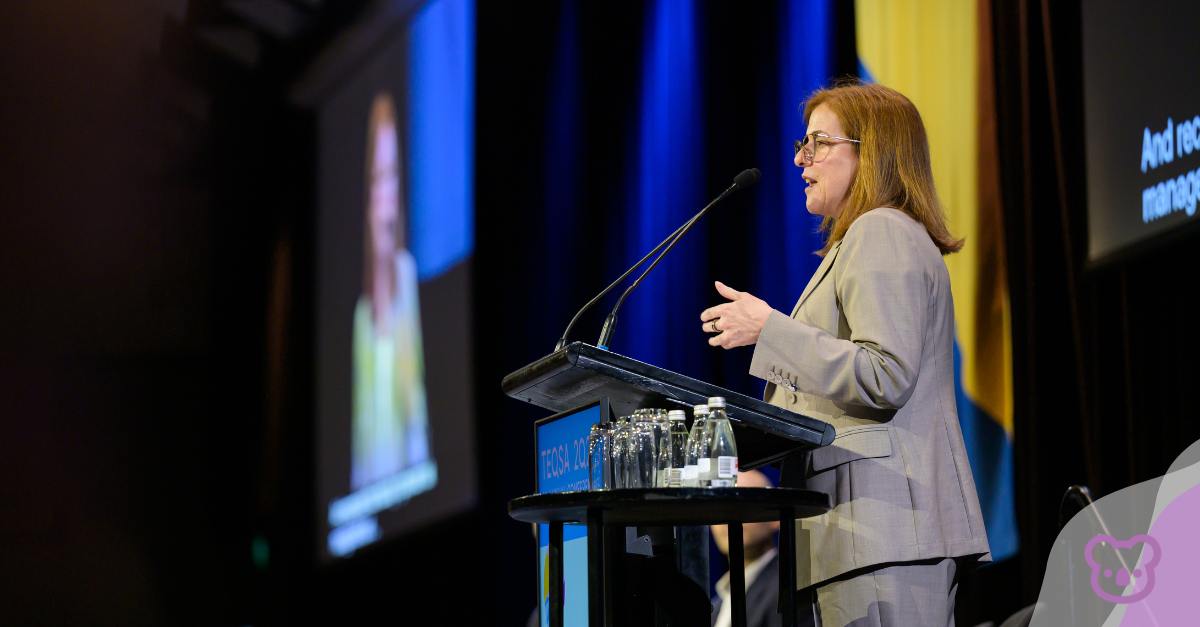
These words by Dr. Mary Russell – TEQSA Chief Executive Officer – were core to introducing TEQSA’s new approach to regulation at the recent TEQSA Conference. In her presentation – “From compliance to confidence: Trust, transparency and regulatory strategy” – Dr. Russell walked conference delegates through the rationale for TEQSA’s new regulatory approach which aims to meet expectations of students, the public and the parliament.

Dr. Russell asserted that expectations of regulation have changed over time: public attention has sharpened; expectations of accountability have increased; and the sector’s reputation depends on the regulator’s collective ability to respond with integrity and transparency.

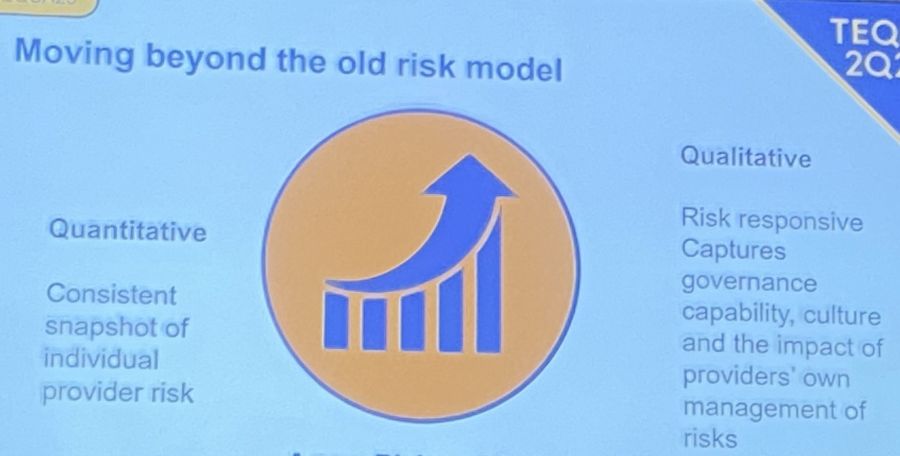
The current risk model limits the regulator’s ability to meet these expectations as it relies on lag data and outcomes (often 2-years old); is unable to provide real-time insights on how providers manage their risks and assure quality; and often understates or overstates individual provider risk.

What is changing?

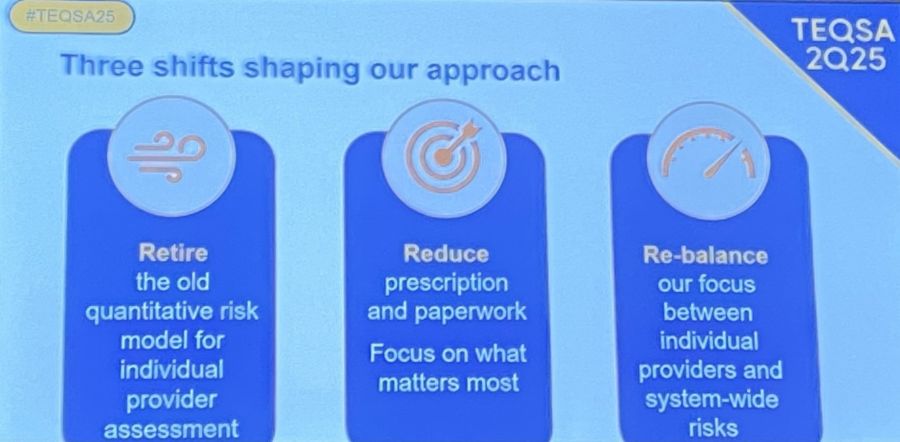
Three major shifts in TEQSA’s regulatory approach:

  • changing the way TEQSA look at risk
  • changing TEQSA’s processes to make sure they’re targeting and, where possible, reducing regulatory burden
  • re-balancing the way TEQSA apply their resources and efforts between assessing individual provider quality assurance and responding to sector risks
What does this look like in practice?

  • Less documentary evidence needed to demonstrate regulatory compliance
  • More attention paid to individual provider self-assurance statements that combine quantitative data with nuanced, qualitative commentary to identify their risks and challenges
  • Documentary evidence will link with individual provider circumstances and provide insights on how the individual provider manages risk and assures quality
  • Documentary evidence is curated by the individual provider to provide confidence to TEQSA that they understand the environment they operate in and are aware and upfront with identifying risk and opportunities for improvement
  • Rather than ask for the same set of documentary evidence for each provider, TEQSA will ask targeted questions based on their knowledge of individual provider circumstances
  • No more standard Confirmed Evidence Tables

“Quality, integrity, reputation and student protection sit at the heart of TEQSA’s work and at the centre of regulation”

What questions may be asked?

Dr. Russell was transparent in her presentation about the type of questions TEQSA may ask to understand how individual providers are working to safeguard their operations and their students. Such questions may include:

  • What are the key risks that you are focused on?
  • How do you assure yourselves that your management of these risks is effective?
  • What are the risks you anticipate might become more important in the coming years?
  • What evidence and reporting does your governing body rely on to assure itself about academic quality, integrity and student experience?
  • How do you monitor and assure that third-party providers are delivering in accordance with your policies and the Threshold Standards?

TEQSA’s view is that their new regulatory approach enables them to recognise early signs of risk and act before confidence is lost. Providers who are currently working on their self-assurance reports for their application to renew their CRICOS registration will recognise this approach and language as they collate their evidence to demonstrate how their risks have been identified, managed and mitigated and how they will manage these risks going forward.

It’s all about managing risk – just count how many times I’ve mentioned the word ‘risk’ in this article!!!

Tags: Teqsa
Previous Post

New fact sheets provide guidance on ESOS Act amendments

Next Post

Embracing AI: Our Universities Seem to Be Doing a Great Job… But Will It Matter?

Melanie Duncan

Melanie Duncan

Melanie has worked in higher education for over 20 years with extensive expertise in international admissions; designing and implementing policies, procedures and processes within an ESOS/TEQSA framework; leading international-specific campuses for both universities and third-party providers; and leading teams of international education professionals across all tertiary international student lifecycle administrative processes and wellbeing service delivery. Melanie’s work embeds enterprise-wide risk management practices with key compliance responsibilities as part of her management roles since 2006. Over this time, she has been responsible for the ensuring that her providers’ and teams’ processes, policies and practices meet the obligations of the ESOS Act 2000; National Code of Practice for Registration Authorities and Providers of Education to Overseas Students (2007 & 2018); TEQSA Health and Wellbeing Guidelines; and TEQSA Higher Education Standards Framework (Threshold Standards) 2021. Melanie is Co-Founder and Principal of IEP Advisory. IEP are experts in international education who specialise in ESOS compliance and the international student journey. Their business advice and services position their clients to exceed minimum compliance obligations and aspire to a best-practice overall experience for their international students.

Next Post
Embracing AI: Our Universities Seem to Be Doing a Great Job… But Will It Matter?

Embracing AI: Our Universities Seem to Be Doing a Great Job… But Will It Matter?

What Now? What Next? What Now? What Next? What Now? What Next?
Cambridge Cambridge Cambridge
iDAT Logo iDAT Logo iDAT Logo
The Koala News

The Koala is intelligent, it can be cheeky, it aims to be informative and is uniquely Australian though proudly global.

It unashamedly promotes best practice in International Education. It loves seeing students succeed via vibrant offerings and a supporting mix of policy, recruitment and support settings.

Follow the Koala

Browse by Category

Subscribe: Have the Koala Delivered to your Inbox

  • About
  • Terms of Use
  • Privacy Policy
  • Contact

© 2023 The Koala News

No Result
View All Result
  • News
  • About
  • Contributors
  • Advertise
  • Jobs
  • Events
  • Subscribe
  • Archive
  • Shop
  • Contact

© 2023 The Koala News