






Artificial Intelligence is reshaping how international students choose where and what to study, marking what experts are calling a new era of global student recruitment.
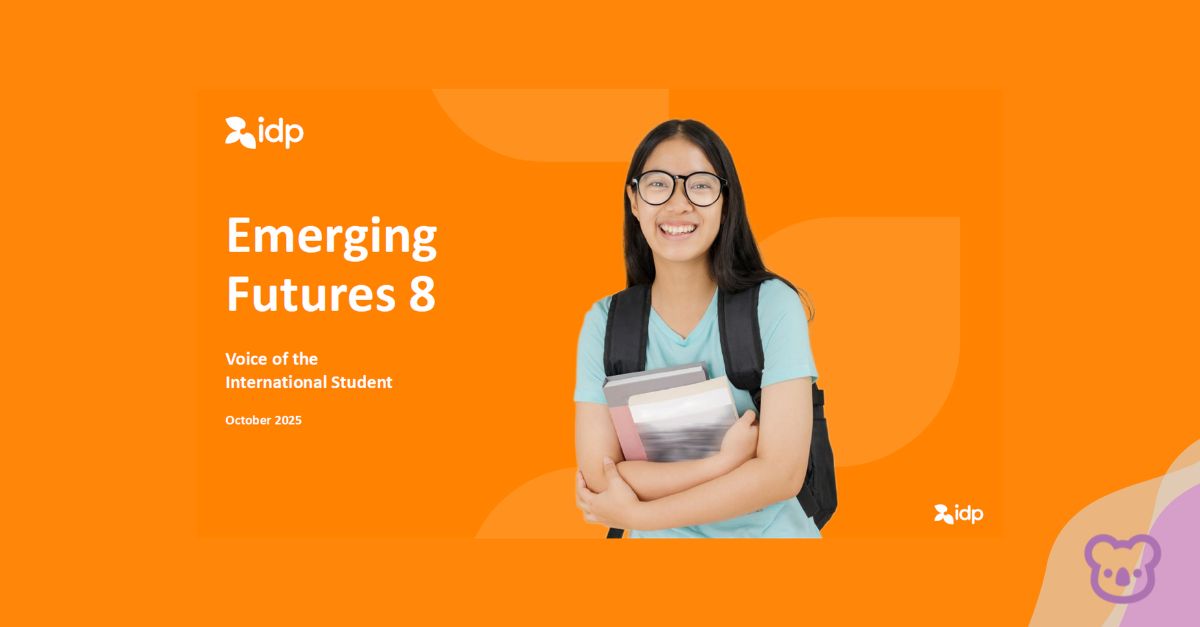
The findings come from Emerging Futures 8: Voice of the International Student, a survey of nearly 8,000 students from 134 countries, released this week. Conducted in English and Chinese, the research offers one of the most detailed looks yet at how technology, perceptions and policy shifts are influencing global student mobility.
According to the new research from IDP Education, more than half of prospective international students now plan to use AI tools like ChatGPT to help decide on their study destination (54%) and subject area (53%)—a 20 per cent jump in just 12 months.
Simon Emmett, Chief Partnerships Officer at IDP Education, said the report captures a turning point in the international education landscape.
“While students are still turning to counsellors and universities for advice, many are telling us that AI is becoming part of their decision-making toolkit,” Mr Emmett said. “As a result, AI is shaping the early stage of students’ journeys.”
The research found that Chinese students are leading this shift, with 63 per cent indicating they would use AI to help choose an institution—despite the tool being restricted in China.
Counsellors are also noticing the trend firsthand. Vaishali Jain, a Senior Education Counsellor at IDP, said more students are arriving to consultations after already experimenting with AI.
“We’re seeing a growing number of students using ChatGPT to explore study options before they even speak to a counsellor,” Ms Jain said. “AI helps students clarify their interests and compare institutions, while counsellors provide guidance and reassurance when it comes to applications and visas. It’s a partnership that works.”
The study highlights how competitive the global education market has become, with 85 per cent of students considering more than one destination. Australia remains the top choice overall, followed by the UK, USA, Canada and New Zealand.
Australia continues to lead on perceptions of safety, post-study work rights and international student policies, while the United States retains its edge on perceived education quality.
“With student caps, shifting policies and a growing array of choices, the global race for talent is intensifying,” Mr Emmett said. “AI is fast becoming a deciding factor in where those enrolments flow.”
For students like Ishika Malik, now studying Psychology at Swinburne University of Technology, AI made navigating that choice less daunting.
“When you’re making such a big decision, it can be hard to know where to begin,” Ishika said. “AI helped me narrow down my options and understand what was possible before I spoke to a counsellor.”
As global competition heats up and technology becomes more deeply embedded in student decision-making, the findings suggest that the universities best positioned for the future will be those that combine digital intelligence with human connection.
For more details, visit partners.idp.com/emergingfutures