











Demand for Purpose-Built Student Accommodation (PBSA) remains strong globally for both students and investors, despite governments in major study destinations tightening international student policy settings according to BONARD’s Student Housing Annual Report 2025 released last week. The Report identifies two key reasons for this resilience; ongoing growth in student demand especially outside the four major study destinations, and a construction pipeline that is not keeping pace with demand.
International student enrolments increased across much of Europe and the UK in 2025, with demand shifting beyond the “big four” destinations of the United States, the United Kingdom, Canada and Australia. Investor and student interest has also increased across continental Europe, particularly in markets such as Germany, Spain, Italy and the Netherlands.
Across major student cities in Europe, Canada and Australia, demand is now growing materially faster than new supply. This structural imbalance continues to support high occupancy levels across most markets, despite emerging affordability pressures in some locations. On average across Europe and Canada, the average occupancy rates range from 91 to 99 per cent.
BONARD estimates a combined undersupply of nearly 463,000 beds across Europe, Canada and Australia. Demand is growing significantly faster than new supply additions, and the announced pipeline of projects in the 27 biggest cities (Sydney being the one Australian city included) will cover less than five per cent of the overall bed shortfall.
Student expectations of PBSA are also evolving, according to BONARD, with an increased demand for amenities that support student well-being, academic performance and social engagement. This includes game rooms, gyms, study rooms and TV/cinema rooms. Privacy and comfort is highly valued, and single studios are the most popular room type, offered by 61 per cent of residences.
Student houses has jumped from fifteenth in 2022 to third in 2026 in real estate investment prospects, behind data centres and new energy infrastructure. This highlights a long-term confidence and maturity in the sector by investors. And while rental growth has moderated from recent highs, PBSA rents have continued to increase above average inflation.
“Looking ahead, we are confident that the fundamentals of the PBSA sector will remain strong,” says CEO Samuel Vetrak in the Foreword. “Demand from mobile students is expected to continue rising, while the ongoing undersupply will support high occupancy, rental growth, and sustained investor interest.”
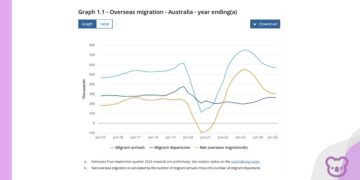
In Australia, the relevance lies in the way international students have been drawn into political and public debates about migration settings and housing pressure. The global data shows these challenges are not unique to Australia, while underlining the central role PBSA plays in supporting both housing supply and education infrastructure for international students.
The report is available for download from here.