






As regulatory scrutiny intensifies across key sending markets, verification and evidence integrity are rapidly emerging as the new horizon in international education, far beyond compliance checkboxes and into the realm of strategic risk management.
In late 2025 and early 2026, Australia’s international education sector has seen a cluster of initiatives aimed at strengthening trust in applications, credentials and identity. From the Association of Australian Education Representatives in India’s (AAERI) recently announced Verify Tool to emerging technology platforms built around auditable reusable trust records, the message is clear: proof matters more than ever.
The backdrop for this shift is not abstract. From 8 January 2026, the Department of Home Affairs moved India, Nepal, Bangladesh and Bhutan to Evidence Level 3 under the Simplified Student Visa Framework, triggering tougher documentation requirements, especially around academic, financial and identity checks. Regulators said the change is designed to manage “emerging integrity issues”, but the sector has raised concerns about processing delays and higher refusal risks, even for genuine students.
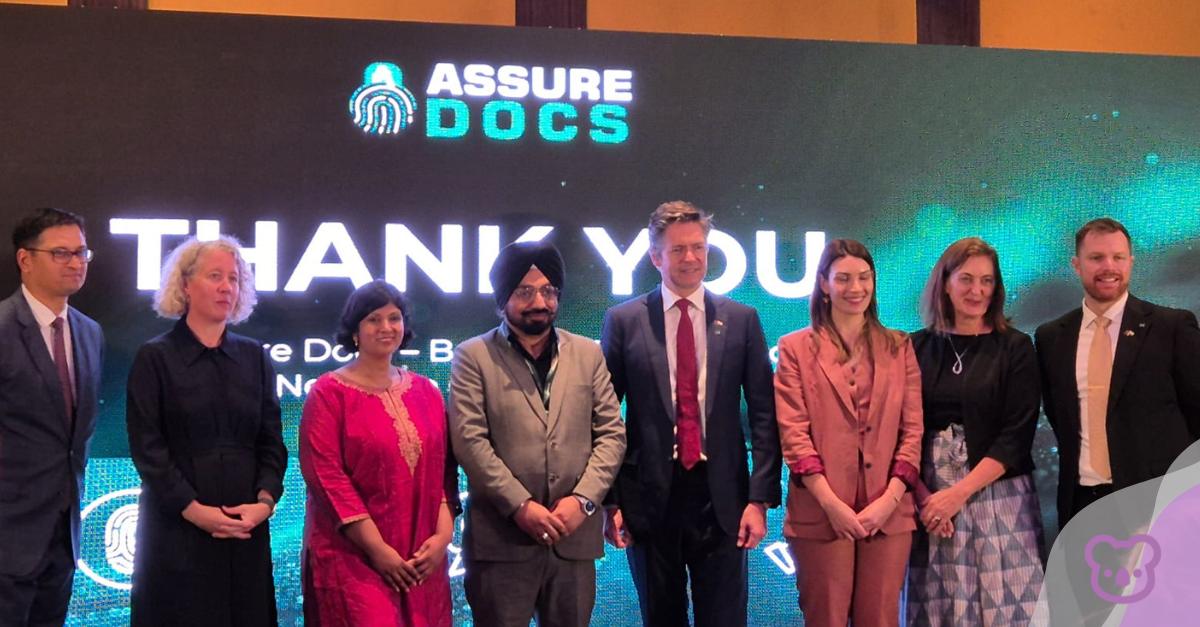
Against this landscape, Assure Docs, an Australia-built integrity and verification platform, is positioning itself not simply as another tool, but as part of new trust infrastructure layer that could help the sector move from reactive checks to proactive, auditable trust. Unveiled at an Austrade-hosted event on the eve of the Bengaluru Tech Summit, the platform attracted government, education and industry attention as an Australian response to systemic documentation and identity fragmentation.
Assure Docs was founded by Australian Registered Migration Agent Navjeet Singh Nayyar, drawing on more than 16 years of frontline experience in migration and compliance systems. Its core promise is a portable, tamper-proof digital trust record that travels with the applicant — containing verified documents, risk assessments, interview evidence and decision trails that can be reused by institutions, agents, employers and regulators without repeated re-verification.
Unlike standalone verification tools that focus on single elements, such as identity or academic history, Assure Docs states it integrates multiple technologies, including AI, machine learning, Hashgraph immutability and decentralised digital IDs to build a unified evidence layer. The platform’s design aims to tackle both the integrity and usability problems that have long plagued international admissions: fragmented evidence, repeated manual checks, and a reset of trust at every new application.
At the heart of the solution is what Assure Docs describes as the KYA (Know Your Agent, Know Your Applicant, Know Your Application) framework, a structured framework to bring transparency and auditability to three core elements of global recruitment and assessment. For example, agents’ recruitment activity can be logged and linked to outcomes; applicants’ identities can be verified using AI-assisted systems that detect spoofing or deepfakes; and applications can include an immutable audit trail of documents and interviews.
Singh Nayyar says, “While some verification initiatives are designed around specific source-country ecosystems, Assure Docs is built with global coverage in mind, supporting verification across more than 200 countries.”
Sector voices have been quick to emphasise that verification alone isn’t a panacea. The AAERI Verify Tool launched in late 2025 reflects a similar push, harnessing India’s DigiLocker and e-verification systems to authenticate identity, academic records and financial documents in a time-stamped, source-linked way. These tools are rooted in collaboration between Indian digital infrastructure and Australian education representatives, highlighting that verification is increasingly a cross-national endeavour, not a siloed backend process.
What unites these developments is a recognition that trust must be provable, not presumed. As one sector commentary put it in November 2025, verification has ceased to be optional, it is now central to reputation, compliance and competitiveness in global student recruitment.
Yet challenges remain. As The Koala has highlighted in adjacent coverage, reliance on automation and AI-driven systems raises questions about bias, equity and transparency, especially where risk profiling intersects with applicants from markets with diverse documentation norms. And while digital records can streamline verification, they must be paired with ethical frameworks to ensure genuine students aren’t inadvertently disadvantaged.
Still, the direction of travel is unmistakable. Whether through AAERI Verify, UniReady Global’s AI verification systems — which claim to slash decision times while strengthening compliance — or platforms like Assure Docs that promise a portable integrity layer, the sector is moving toward systems that treat evidence as strategic infrastructure, not administrative overhead.
For Australia’s international education ecosystem, grappling with regulatory shifts, global competition and rising expectations around integrity, this may well be the start of a new era: one where trust is built, shared and demonstrable in ways that paper simply cannot match.
For more information on Assure Docs, see here.