






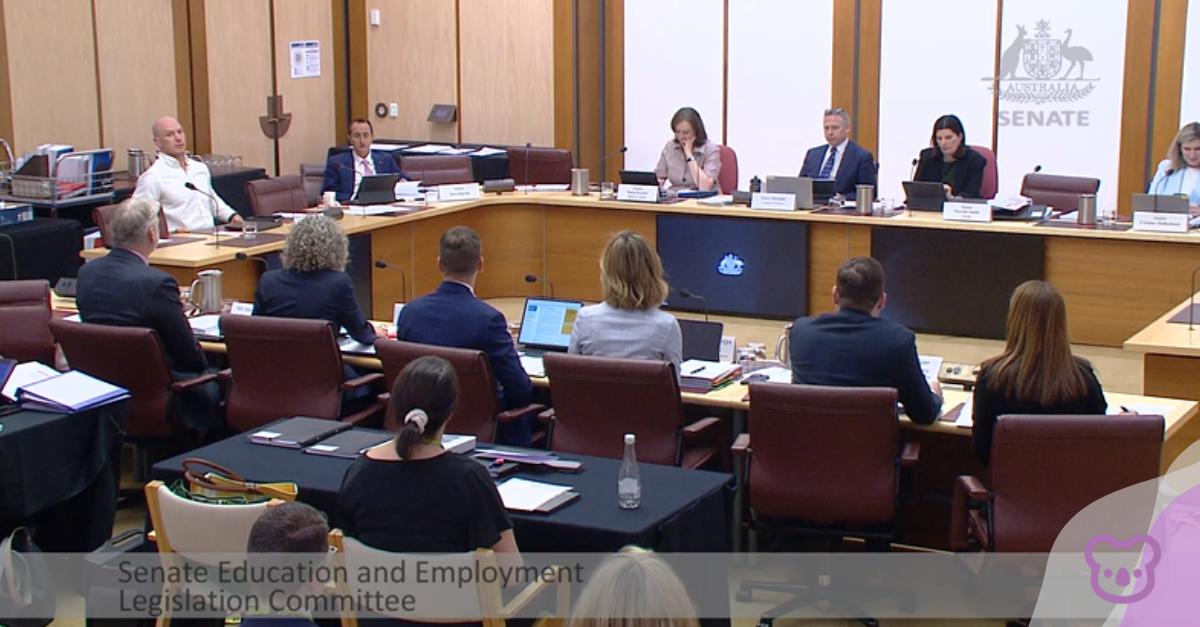
It was Supplementary Budget Estimates (Senate Estimates) last week, the final time for non-government senators to grill public servants and government senators about, well anything they want to ask about.
We learned that there are almost 47,000 students awaiting a decision in the Administrative Review Tribunal, 23 providers have already exceeded their priorisation threshold for 2026 and Monica makes delicious mince pies (more on that later). And not directly international education related, Senator Sharma seemed to have a bee in his bonnet about how many TEQSA staff attended the TEQSA conference this year.
Administrative Review Tribunal (ART)
The ART reported the following data:
- As at 31 October, the ART had 124,000 cases on hand
- This is up about 10 per cent in three months
- 56 per cent of the case load (69,903) are in the migration jurisdiction
- 38 per cent of the case load (46,590) are in relation to student visa review
- 3,886 student visa related decisions were made between 1 July to 1 October
- 44 per cent of outcomes in these cases resulted in a changed decision during this time, and the average changed decision in the ART is between 44 and 50 per cent
During questioning, ART’s Chief Executive Officer and Principal Registrar, Mr Michael Hawkins AM, confirmed that one of the reasons for a large number of student visa reviews to be remitted is because Home Affairs rejects visas because certain documents have been provided. Then during ART these documents are produced, leading to a changed decision.
This was picked up during Home Affairs session, see below.
Home Affairs
Home Affairs was quizzed about the changed decision rate of student visa reviews at the ART. Deputy Secretary Immigration Programs, Michael Willard, and ‘veteran’ of the student visa program, agreed with the ART explanation that as there is a gap in time between Home Affairs making a decision and the ART, and that it is often the case that the student is able to provide additional documentation to the ART. This is one of the key factors leading to the high remittance rate at ART, according to Willard.
On temporary visa data, Home Affairs reported that as at 31 October there were:
- 2.925 million temporary visa holders in Australia
- 402,652 bridging visa holders
- 638,166 student visa holders
- 226,962 working holiday-makers
NB: This data collecting will most likely be used by the Opposition when they release their migration policy.
Education
Liberal Senator Dave Sharma sought information on the National Planning Level. The Department of Education reported:
- As at 28 November, there were 277,900 current new overseas student commencements (NOSCs), or 103 per cent of the national planning level
- 191,400 are higher education NOSCs
- 86,500 are vocational education and training NOSCs
- 23 providers have already exceeded their prioritisation threshold (ie they are at 80 per cent or above) for 2026
Tertiary Education Quality and Skills Agency (TEQSA)
In addition to Canberra Senator David Pocock’s questions about the Australian National University, the time allocated to TEQSA was largely taken up by questions from Senator Sharma about the TEQSA Conference and the number of its staff who attended. I wonder who had a word in his ear about this? I’m certain that education providers in attendance are grateful for the opportunity to meet TEQSA staff in person at the conference. Let’s hope that this isn’t lost in the politicising of budget spend.
Australian Skills Quality Agency (ASQA)
Of particular note during the questioning of ASQA was its Chief Executive Officer, Saxon Rice, stating the Agency had not provided advice or guidance on 2026 planning levels for international education because it was “a policy consideration for the department [of Employment and Workplace Relations]”.
Rice did confirm that ASQA had been involved in providing advice on the Education Legislation Amendment (Integrity and Other Measures) Bill 2025, particularly those involved the new powers for the Minister.
Department of Foreign Affairs and Trade (DFAT)
The only mention of the New Colombo Plan and Australia Awards was by Senator Penny Wong, who mentioned them in the context of Australia’s Asia capability. Instead, ISIS brides and Australian Government funding for the Papua New Guinea rugby league team, among other things, were on the minds of non-government senators during the DFAT session.
National Student Ombudsman
Although the Commonwealth Ombudsman, with the National Student Ombudsman, was scheduled at 10.15pm on the day of its appearance, the Legal and Constitutional Affairs Legislation Committee ran out of time and they did not appear. (Lamenting the briefing documents that have gone to waste…).
There were no questions about international students to either Austrade or Tourism Australia.
And finally, back to Monicas mince pies. There’s usually at least one particularly silly exchange between non-government and government senators. This session, the exchange between Senators Stewart, Shoebridge and Watt caught my attention when Senator Shoebridge said he would “take one of those pies on notice any day” and it is recorded in Hansard that Monica’s fruit mince pies are delicious. Christmas silliness in Senate Estimates!
Although I’d like to end the year on that Christmas note, we’re still expecting the Opposition to release its migration policy before Christmas and the Government may or may not release its plans for changes to the National Code pre-Christmas. This may not be the last you hear from me for 2025.