
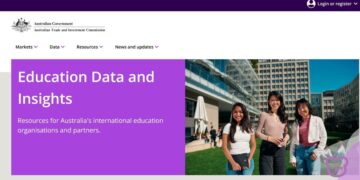










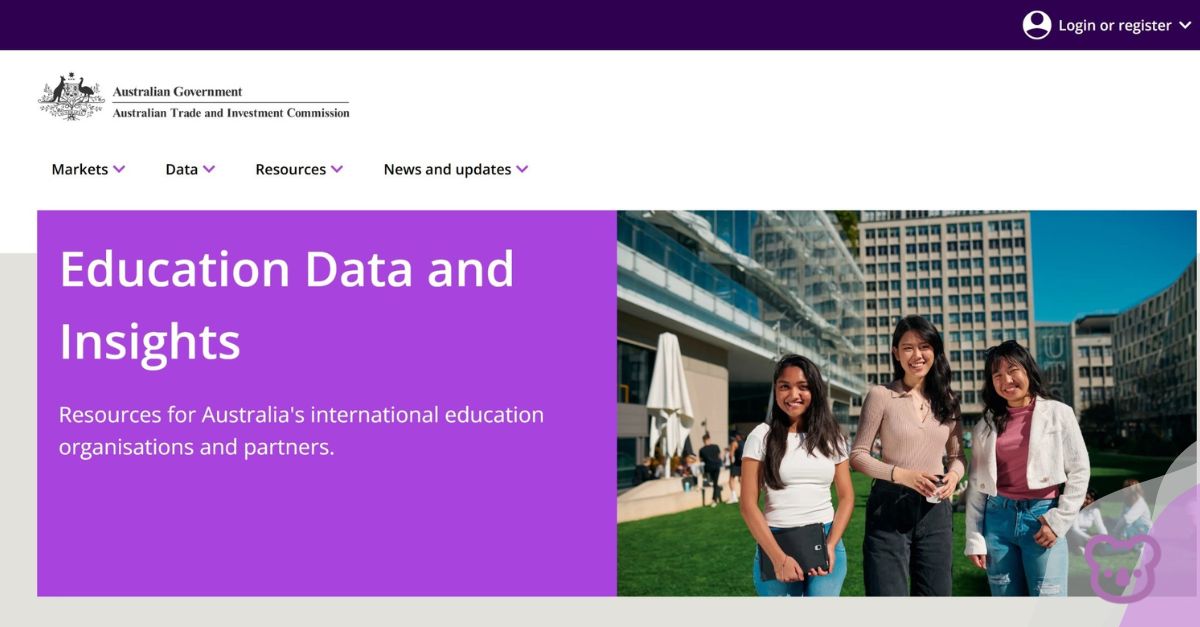
Austrade has upgraded its Education Data and Insights (EDI) platform, expanding the market intelligence and practical opportunities available to Australian education providers looking to grow their international operations.
The refreshed platform brings together market data, in-country intelligence and commercial opportunities, with a stronger focus on helping institutions make decisions about recruitment, partnerships and international marketing.
For a sector under increasing pressure to diversify its markets, manage risk and identify new sources of student demand, better access to reliable intelligence could prove valuable. The challenge, as always, is turning information into action.
From market data to market opportunities
EDI is Austrade’s market intelligence platform for the international education sector. It provides Australian education providers with access to data, insights, opportunities and expertise drawn from Austrade’s global network.
The upgraded platform has been redesigned around the needs of recruitment, partnerships and international marketing teams, with several changes intended to make the intelligence more accessible and useful.
These include expanded premium content covering transnational education (TNE), scholarships, events, campaigns, trade missions and partnership opportunities. Providers will also have greater visibility of market development opportunities identified through Austrade’s offshore education network.
Market Profiles have been redesigned to combine data with current trends and in-market perspectives, while improved navigation and comparison tools are intended to make it easier to assess different markets and opportunities.
A new MyOrg dashboard also allows users to benchmark their organisation’s international student performance against the wider sector.
That last feature could be particularly useful. Understanding how an institution is performing relative to its peers can help identify where recruitment strategies are working, where market share may be slipping and where there may be room to grow. The value, however, will depend on the quality and comparability of the underlying data, as well as how institutions use it to inform their decisions.
Bringing offshore intelligence closer to providers
One of EDI’s key strengths is its connection to Austrade’s education specialists operating in international markets.
These teams work with overseas governments, institutions, education agents, industry bodies and strategic partners. Through those relationships, they can identify emerging opportunities, shifts in market conditions, potential partnerships and pathways into new markets.
This is an important distinction. International recruitment decisions cannot be made on headline figures alone. Student demand, government priorities, local competition, agent relationships and changing perceptions of Australia all influence whether a market represents a realistic opportunity for an individual provider.
Combining market statistics with on-the-ground perspectives can help institutions move beyond simply identifying where student numbers are growing to understanding why a market is changing and what that might mean for their own recruitment or partnership strategies.
For providers seeking to diversify beyond their established markets, that context matters. Diversification is not simply a matter of adding more countries to a recruitment plan. It requires an understanding of local conditions, a credible value proposition and the capacity to build relationships over time.
Scholarships added to the intelligence mix
The upgrade also introduces a monthly scholarship overview, bringing together scholarship program opportunities across international markets.
The new resource is intended to help institutions understand how scholarship programs might support student recruitment and partnership development.
Scholarships can be an important part of an institution’s international strategy, particularly where affordability, government priorities or competition between destinations influence student decisions. They can also provide a basis for institutional partnerships and broader engagement with overseas governments and organisations.
But scholarship opportunities need to be considered in context. Providers will need to assess eligibility, funding arrangements, strategic fit and the likely impact on recruitment before committing resources.
The monthly overview gives institutions another source of information to support that assessment.
Intelligence is only as useful as the decisions it informs
The EDI upgrade arrives at a time when Australian education providers are navigating a changing international environment. Competition between study destinations remains intense, student preferences continue to evolve and institutions are under pressure to make more informed decisions about where and how they recruit.
Access to better market intelligence will not remove those challenges. Nor will a new dashboard, on its own, deliver market diversification or stronger international partnerships.
Its value will ultimately be measured by whether institutions can use the information to identify credible opportunities, allocate resources more effectively and develop relationships that translate into sustainable outcomes.
For smaller providers, in particular, access to market intelligence and offshore expertise may help address some of the information gaps that larger institutions can cover through their own international networks. The extent of that benefit will depend on the accessibility of the platform, the detail available to different users and how readily the intelligence can be applied to individual institutional priorities.
Austrade’s message is clear: EDI is intended to be more than a source of market statistics. It is designed to help providers connect data, international expertise and practical opportunities.
For institutions that have not explored the platform recently, the upgrade offers a reason to take another look. The next step is making sure the intelligence leads to decisions that strengthen Australia’s international education offering, rather than simply adding another report to the reading list.











