



The Koala News
  • News
    • All
    • Accommodation
    • Agents
    • Breaking
    • Compliance
    • Data
    • Ed-Tech
    • English Language
    • Market Update
    • Opinion
    • Policy
    • Profile
    • Research
    • Schools
    • Sponsored Content
    • Student Mobility
    • Student Recruitment
    • Student Support
    • TNE
    • World
    Post-Election Wish List

    Taking the Message to the Regions

    Grace International marks 20 years with Sydney education and migration expo

    Grace International marks 20 years with Sydney education and migration expo

    Students aren’t turning up. Are we asking the wrong question?

    Students aren’t turning up. Are we asking the wrong question?

    Wellington Education Group and VFS Global launch new partnership

    Wellington Education Group and VFS Global launch new partnership

    EIT Perth Open Day puts engineering study to the test

    EIT Perth Open Day puts engineering study to the test

    I’ve seen the future (and it’s not vibe coding)

    The future just got a step closer

    Beyond Arrival: Closing the Confidence Gap in International Student Support

    Beyond Arrival: Closing the Confidence Gap in International Student Support

    Why small decisions have a big impact in PBSA

    Why small decisions have a big impact in PBSA

    AI writing tools linked to lower rates of student outsourcing, Turnitin report finds

    AI writing tools linked to lower rates of student outsourcing, Turnitin report finds

    HEA launch puts employer connections at the centre of postgraduate offer

    HEA launch puts employer connections at the centre of postgraduate offer

    Trending Tags

    • Austrade
    • English
    • Student Data
    • Awards
    • Schools
  • About
  • Contributors
  • Advertise
  • Jobs
  • Events
  • Subscribe
  • Archive
  • Shop
  • Contact
No Result
View All Result
The Koala News
No Result
View All Result
Home News Opinion

Chancellors give the warning: the customer is always right

Guest ContributorbyGuest Contributor
February 19, 2026
in Opinion
With regulators, evidence wins: 5 out of 5
Share on LinkedinShare on TwitterShare on FacebookShare via Email

“The customer is always right.”

The phrase is often attributed to figures such as César Ritz, the pioneering hotelier whose legacy eventually became The Ritz-Carlton Hotel Company. The sentiment, regardless of its precise origin, remains influential because it speaks to trust. Businesses survive when their customers believe in the value of what they are buying.

Higher education is increasingly being viewed through exactly that lens.

Recently, two of the nation’s most respected former university chancellors issued a very clear message – bring back supervised exams. Their concern was not simply academic integrity in isolation, but public confidence in the value of university degrees themselves.

Former Monash University chancellor Dr Alan Finkel noted discussions with several vice-chancellors about the importance of serious investment in getting students back onto campus, including a return to in-person assessments worth up to 70 per cent of final marks.

“In other words,” he said, “you cannot pass your degree unless 70 per cent of your grades are in the form of invigilated exams and assessments. That way, employers can be satisfied that their graduates have accumulated the required knowledge for their degree.”

Employers, in this framing, become the ultimate customer. They are the end users of the products universities produce: graduates.

But employers are not the only stakeholders watching.

Public expectations about higher education remain strongly vocational. Research from the ANU Centre for Social Research and Methods found that the most widely supported role of universities was to “train young Australians for the future workforce.” That perception aligns closely with how universities themselves market their offerings.

One university promotional message puts it plainly as well – a degree improves career prospects, builds employable skills, and increases lifetime earnings. The OECD supports that argument with data, reporting that younger adults with a bachelor’s degree earn, on average, 29 per cent more than those without tertiary qualifications across OECD countries.

There is clearly a value proposition. Higher education promises better employment outcomes and higher lifetime earnings.

It also comes with a cost.

Many graduates leave university with debts approaching $40,000 or more. That liability appears immediately on graduation and can affect borrowing capacity and financial decisions for years. In that sense, graduates are not just students, they are customers with a long-term financial commitment tied directly to the perceived value of their degree.

That makes public confidence critical.

If employers begin to question whether graduates genuinely possess the knowledge their qualifications imply, the perceived value of the product diminishes. When that happens, reputational damage follows quickly.

Dr Finkel warned precisely about this scenario. Universities risk further reputational erosion if the public concludes that higher education exists primarily to collect fees and issue degrees while allowing AI-enabled academic dishonesty to proliferate unchecked.

Once that perception takes hold, regulators inevitably step in.

The Tertiary Education Quality and Standards Agency (TEQSA) has already provided guidance in anticipation of this shift. Its advice acknowledges the complexity introduced by generative AI and emphasises assessment reform rather than reliance solely on detection technologies.

Institutions, TEQSA suggests, must focus on authentic demonstrations of student capability. Broadly, three approaches are emerging. Assuring learning across entire degree programs, assuring it within individual subjects, or combining both approaches to maintain credibility.

In essence, the emphasis returns to assurance. Assurance of learning, assurance of integrity, and assurance that graduates genuinely meet expected standards.

Responsibility ultimately sits with institutional leadership, typically the Principal Executive Officer or Chief Executive Officer. When regulators seek reassurance, it is those leaders who must produce convincing evidence that assessment practices remain robust.

That evidence is becoming harder to demonstrate through unsupervised, asynchronous digital assessments alone. TEQSA has expressed concern that such methods may no longer reliably prove genuine learning in an era of powerful generative AI tools.

Hence, the renewed emphasis on supervised examinations and credible assessment design. The warning from chancellors is also very much strategic. Invest in quality assessment now, or risk long-term erosion of trust.

As Richard Branson once observed, brands that project only a polished ideal without substance eventually lose credibility. Universities face a similar challenge. Authenticity, transparency, and demonstrable standards are what sustain public trust.

And in education, as in any customer-focused industry, trust ultimately determines value.

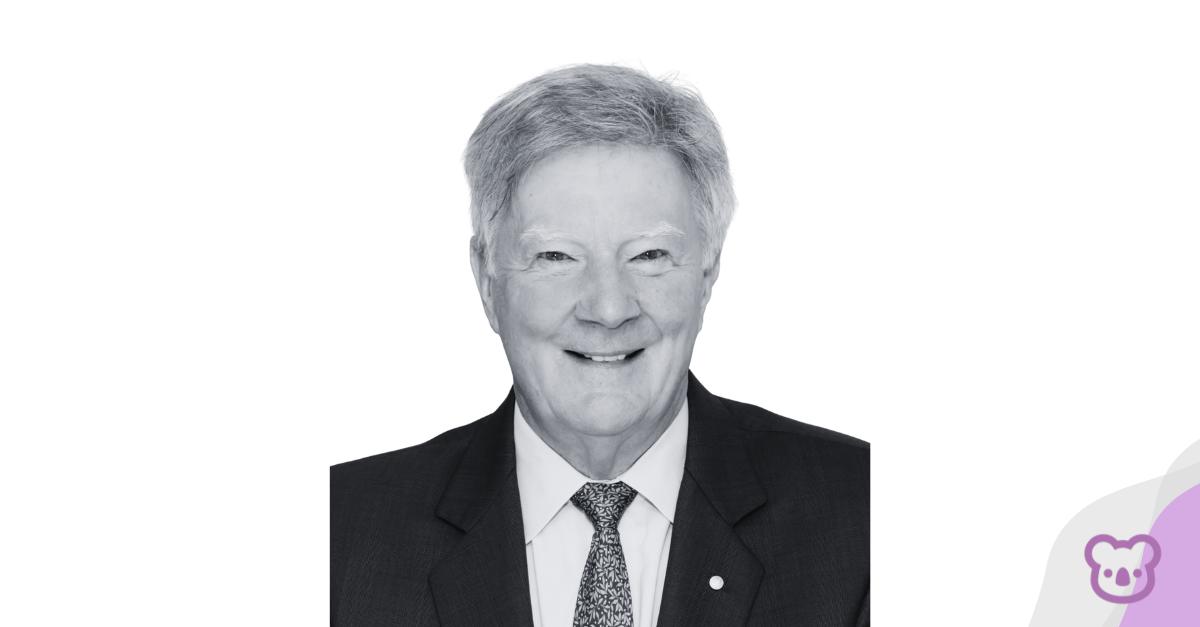
Alan Manly OAM is currently the CEO of CampusQ, provider of the InvigilatorPlus platform. A distinguished entrepreneur, innovator, director and author, he has held directorships in private, public, and non-profit sectors and was CEO and PEO of RTOs and Higher Education Institutions for over twenty years.


Tags: Student Journey
Previous Post

Postgraduate students report higher rates of racism, CAPA calls for structural reform

Next Post

Global demand for chip degrees surges as universities struggle to keep pace

Guest Contributor

Guest Contributor

From time to time The Koala loves to have guest contributors. Guest contributors are typically someone from industry, with a wealth of knowledge and a unique perspective that the Koala believes adds to public discourse.

Next Post
Global demand for chip degrees surges as universities struggle to keep pace

Global demand for chip degrees surges as universities struggle to keep pace

What Now? What Next? What Now? What Next? What Now? What Next?
Cambridge Cambridge Cambridge
iDAT Logo iDAT Logo iDAT Logo
The Koala News

The Koala is intelligent, it can be cheeky, it aims to be informative and is uniquely Australian though proudly global.

It unashamedly promotes best practice in International Education. It loves seeing students succeed via vibrant offerings and a supporting mix of policy, recruitment and support settings.

Follow the Koala

Get the App for your mobile device

Subscribe: Have the Koala Delivered to your Inbox

  • About
  • Terms of Use
  • Privacy Policy
  • Contact

© 2023 The Koala News

The Koala News app
Get
No Result
View All Result
  • News
  • About
  • Contributors
  • Advertise
  • Jobs
  • Events
  • Subscribe
  • Archive
  • Shop
  • Contact

© 2023 The Koala News