






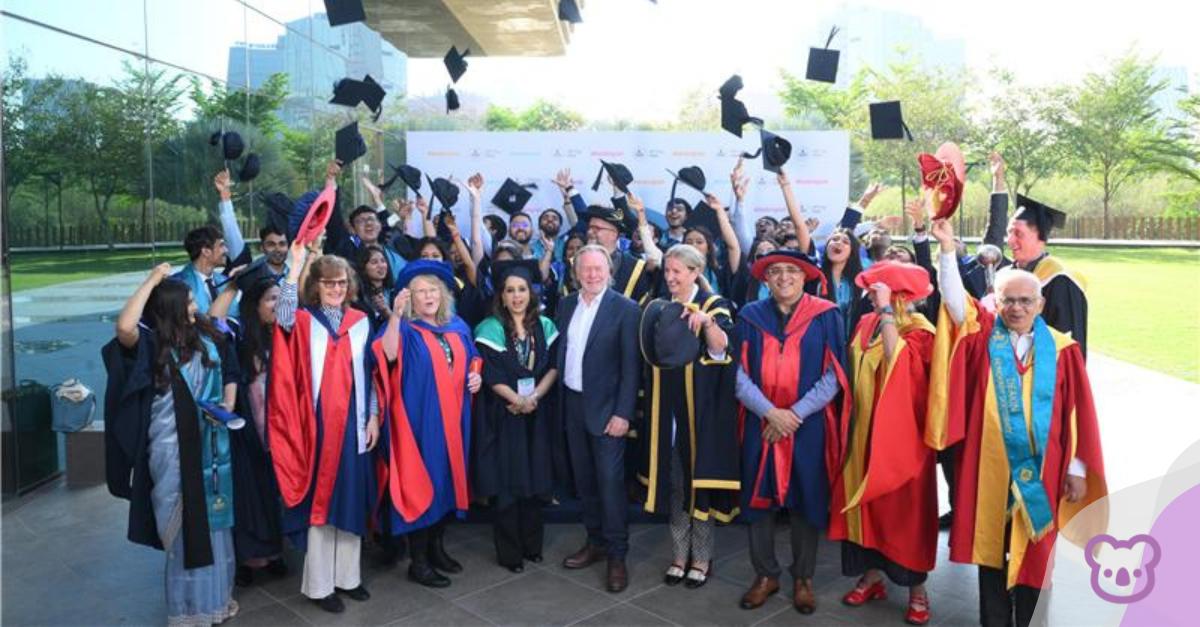
Deakin University has reached a significant milestone in its global expansion strategy, celebrating the first graduating cohort from its GIFT City campus in Gujarat, India, a moment more than 30 years in the making.
As the first foreign university to establish an international branch campus in India, Deakin’s presence at GIFT City has long been viewed as a test case for transnational education under India’s reform agenda. This week’s graduation ceremony signals that the model is no longer theoretical, it is delivering outcomes.
In a distinctly Australian touch, academic regalia was sourced from Australia for the ceremony, underscoring the institution’s effort to replicate an authentic university experience on Indian soil. Senior dignitaries from both countries were in attendance, reflecting the broader diplomatic and economic significance of the initiative.
Vice-Chancellor Iain Martin described the occasion as a milestone moment for the Australia–India education partnership, noting that graduates had earned globally recognised Australian qualifications without leaving their home country.
For the inaugural cohort, that qualification came in the form of Masters degrees in Business Analytics and Cyber Security (Professional), with many already securing roles in finance and technology sectors across India and internationally, an early signal that employer confidence in the model is strong.
Australia’s High Commissioner to India, Philip Green, framed the graduates as pioneers, highlighting both the opportunity and responsibility that comes with being first. Meanwhile, Gujarat Chief Minister Bhupendrabhai Patel positioned the moment within India’s broader ambition to emerge as a global knowledge hub.
The campus itself is a direct outcome of India’s National Education Policy 2020, which opened the door for foreign universities to establish a physical presence in the country. For Deakin, it represents a strategic bet that global education can be delivered locally and at scale.
Vice President Global Engagement and CEO South Asia Ravneet Pawha said the graduation ceremony was a tangible demonstration of policy translating into practice, crediting India’s reform agenda with enabling new pathways for international education.
For a sector increasingly focused on diversification and offshore delivery, Deakin’s GIFT City experiment is being closely watched. The early signs suggest that demand for globally recognised qualifications delivered in country is not only real, but accelerating.
And for Australia’s $53 billion international education sector, the message is clear, the next phase of growth may not depend on students coming to Australia, but on Australian education going to them.