









The international education sector has to navigate uncertainty once again.
The recent commentary, including Dirk’s recent analysis of Julian Hill’s signalling, highlights a familiar but uncomfortable reality: the sector is operating in a VUCA environment, one defined by volatility, uncertainty, complexity, and ambiguity.
For those working across international education, this isn’t new. But that doesn’t make it any easier.
- Policy signals shift.
- Narratives change.
- External pressures build.
So, it is in these moments that your instinct will tempt you to act quickly, decisively, and visibly.
However, in doing that lies a risk.
When uncertainty rises, so does the temptation to make panic decisions. To grasp for what you believe to be control. To implement reactive strategies that feel productive in the moment but lack long-term grounding.
Dirk’s piece does an excellent job of outlining the current landscape, not just what is happening, but the tone of what is being signalled. And it’s that tone that matters. Because in these environments, your interpretation is as important as the information you receive.
Your challenge. Is not simply to respond, but to respond well.
And that often requires something counterintuitive:
The discomfort of not knowing.
Don’t mistake this for passivity or avoidance. Done consciously and deliberately, it’s a disciplined practice.
Because we know that clarity rarely emerges from rushed thinking. It emerges from considered thinking, from creating space to interpret, question, and understand before acting.
In a VUCA environment, those who create stability are not those who react fastest, but those who think most clearly.
How to Sit with Professional Discomfort
- Create Structured Thinking Time
In periods of uncertainty, calendars tend to fill with urgency. But without protected time to think, you become reactive.
Block time specifically for reflection and sense-making.
Ask: What do we know? What is signal versus noise?
Your clarity begins when thinking is given space.
- Separate Signal from Story
In uncertain environments, it’s easy to fill gaps with assumptions.
Distinguish between:
– What has been confirmed?
– What am I interpreting?
– What am I fearing?
Those who can separate fact from narrative make better, more grounded decisions.
- Normalise “Not Knowing”
Perhaps the most powerful move is to make it safe to say:
“We don’t know yet.”
This reduces pressure for premature answers and creates space for collective thinking. It also builds trust because people appreciate honesty over false certainty.
Your Opportunity
Sitting with the unknown is uncomfortable. It challenges our need for control and our identity as decision-makers.
But it is also where our growth happens.
It builds patience, judgment, and emotional discipline.
For organisations, it creates better decisions and more sustainable strategies.
In a world where certainty is increasingly rare, the ability to stay grounded in uncertainty may be one of the most important capabilities we can develop.
The question is not whether the environment will stabilise.
It’s whether we can operate effectively while it hasn’t yet.
My Final Thought
For international education, the challenge is not simply deciding when to act but understanding how long to sit with uncertainty before you do. Acting too quickly can create noise and unintended consequences; waiting too long can leave students, agents, and teams navigating ambiguity alone.
The discipline lies in knowing the difference.
Sitting with the unknown creates the space for clearer thinking. Acting at the right moment, often before certainty arrives, creates the conditions for progress.
In a sector defined by complexity and constant change, effective delivery is not about choosing between patience and action. It is about holding both and knowing when each is required.
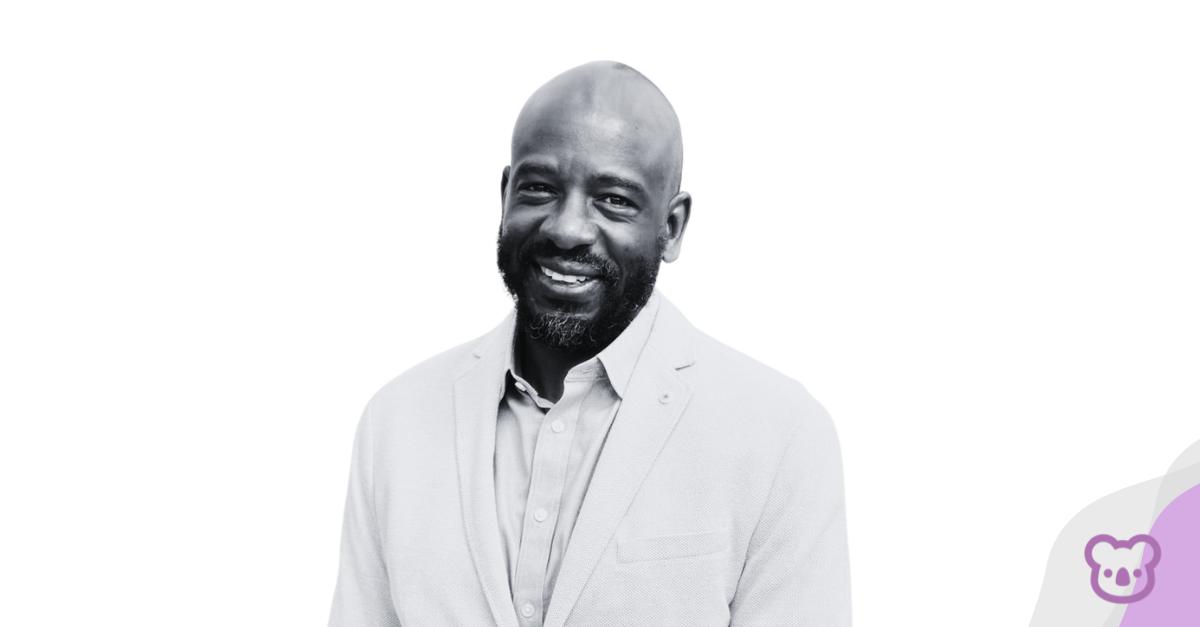
Graham Jones is an executive coach and leadership practitioner with extensive experience in higher education. He works alongside senior leaders, using a values-led and psychologically grounded approach to align judgment, behaviour, and decision-making in complex, high-stakes environments.












