




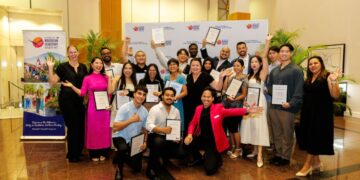






Canada’s new Minister of Immigration, Refugee and Citizenship Canada (IRCC), Marc Miller, held a press conference Friday just gone – October 27, 2023 at Sheridan College in Brampton Ontario. The purpose of the announcement was to provide details on emerging changes to Canada’s International Study Program aimed at helping to better protect international students.
There has been much discussion in Canada about imposing a general cap to limit the overall intake of international student numbers, amongst media concerns related to housing shortages, abuses, as well as concerns about overall program integrity.
Back in August 2023, former Minister of IRCC Sean Fraser, – in his first few weeks as now Minister of Housing Infrastructure, Communities, recommended considering an overall cap in inbound student numbers. The idea of a blanket cap had received considerable pushback from industry lobbyists and corporate stakeholders.
Friday’s announcement by Minister Miller, signalled the Canadian government was heading in a different direction. Miller publicly announced IRCC’s commitment to developing a two-tiered post-secondary institution framework for immigration purposes, called a “Recognized Institution Framework”, proposed for Fall 2024.
Miller outlined the intention of the initiative was to punish bad actors and reward good actors – Designated Learning Institutions (DLI) who have proven their ability to provide adequate outcomes for the success of international students. Previous outlines of the new system (then called “Trusted Institution Framework”) were presented by IRCC to some prospective students in August 2023. The initiative was said to be part of a long-term commitment to changes necessary to address “a system that lost its integrity and is subject, at times, to the worst elements of fraud” according to Miller. The matrix to divide institutions into two groups includes an assessment of each institutions’ housing support, student services support funding, and graduate outcomes.
By the sound of things, IRCC is prepared to use those advantages to guide market interest towards institutions in particular provinces that it perceives as good actors. The implication seems to be that measures will be particularly impactful, if provinces do not get on board quickly with improvements that fall within their areas of jurisdiction. Ontario, Canada’s most populous province and the top destination for international study, was singled out in particular.
In Canada, action on this issue is complicated by Federal and provincial division of powers, where education is a matter firmly within provincial jurisdiction and matters related to immigration are split between the two. Minister Miller recognized the sensitivities but had strong words of warning for the provinces during his speech.
“I would caution people who have demanded a one-stop solution… that we put a cap on things….the issue is too complex to come up with a simple formula and have the Federal government stomp in and pretend that it has all the solutions…” said Miller.
“My job is to solve for fraud and to make sure my department and the Federal government is doing its job. But I do want to add that the accreditation of Designated Learning Institutions is made by provinces and (the provinces) have a primary role in making sure those institutions are doing their job. We have a challenge, in particular, in Ontario…….the Federal government is coming forward to our provincial partners to make sure we all do our jobs properly. If that job can’t be done, the Federal government is prepared to do it!” Miller made clear.
Aside from publicly introducing the proposed two-tier DLI system, the Minister also provided updates on a recent investigation related to Letter of Acceptance fraud that captured the media’s attention this past summer. The result was investigations by the Canadian Border Services Agency (CBSA), IRCC and a specially appointed Federal task force that identified significant volumes of fraudulent Letters of Acceptance (LOA) (necessary to apply for a study permit to Canada) that had passed visa officer scrutiny undetected.
The Minister is worried that the results “might be just the tip of the iceberg.” IRCC announced that it was moving to a new, internal LOA verification system for every study permit application. It is hopeful that the new system will offer improvements over previous models, which suffered due to communication delays. The Canadian government had flirted with the idea of using third-party verification systems previous to this announcement.
IRCC also announced their intention to review Canada’s Post Graduate Work Permit program (PGWP). The PGWP allows international graduates from a widespread number of qualifying institutions and programs eligibility to work in Canada one to three years post-graduation and is seen as key to students’ ability to transition to permanent immigration in Canada. The Minister speculated changes were coming and that IRCC was considering revisions to the program to align better with graduates seeking to study programs leading to areas of labour market demand.
“I’m not here to shut down a business model that makes sense. But what we are seeing in the ecosystem is one that has been chasing after short-term gain without looking at long-term pain, and we need to reverse that trend.”, insisted Miller.