










The 2026 AFR Higher Education Summit in Sydney contained a lot for the international education sector – even without a specific session focused solely on international students.
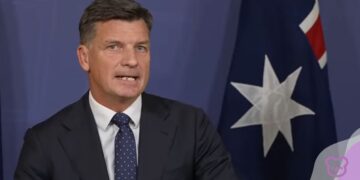
Minister for Education, the Hon Jason Clare, gave the opening keynote address – without mentioning international students at all. He did briefly reference the legislation in Parliament on “foreign arrangements”, but in a speech characterised as “an update on what’s happening (in the sector), and the big things to watch out for over the next few months”, it was striking there was no mention of international education.
The AFR’s Education correspondent Maani Truu clearly thought there were questions to be asked on the state of international education. She asked the Minister about the significant increase in visa rejection rates the sector was seeing. His response made clear that he attributes the increase to “integrity measures” being enacted by the Department of Home Affairs. He then went on to explain that student visa fees have tripled in the last few years – “how do you think we’re finding the money to pay for the Universities Accord measures” like more Commonwealth-Supported Places for domestic students and more bridging course places. The Minister made the same point in an interview on News24 (previously Sky News) on Monday.
In a panel session focussed on “the big picture” there were two important statements from sector leaders related to international education. Firstly, ATEC Chief Commissioner, Prof. Barney Glover AO, talked about his hope that ATEC could help bring greater stability for the university sector – providing institutions with four-year horizons on domestic and international students. He was specifically hopeful that in relation to international education, the Minister for Education might give ATEC (and therefore the sector) an indication of the trajectory of the National Planning Level over the next four years and not just year-on-year – allowing for better institutional planning.
Speaking on the same panel session, QUT Vice Chancellor, Prof. Margaret Sheil, took the opportunity to again highlight the lack of funding universities receive for their indirect research costs. In the case of QUT she indicated that’s $35m per annum, and as she pointed out – universities would be much more relaxed about changes in international education if their research costs were fully funded.
University of Sydney VC, Prof. Mark Scott, was on the same panel and explained his university’s relatively high proportion of international students with the observation that “great universities around the world are often highly internationalised”. He then argued that Sydney needs a high proportion of international students (approximately 50% of students at Sydney University are international students) to support the university’s research funding and infrastructure costs. He also cautioned that the recent 30 percent decline in Chinese postgraduate students looking to study in Australia is part of a broader trend away from the Big Four destination countries (Australia, Canada, the UK and the US) because of government policy settings. Instead Chinese students are increasingly looking to study at home (as Chinese universities perform increasingly well on international rankings) and in the region. This shift was going to prove “very challenging” for Australia he cautioned.
University of Canberra Vice Chancellor Prof. the Hon Bill Shorten, in a candid one-on-one interview, called out a number of conflicts and tensions in the sector (in a manner that does not usually happen in public events like this). His candour included his observation about the “hunger games” for universities as they compete with each other for international students in a difficult environment where government funding is not enough to deliver on all of the requirements placed on them. He did suggest though that the regulatory impost of international student numbers being capped was problematic.
In a later discussion on “the next university business model” the Vice Chancellors of both Western Sydney University, Prof. George Williams, and Charles Sturt University, Prof. Renée Leon PSM, explained in real detail how international students help them support their domestic students and cross-subsidise the delivery of critically important courses, like veterinary science in regional New South Wales that have small class sizes and would otherwise be uneconomic to run. IEAA’s Phil Honeywood speaking on the same panel pointed out the obvious – the government’s reforms to international education are not just having a negative impact on our public universities but also on independent providers. He reiterated his previously expressed concerns that ATEC lacks a commissioner with specific international education expertise, and a commissioner with experience in the private higher education sector.
Having been privileged to attend many higher education conferences and events over the years – there was a noticeably greater degree of candour from leaders in the sector than is usually the case. That probably in part reflects the personalities of the leaders chosen to speak at the conference – but it may also be a sign of the difficulties the sector is facing.
With international education and migration unlikely to be far away from the media headlines in the months and even years ahead the sector can only hope that government finds a way to explain the ongoing benefits of migration and international education to a sceptical public – or else one wonders if the ‘hunger games’ Prof. Shorten described might not move closer to the ‘Sicilian knife fights’ he said he’s seen in politics. For the sake of our institutions, staff and crucially our students let’s hope not.