





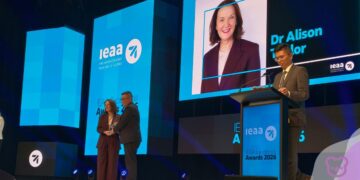







A publication outlining the key guiding principles and propositions developed through a forum hosted by TEQSA and the University of Technology Sydney in August 2023 was released last week at the TEQSA conference.
Authored by Jason M Lodge, The University of Queensland, Sarah Howard, University of Wollongong Margaret Bearman and Phillip Dawson, Deakin University and developed in consultation with a wide range of experts and sector leaders, it aims to offer direction on how assessment methods can harness advantages and mitigate risks posed by AI, specifically generation AI.
“Together, the sector can harness the opportunities offered….to enhance assessment design and to build a better higher education system emphasising partnerships, consensus, and the importance of knowing and working alongside our students.”
The document outlines two guiding principles:
- Assessment and learning experiences equip students to participate ethically and actively in a society where AI is ubiquitous.
Emphasizes the need to prepare students to engage with AI actively and ethically in their academic and professional lives.
- Forming trustworthy judgements about student learning in a time of AI requires multiple, inclusive and contextualised approaches to assessment.
Advocates for the use of multiple assessment methods that consider the diverse needs and backgrounds of students, ensuring inclusivity and contextual relevance.
And proposes that assessments should emphasise:
…appropriate and authentic engagement with AI.
Suggests designing assessment tasks that allow students to work with AI in a manner that is appropriate, ethical, and aligned with the learning outcomes.
…a systemic approach to program assessment aligned with disciplines/qualifications.
Advocates for a holistic approach to assessment that spans an entire program of study, considering the specific disciplines and qualifications rather than focusing solely on individual tasks or units.
…the process of learning.
Highlights the importance of assessing and capturing the learning process over time, providing opportunities for students to demonstrate critical thinking, decision-making, ethical considerations, and reflection on their learning journey.
…opportunities for students to work appropriately with each other and AI.
Emphasizes the need to create opportunities for students to collaborate effectively with both their peers and AI, defining clear boundaries and ethical considerations for their interactions.
…security at meaningful points across a program to inform decisions about progression and completion.
Suggests implementing targeted security measures at critical points throughout a program to inform decisions regarding student progression and completion.
The authors are careful to note that the advice in the publication is not designed to be prescriptive and is “intended to guide ongoing discussion and decision-making and will be revisited and updated” as “technologies evolve”.
The document adds to the TEQSA Higher Education Good Practice hub, an increasingly valuable resource found here: https://www.teqsa.gov.au/guides-resources/higher-education-good-practice-hub
Reference: Lodge, J. M., Howard, S., Bearman, M., Dawson, P, & Associates (2023). Assessment reform for the age of Artificial Intelligence. Tertiary Education Quality and Standards Agency.












