








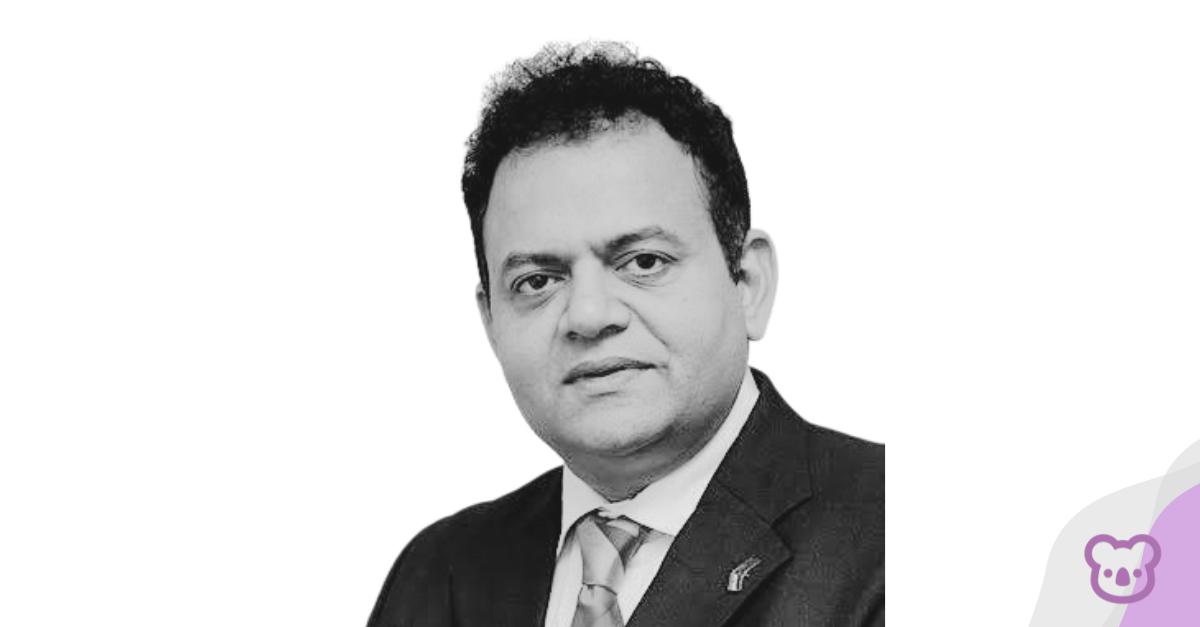
Just this week, Ravi Lochan Singh and the company he founded to assist students in studying abroad celebrated 33 years of operation. It is a huge milestone, and the Koala caught up with Ravi and spoke to him about his journey.
You were studying at Bond University, I believe, where you had the idea for Global Reach?
Global Reach traces its roots to an on-campus discussion between three graduating Indian MBA students at Bond University in Australia. Returning to India as the first Indian alumni, the University was keen to initiate a chapter of the Alumni and we proposed that we would promote the University too. The timing was just right. Indian economy opened up in 1991 and around the world several polytechnics turned into Universities, including in Australia. The three of us were Sushil Sukhwani, Shiv Kumar and myself. After the first event in 1991, Shiv chose to move to Singapore and thus the partnership was between Sushil and myself. The initial representation for Bond University was followed by us running roadshows for multiple Australian Universities. By mid 90s, we had parted ways to promote our own brands. Today, Sushil’s company Nivea (later rebranded as Edwise) is a leader in its own right while my company Global Reach has developed its own strength. Global Reach owes its existence to the initiative taken in 1991 and also to Bond University for having promoted and encouraged the returning alumni. And funding some of the activities.
Can you elaborate on how and why you started offering consultancy services, originally?
Then India of 1991 was very different. Forget the internet and emails, the postal system was also very time consuming. India only liberalised its economy in late 1991 and prior to this, there were significant restrictions on availability of forex for studies overseas. It is not that Indians were not travelling overseas to study but it was largely for studies that were funded through scholarships. Any student looking for information would spend countless hours at the USIS (now USEFI or American Library) and British Council. Once Universities were shortlisted, airmails would be sent out for prospectuses and depending on the reliability of airmails, some would be lucky to hear back from the institutions. There presented an opportunity for a counsellor who would pre-organise the prospectuses and be able to hand-hold the students through the process. Also, for the Australian Universities, there was no information service such as the British Council or the USIS. This is where the returning MBA graduates found an opportunity and pitched in the service. I am aware that some consultancies claim to also have started around the same period and so possibly they saw the same opportunity.
Why do you believe you have been successful in building up the business to such a good size and with such a good reputation?
I would state with no hesitation that Global Reach may have been initiated by me but has grown only because of its team and several members who have given their full working lives to it. This is an absolute truth. We have over a dozen managers who have now been with GR for 15+ years and a few even for 25+ years. This is remarkable. GR is an adult that is breathing on its own. And there is a clear mission statement that drives in. In addition to the team members who will always ensure the interest of its clients (students, education providers and government agencies) and who have been trained to not allow any compromise with the standards knowingly, GR has also partnered with some key individuals with similar values as a way to expand. I have tried to implement the taught management principles by way of looking for niche positioning in markets where we were late entrant. Today, GR is the only agency that operates in as many countries from South Asia and apart from India, it is the market leader in Nepal, only such agency in Bhutan and amongst the leading few in Bangladesh and Sri Lanka. Within India too, GR also focussed on developing several regional markets and being the first entrant, has greater market share in Eastern, Central and North Eastern India. GR takes pride in its work in Rajasthan and also in South India. There was an article in pie earlier this year that had tabulated all university contracts and it confirmed that Global Reach is amongst two agencies (IDP being the other) to have been engaged by ALL Australian Universities.
Along the way I have also received recognition and encouragement. Received the Alumni of Year award by Australian Government over a decade ago and was also honoured by AIRC for the work in the industry a few years ago. The company received the Education Agency of the year award in the inaugural edition of the Pie Awards and only recently I was awarded by my home state in India for the contributions. There are a few other acknowledgements and I don’t aspire for the awards but it does feel good.
How has the view of governments and immigration depts changed towards the role of agencies as a profession since you have been in business?
This is a very interesting question. Australia was the first country to embrace the role of “agents” and in India, the Australian High Commission displayed foresight way back in 1996 and promoted a locally registered peak agent association in AAERI. It was housed within the High Commission for its first five years. I have had the privilege of serving as its President on several ocassions. By mid 90s, British Universities too started signing agent agreements though the leading Universities remained hesitant. British Council was unable to make up it’s mind in the beginning if the Agents were supplements or competitors to their service. New Zealand institutions had begun to make their trips to India and sign up agencies but in 1998, a consortium of about 14 institutions came together under IEEN (India Education Export Network) and this was a major development. Global Reach has been part of all these developments and now has supported an independent NZ education agent association named NZERI. Immigration departments have worked closely with agents too. Britain introduced a Trusted Partner scheme for agents. Australia selected a few agencies for a PVA Pilot project and NZ proceeded to fast track the visas for selected agents. Universities from USA and Canada have had difficulty in accepting agents for various reasons. I believe that the formation of AIRC has helped in growing an awareness within USA on the role of agents and I feel proud of the fact that I have been a part of the group that brainstormed the concept and Global Reach was amongst the very few agencies in the pilot phase.
How difficult was it to expand overseas into new countries yet retain the same service standards?
There have been some challenges. Global Reach had to decide on the model of operation and the method for the expansion. I have had a bad experience with franchising with computer training institutes and felt that in such a method of expansion, the franchisee doesn’t gain and often leads to disenchanted franchisees. Thus it was ruled out of our model. Further, I didn’t believe in sub-contracting too. However it is also a fact that India is several markets within a country with their own uniquenesses. Countries like Nepal, Bhutan and Bangladesh had restrictions in the “education space” for foreign investments. Thus Global Reach has counsellors across all locations (across the countries) recruited and trained centrally and on common payroll. It further does believe in local entrepreneurship and has partnered with individuals who bring in local supervision and direction to the operations without making it a franchise arrangement. This is the key to us having been able to retain the same core values and standards.
And what of the future of Global Reach?
This is at the top of my mind at this time and ever since the pandemic. As I mention, I treat it like a living entity and have made effort to be seen as independent of me often. We are also a family enterprise and my father (Dr Sitasaran Singh, aged 87) is the Chairman. Shobhna (my wife) and I are delighted with our Son Aditeya taking an active interest in its operations and bring in a fresh perspective. My daughter, Akanksha too is involved in the background and so is my nephew, Ishaan. They are all professionally skilled in various aspects of the operations. My definition of the family business includes the various individuals who have given their working life to GR, and this includes employees who have been with us for 15+ years and all our HOO partners who have led the company in certain regions partnering with me. God has been kind and I have some wonderful assets in people who have been with GR for a long time and continue believe in it. It is also not the same company that took birth in 1991 and has evolved with changing externals. Today we use technology and tomorrow it will be AI but the core counselling will remain our USP and it is human interface powered by our mission statement. We may need funding and investments to scale the operations but that is for the future.
The Koala congratulates Ravi and Global Reach on this milestone.