

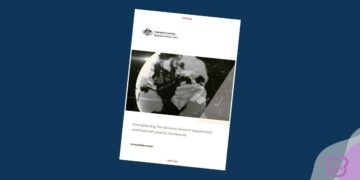










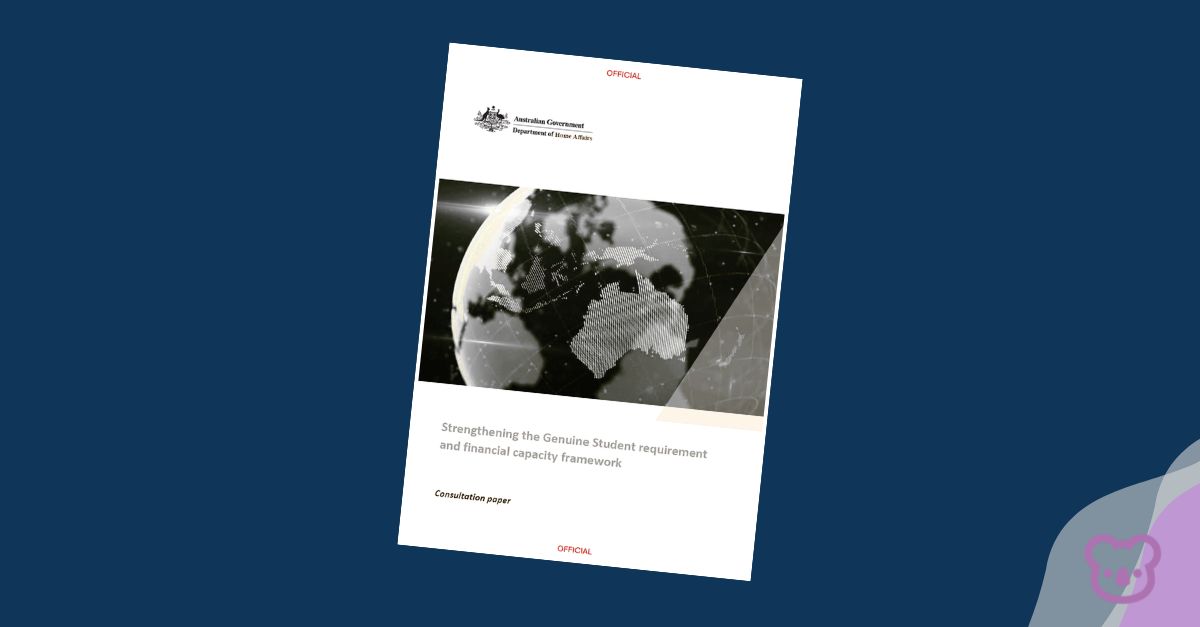
Requiring prospective international students to open Australian bank accounts and deposit funds before applying for a student visa is among the options being considered by the Australian Government as part of proposed reforms to financial capacity requirements.
In his address at the Australian International Education Conference (AIEC) on Friday, Assistant Minister for International Education Julian Hill announced that the government would seek sector feedback on new financial standards for South Asia and a proposed replacement for Ministerial Direction 106 (MD106), which guides the assessment of the Genuine Student requirement.
However, the consultation paper proposes interim changes extending beyond South Asia to applicants from all Evidence Level 3 countries, regardless of the Evidence Level of their chosen education provider.
Although the consultation paper begins with proposed changes to MD106, it is the options for demonstrating financial capacity that are the most far-reaching. Requiring prospective students to transfer substantial funds to Australia before even applying for a visa would fundamentally change international student recruitment and require an entirely new financial and regulatory infrastructure.
Strengthening financial capacity
The consultation paper outlines four options for strengthening financial capacity requirements, including three that would require prospective students to hold funds in an eligible Australian bank account or prescribed financial product in their own name before applying for a visa. Under the proposed arrangements, students covered by the new framework would also have to provide financial evidence when lodging their application, regardless of their chosen provider’s Evidence Level.
The most stringent option would require students to deposit funds covering 50% of total tuition fees and prescribed living costs for their entire course or package of courses into an Australian account at least one month before lodging their visa application. Access to these funds would then be controlled through a prescribed release schedule.
A second option would require the same amount to be held in an Australian account for at least three months before applying, but without mandatory restrictions on when funds could be withdrawn.
The third option would require students to deposit 100% of their first-year tuition and prescribed living costs, or the remaining costs of their course if shorter, at least three months before applying. Restrictions on the release of funds could apply to particular groups of students.
A fourth option would allow recognised education finance arrangements, including approved loans and other financial products, with funds transferred to an Australian account where practicable.
The proposals represent a significant departure from the current system, under which students can demonstrate financial capacity through bank deposits, approved loans or evidence of sufficient annual income, without having to transfer funds to Australia before applying for a visa.
Students would also need to provide independently verifiable evidence of the ownership, source, accessibility and sustainability of their funds.
Beyond the considerable practical challenges, there are questions about what these proposals could mean for Australia’s competitiveness as a study destination. Prospective students could be required to transfer substantial sums of money to Australia months before applying for a visa, with no guarantee of approval and no certainty about how easy it would be to recover their funds if refused. With high visa refusal rates already deterring prospective applicants, it is difficult to see how these additional requirements would not discourage some genuine, financially capable students from choosing Australia.
The consultation paper provides little detail on how the arrangements would work in practice, instead seeking feedback on issues including fees, exchange rates, privacy, refunds and what happens when a student is refused a visa, defers or withdraws. There are also questions about whether Australian banks would be willing and able to open accounts for prospective students who are still overseas and have not been granted a visa, and what identity verification and regulatory requirements would apply.
The Australian account models would require substantial legal, banking and systems work, as well as financial institutions willing and able to develop and administer products specifically for this purpose.
The consultation seeks views on which of the four options would best balance financial assurance, accessibility and practicality, as well as the proposed funding thresholds, access to funds, consumer safeguards and the impact on student recruitment already underway. The proposals are longer-term options and no decisions have been made.
Earlier changes for higher-risk countries
While the Australian bank account models would take time to implement, the Department is also considering earlier changes that would tighten financial evidence requirements for applicants from Evidence Level 3 countries. Under these proposals, all primary applicants from these countries would have to provide financial evidence when lodging their visa application, regardless of the Evidence Level of their chosen education provider.
Applicants would also generally need to provide at least six months of bank transaction history, with longer periods required in higher-risk circumstances. The proposals would tighten the rules around acceptable sources of financial support, generally limiting these to the applicant, their spouse, parents or another prescribed supporter.
Unsecured personal loans and loans that had not been disbursed would generally no longer be accepted, with greater reliance placed on secured loans, government-backed lending and recognised education finance arrangements.
The existing prescribed financial amounts would initially remain unchanged, with the focus instead on improving the quality and verifiability of financial evidence.
The Department is seeking feedback on whether the interim requirements should apply to all primary applicants from Evidence Level 3 countries or whether a pilot involving particular groups of students should be considered.
A new Ministerial Direction
The consultation paper also canvasses changes to MD106, which guides how decision-makers assess whether student visa applicants meet the Genuine Student requirement. The proposed changes would retain individual assessments but make a clearer distinction between students starting a new course in Australia and those continuing or returning to study.
For new students, the focus would be on whether their proposed study plans are credible and achievable, including their educational background, choice of course and provider, financial preparedness and intended outcomes.
For students continuing or returning to study, greater weight would be placed on their record in Australia, including academic progress, course changes, gaps in study, employment and financial circumstances.
This approach is consistent with Hill’s comments at AIEC about the government’s determination to reduce the number of what he described as “permanently temporary” migrants. Hill defended recent restrictions on onshore visa applications and course progression, saying they were necessary to prevent people moving repeatedly between temporary visas to extend their stay in Australia.
The proposed direction would also give more favourable consideration to students progressing through transnational education pathways, where there is evidence of genuine progression and good study outcomes.
Another change would more clearly separate financial capacity from the Genuine Student assessment, with financial requirements assessed separately rather than effectively being considered under both frameworks.
The Department also wants to move away from formulaic Genuine Student statements, proposing changes to application questions to obtain more useful information and make the reasons for visa decisions clearer.
Feedback is being sought on whether different considerations should apply to new and continuing students, and which elements of MD106 should be retained, changed or removed. It is also asking how the Genuine Student framework could better support consistent assessments of whether study is the primary purpose of a visa application.
Submission details
Submissions on the proposed changes to the Genuine Student requirement and financial capacity framework close at 12pm AEDT on Monday, 23 November 2026.
Submissions should be emailed to student.visa.consultation@homeaffairs.gov.au.
The Department has advised that submissions will not be published on its website.












