










Education Centre of Australia (ECA) is taking its first Australian qualification offshore in China, partnering with Wuhan University to deliver an Information Technology diploma to students without them having to leave the country to access an Australian qualification.
The partnership, signed in July after almost a year of discussions, will see ECA College deliver Diploma courses in Information Technology through Wuhan University’s College of Continuing Education.
The move also gives ECA its first offshore delivery site in China, following the successful registration of Wuhan University as an approved offshore delivery location with the Australian Skills Quality Authority (ASQA).
For a sector increasingly looking beyond traditional international student recruitment, the agreement is another example of how transnational education is becoming a more important part of the international education landscape.
Rather than requiring students to travel to Australia at the outset, the model allows them to undertake an Australian qualification in China, with the potential to progress to further study in Australia.
This is becoming increasingly important as international education providers grapple with rising costs, visa uncertainty and changing student expectations. For students and families, the ability to begin an international education journey closer to home can reduce some of the financial and practical barriers associated with overseas study.
ECA says the diploma will provide students with practical, industry-relevant skills while supporting progression to higher education and future careers.
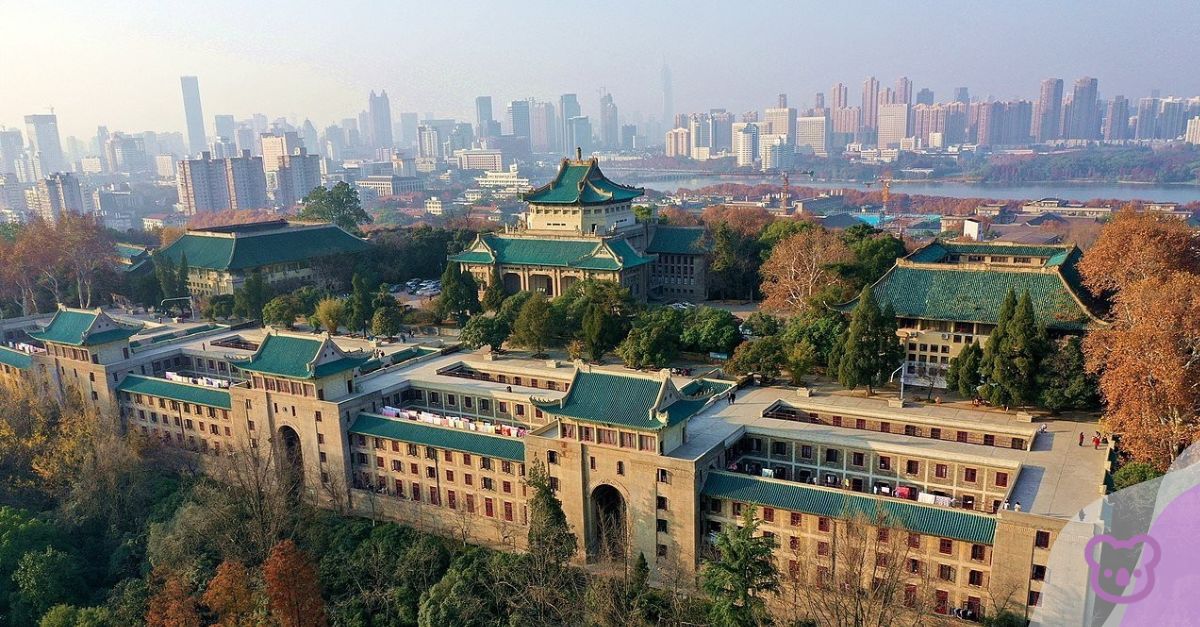
The partnership also gives ECA access to a substantial local academic environment. Founded in 1893, Wuhan University is a comprehensive research-intensive university and a member of China’s Double First-Class Initiative, the Chinese government’s program aimed at developing leading universities and disciplines.
Lina Wang, Regional Director, Greater China at ECA, said the partnership would create more opportunities for Chinese students to access Australian education closer to home.
“We are proud to work with Wuhan University to create more opportunities for students in China to access Australian education closer to home,” she said.
Wang said the program would support students in developing practical knowledge, broader perspectives and capabilities to help them progress to higher education and pursue their career goals.
Stephanie Smith, Trade and Investment Commissioner for Mainland China, Hong Kong and Taiwan at Austrade, also welcomed the initiative, describing it as creating additional pathways for students pursuing international education aspirations.
The partnership is notable not simply because it adds another offshore program, but because of the direction of travel it represents.
For years, the dominant Australian international education model has been built around students physically crossing the border to study. TNE turns that model on its head, allowing Australian institutions and qualifications to travel to students instead.
China remains one of Australia’s most important international education markets, but the relationship is increasingly about more than student commencements in Australian campuses. Offshore delivery, pathway programs, online learning and other forms of collaboration provide institutions with ways to deepen engagement while responding to students who may not be ready, able or willing to relocate immediately.
For ECA, the Wuhan University agreement provides a platform for that broader engagement. For Australian education more generally, it is another reminder that international education does not necessarily have to begin with an international flight.
The first students may be studying an Australian qualification in Wuhan. The longer-term significance could be the pathway that takes them from there to Australia.