











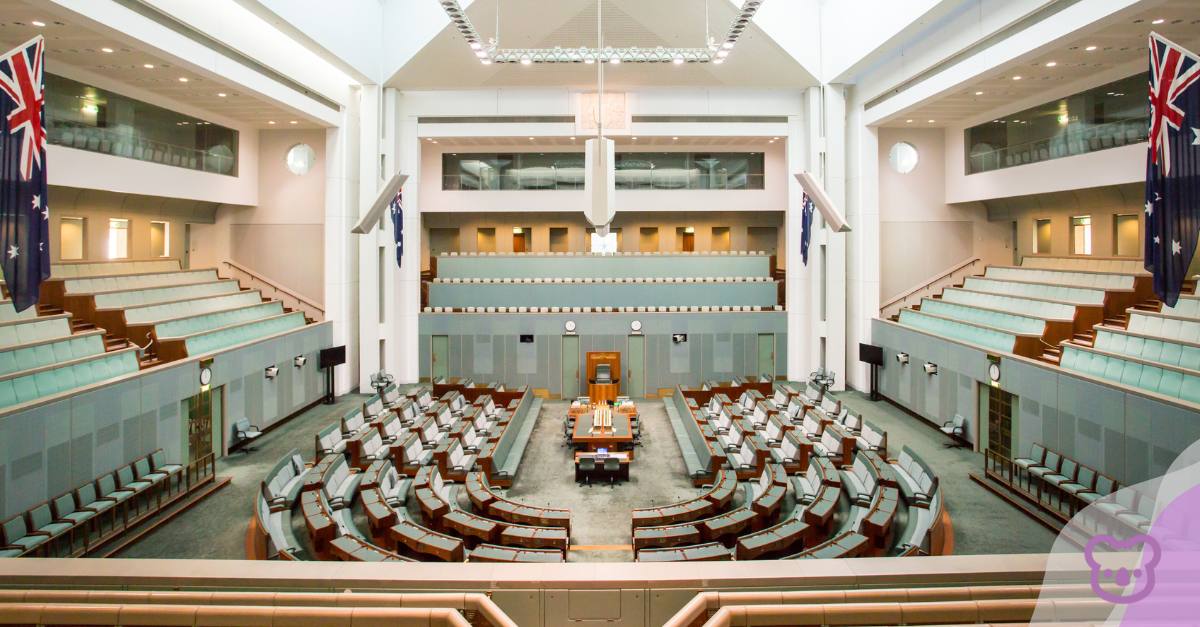
The ESOS Amendment Bill passed through the House of Representatives yesterday with Minister for Education, Jason Clare, not backing down on his commitment that the legislation will apply from 2025, or the harsh penalties involved for those that exceed their enrolment caps. However, following several members of the crossbench and the Coalition speaking out against aspects of the bill prior to and during its debate, Clare signalled that the government would consider changes to the bill once it reaches the Senate.
In response to amendments proposed by Independent MP, Zali Steggall, he said “I do identify, in your amendments, things where we can improve the bill, and I’ll seek, through the work of the Senate committee as well as through the ongoing consultation that we’re having with the higher education sector and the vocational education sector, to look at what amendments we might be able to accept when the bill is debated in the Senate”.
This appears also to be the case for the opposition, despite voting for the passage of the bill in the lower house. Liberal MP, Alex Hawke said that “the coalition reserves our position in relation to this until we see the Senate inquiry. We want to know a lot more about the impact of the bill.”
Proposed amendments to the bill
A range of amendments were moved by members of the crossbench, including proposing a sunset clause and delaying implementation of the legislation, with only one supported by the government, legislating a review of the consequences of the bill.
When speaking in opposition to the proposed sunset clause, Clare told Parliament that the government’s intention was to “look at how we might transition these powers to an appropriate independent body such as the Australian tertiary education commission, once it is established”.
Clare also told Parliament that no delay was possible because “we need to ensure that we secure the social licence for this sector and provide it with the certainty that it needs. I’ve said a
number of times that it’s important that this begin from next year, and that’s what the bill sets out”. He acknowledged, however, that there were concerns about the definition of ‘enrolment’ and that he was “happy to continue the conversation with you and other colleagues as we move forward to the Senate.”
The proposed amendments can be seen in detail here.
Speaking in the affirmative for the bill
The main concerns about the international education sector repeated by MPs supporting the bill were:
- Legitimacy of providers and agents
- Accommodation shortages
- A rise in asylum seekers
- Students holding consecutive, multiple visas
The sector also still has a way to go in managing perceptions about international education, with MP Rebekah Sharkie stating, among other things, “celebrating the education sector as an export industry has created an environment for opportunistic agents and providers, many of whom are illegitimate, and they exploit the system”.
Some notable extracts from Hansard are:
Ms SHARKIE (Mayo) (12:59, 13/08/24): The education system—or the education export sector, as it’s often referred to— is an important economic contributor to the country, but I question the veracity of the notion that it is actually an export. Apart from tuition fees, all other economic contributions are typically the consequence of students working while here; hence, the figures of $50 billion and more injected into the economy, as proffered by the education sector, are wildly inaccurate and, I would say, perhaps misleading. Celebrating the education sector as an export industry has created an environment for opportunistic agents and providers, many of whom are illegitimate, and they exploit the system. Overwhelmingly, evidence shows us that there are sham arrangements that provide nothing more than a vehicle for people to obtain a workaround for entry into our country. This is not good for the reputation of our education system, and it’s certainly not good for the many hardworking Australians who are finding it difficult to find accommodation. The upshot of our grand education export push is the arrival of more people into our cities and regions who cannot be realistically accommodated. I would also say that it is not good for the many vulnerable people who come here whose expectations, perhaps, are not met and who, therefore, are somewhat forced into servitude.
Ms CHESTERS (Bendigo) (18:31, 12/08/24): I say that it’s a sector that needs to be saved from itself because I disagree that we should be viewing higher education as an export industry. I disagree with that statement. Education is a fundamental right, and the first role of our universities should be providing a world-class education to Australian domestic students first and foremost. They are publicly funded universities. And at some point, about a decade ago, they reached a tipping point. They reached a tipping point when our universities went from having a majority of academic and academic support staff to having more general and marketing staff… This bill is about ensuring integrity. It is about ensuring that we are getting universities to focus on what they’re here to do: provide quality higher education. This idea that caps will somehow interfere with that is nonsense.
Mr KATTER (Kennedy) (16:17, 13/08/24): The exports and imports figures are now doctored up
with sale of student visas. That is regarded as income for Australia! It’s not; it’s a round robin. They come here, they stay here, they get a job driving taxis or after hours whatever, and they take the job off an Australian.
Speaking in the negative against the bill
Government overreach was the principal theme for MPs speaking against the bill, including Chandler-Mather, Greens MP who said, “the bill demonstrates unprecedented government intervention in the university sector, and that has the possibility of government simply using the legislation to take aim at providers or courses that it does not like.”
Other notable comments from Hansard include:
Ms DANIEL (Goldstein) (17:12, 12/08/24): As I’ve said publicly, the Education Services for Overseas Students Amendment (Quality and Integrity) Bill 2024 is a sledgehammer to crack a walnut—and the wrong walnut… If rorting were the real concern, this legislation would focus specifically on providers of concern and simply introduce measures to ensure more effective regulation of their practices.
Mr CHANDLER-MATHER (Griffith) (16:52, 12/08/24): We welcome the changes introduced in the bill to reduce exploitation of international students and weed out non-genuine education providers and agents. Nevertheless, the introduction of international student caps and broad ministerial powers to interfere in the tertiary education sector is something the Greens cannot support. The government is attempting to write extraordinary powers for itself into legislation, allowing the education minister to set limits on uni enrolments down to specific providers, courses or locations. This is an extraordinarily heavy-handed approach.
Ms SPENDER (Wentworth) (18:17, 12/08/24): I urge the government to reconsider this course of action and look for other ways that it can manage the education system without this draconian impact and the likely impact on the broader strength of this export industry that we have built up—the universities have built up, in particular, as well as the vocational community—over many years.
Ms TINK (North Sydney) (18:46, 12/08/24): Ultimately, many in my community are concerned this legislation simply goes too far. Under the guise of quality and integrity, the necessary checks and balances to ensure effectiveness are conspicuously absent. This then leads them to question whether this legislation is in fact a thinly veiled response to a larger political debate around immigration more generally, for it seems the two major political parties are intent on targeting international students in a bid to slash migration in a poll-driven war on the cost of living and on housing. With that frame in mind, then, this legislation fails to strike a balance between improving the quality and integrity of the scheme and ensuring sustainable growth for the sector.
Dr RYAN (Kooyong) (19:15, 12/08/24): Presenting the Education Services for Overseas Students Amendment (Quality and Integrity) Bill 2024 as an education bill is a misrepresentation. This bill reflects the fact that the sector has become an unwilling and unfortunate victim of the major parties’ race to the bottom on immigration numbers. It is indeed a very sad day when we see our major political parties competing to damage an important Australian growth sector and export industry.
Mr JOYCE (New England) (13:04, 13/08/24): I want to read out something from the vice-chancellor of the University of New England. He says: “We’ve always had a very deep and extensive assessment of bona fide students. The genuine student test is something we’ve spent a lot of time and energy on. We haven’t ever had a default of a single [international] student in any degree in our history, not one.” This is from the University of New England. We don’t have a problem with international students, and we don’t want the government to create one. It’s vitally important for the financial viability of regional universities that a problem happening in the cities does not manifestly become an infliction on regional universities.
Ms STEGGALL (Warringah) (13:09, 13/08/24): I am concerned that this legislation, rather than standing up for this important industry, is going to damage a very important economic driver of the Australian economy. This is a very important industry, and through this the government is I think looking at driving down immigration numbers because of the scare campaign from the opposition. But by hurting and capping international students, we are putting at risk our international reputation and a major economic driver.
Ms CHANEY (Curtin) (16:27, 13/08/24): If the purpose of this section is to allow international students to remain in Australia only if they’ve completed a course relevant to Australia’s skills needs then surely this can be engineered by using visa conditions and migration laws. Far more concerning, however, is how this bill is conflating Australia’s housing crisis with the arrival of international students. Let’s be clear: the housing crisis has not been caused by international students.
The Hansard scripts for the two days of debate on the bill, 12 and 13 August, can be found here.
What else did we learn from the Minister for Education?
In his support of the ESOS Amendment Bill, Clare told Parliament that the bill would achieve the following objectives:
- Protecting the sector and students from bad actors; providers and agents who funnelling students into criminal activities and exploit them.
- Setting up international education for sustainable growth over the long term, noting that growth in the sector is “essentially unregulated” and that “we need to manage the sector’s growth in a way that benefits Australia and our institutions whilst maintaining the sector’s social licence”.
Senate Education and Employment Committee Hearings
The bill now moves to the Senate, where there is currently an open Senate Committee hearing.
“I am also looking forward to seeing what the Senate Education and Employment Committee has to say in its recommendations in response to some of the issues you have raised in your contribution just then” said Clare, responding to amendments proposed by Independent MP Kylea Tink.
Day 1 proceedings were covered by the Koala here. The Koala understands a Day 2 has been scheduled for 26 August, with several people close to the Koala invited to participate. The original date for the Committee to report was 15 August, and questions on notice from the proceeding on Day 1 were requested to be sent to the committee by 20 August.
The Koala looks forward to day 2 of hearings and is not entirely sure when the process will fully wrap up.
Stay tuned.












