









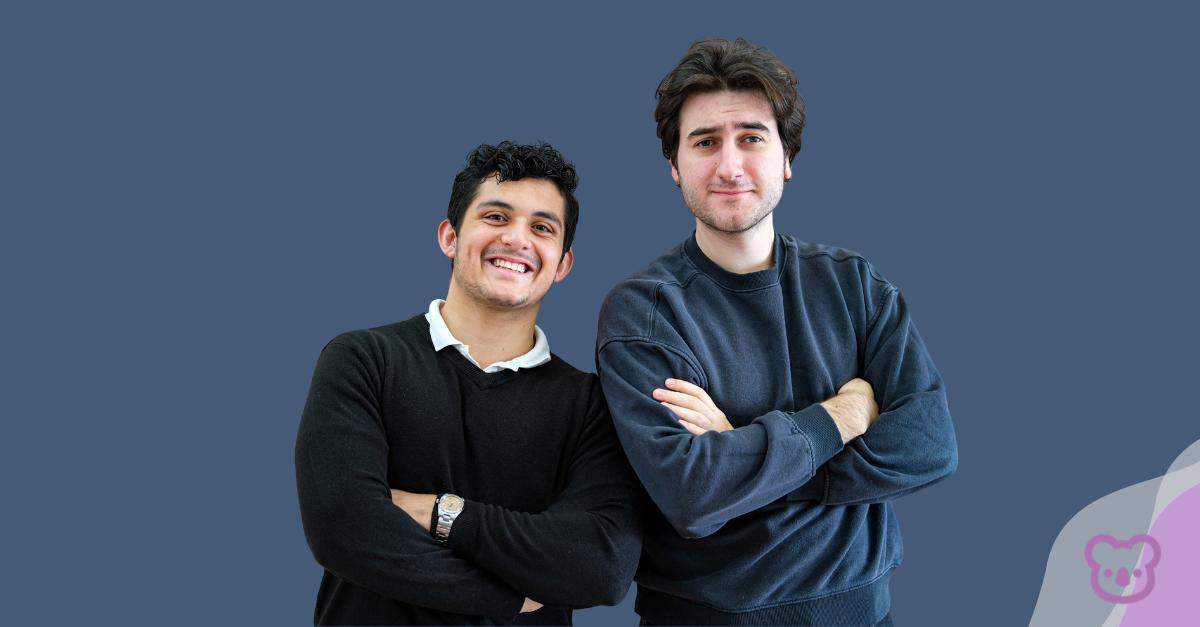
For most university students, study sessions at a suburban campus hub are a stepping stone towards graduation. For childhood friends Anis Mihrshahi and Leon Mojarrabi, they have become the launchpad for one of the most coveted opportunities in global technology.
The University of Southern Queensland and Griffith University students are one month into their time at Y Combinator, the Silicon Valley startup accelerator that helped launch companies including Airbnb, Dropbox and OpenAI. Out of more than 80,000 applicants this year, only around 200 startups secured a place, giving the Brisbane founders entry into one of the world’s most exclusive entrepreneurial networks.
The acceptance comes with US$500,000 in seed funding and three months immersed in Silicon Valley’s startup ecosystem, where founders receive intensive mentoring, investor access and the opportunity to rapidly scale their businesses.
For Australian universities, the story is also a reminder that student innovation increasingly extends well beyond research commercialisation offices and formal entrepreneurship programs. Some of the country’s most ambitious founders are building globally competitive companies while still completing their degrees.
Their company, GutGutGoose, sits at the intersection of biotechnology, artificial intelligence and personalised healthcare. Rather than selling standard probiotics that offer the same formulation to everyone, the startup is developing customised probiotics based on an individual’s unique gut microbiome.
The founders argue that the current probiotic market has failed to keep pace with the science.
“The gut microbiome is now linked to chronic disease, immune function and mental health across hundreds of peer reviewed studies,” said Mojarrabi.
“But many of the products currently sold in the probiotic market don’t work particularly well for most people. We’re building a more personalised approach based on an individual’s microbiome rather than a one size fits all product.”
The concept emerged after the pair immersed themselves in microbiome research and discovered a disconnect between emerging science and the products available to consumers.
“It started with reading the microbiome literature and noticing that the consumer category was selling something the science had already said didn’t work,” Mihrshahi explained.
Initially, their AI models failed to capture the complexity of the gut ecosystem.
“We approached a senior researcher in the field for guidance, and they told us, very politely, that what we’d built was wrong.”
That setback proved to be a turning point.
“What clicked was that this isn’t AI for the sake of AI, which is what a lot of companies in this space are doing. The answer is treating an ecosystem like an algorithm: the maths has to respect how strains actually compete, cooperate and colonise inside the gut.”
As universities continue debating the role of artificial intelligence in education, GutGutGoose offers a different perspective. Rather than replacing expertise, AI is being used to solve a complex biological problem that would be impossible through traditional analysis alone. The founders are quick to point out, however, that AI is only as valuable as the data that trains it.
“The gut shapes everything. The science on that part is settled,” Mihrshahi said.
“AI is supposed to tell us what to do about it, but AI is only as good as the data it learns from, and that data barely exists.”
That challenge has become the company’s biggest opportunity.
Beyond developing personalised probiotics, GutGutGoose is creating a longitudinal microbiome dataset that records what happens before and after interventions over time. Unlike existing microbiome databases, which largely provide isolated snapshots, the founders hope their approach will generate the kind of real world evidence needed to train future predictive AI systems.
“Every GutGutGoose customer fills the gap: a before state, a defined intervention, a verified after state,” Mihrshahi said.
“Nobody else is generating this kind of data at consumer scale.”
The scientific foundation has already progressed significantly. According to the founders, their prediction engine has been validated across two independent clinical studies, with 16 Therapeutic Goods Administration licensed probiotic strains available and a provisional patent filed. An initial alpha cohort has been completed and the upcoming beta program is already nearing capacity.
For Mojarrabi, the commercial response was almost as surprising as the scientific breakthrough.
“The science took us two years. The selling took us five phone calls,” he said.
Despite the technical complexity of the business, the moment that acceptance into Y Combinator arrived was refreshingly human.
“When we got the call, Anis started screaming and jumping around,” Mojarrabi recalled.
“It was something to see. Our families have been incredibly proud and supportive.”
The pair continue to study while working from the Inala University Study Hub, highlighting the increasingly important role that regional and community learning spaces can play in supporting student entrepreneurs.
Their long friendship has also become one of the company’s greatest strengths.
“The value of a long friendship isn’t just trust; it’s the practice,” Mihrshahi said.
“We’ve built the resilience to resolve conflicts easily, and our communication has gotten really good over the years.”
The founders see Y Combinator as far more than a funding opportunity.
“The funding is only one part of it,” Mojarrabi said.
“The bigger value is spending three months in San Francisco surrounded by experienced founders, investors and mentors who have helped scale some of the world’s biggest technology companies.”
Their ambition extends well beyond building a successful probiotic company. Ultimately, they hope their growing dataset will help transform preventative healthcare by giving clinicians and patients a far clearer understanding of how an individual’s microbiome changes over time.
“We want someone to be able to walk into a clinic with a gut concern and get shown their own data, instead of being told it’s stress,” Mojarrabi said.
What the Koala loves is that GutGutGoose is a reminder that some of Australia’s most exciting startups aren’t emerging from corporate incubators or research labs. They’re being built by students juggling lectures, assignments and ambitious ideas that are attracting attention on the other side of the world.
The journey from Brisbane study hub to Silicon Valley may be unusual, but as artificial intelligence continues reshaping healthcare, education and innovation, it is unlikely to be the last story of its kind.
… and isn’t that worth celebrating?