








According to ISC Research, bilingual schools have experienced a 7.9% increase around the world since 2011. Globally there are 12,281 international schools teaching 5.66 million students, employing 549,000 teaching staff and generating $53.5 billion from fee income.
The world is becoming increasingly international, and Australia isn’t keeping pace.
What is Bilingual Education? Bilingual education is defined as the teaching of academic content in two languages, in a native and second language.
Across the globe, and certainly in international education, languages are key. While there is much focus in Australia on how well students speak English, Australia is sadly falling behind in valuing languages other than English. While English is still a desired language to know and learn, it is also important to be multilingual in a connected world.
Language Other Than English (LOTE) subjects are simply valued as that; subjects. They are classes to be taught in school and totally miss the mark of the benefits of true multilingualism.
The world is interconnected both online and with borders open freely for travel, work, and academics, the ability to speak multiple languages gives students an advantage to participate in the global economy and to change the world around them. In addition to this, numerous studies have shown the cultural and cognitive benefits of true multilingualism.
The rest of the world has cottoned on to this, and bilingual education is on the rise across the globe. The Canadian government, in its 2019-2024 International Education Strategy, has been successfully building on the Canadian attributes of offering programs in both English and French. This has resulted in the growth of bilingual offerings and international enrolments.
In Australia, there are just over 9600 schools across the country. Less than 100 of these offer bilingual education.
In addition to the Japanese, German and French schools in Sydney, there are a few other public or independent primary schools across the country offering bilingual education. Some public programs, especially primary, commit to providing a certain amount of instructional time (50% in Victoria) in a language other than English. These languages range from Asian languages, such as Chinese and Japanese, to European languages, such as French and Italian.
However, according to Kuniko Sheather from the Sydney Japanese School, students leave the Japanese section of study in their high school years to prepare for the HSC. There is no university entrance benefit to studying in Japanese for them after this point.
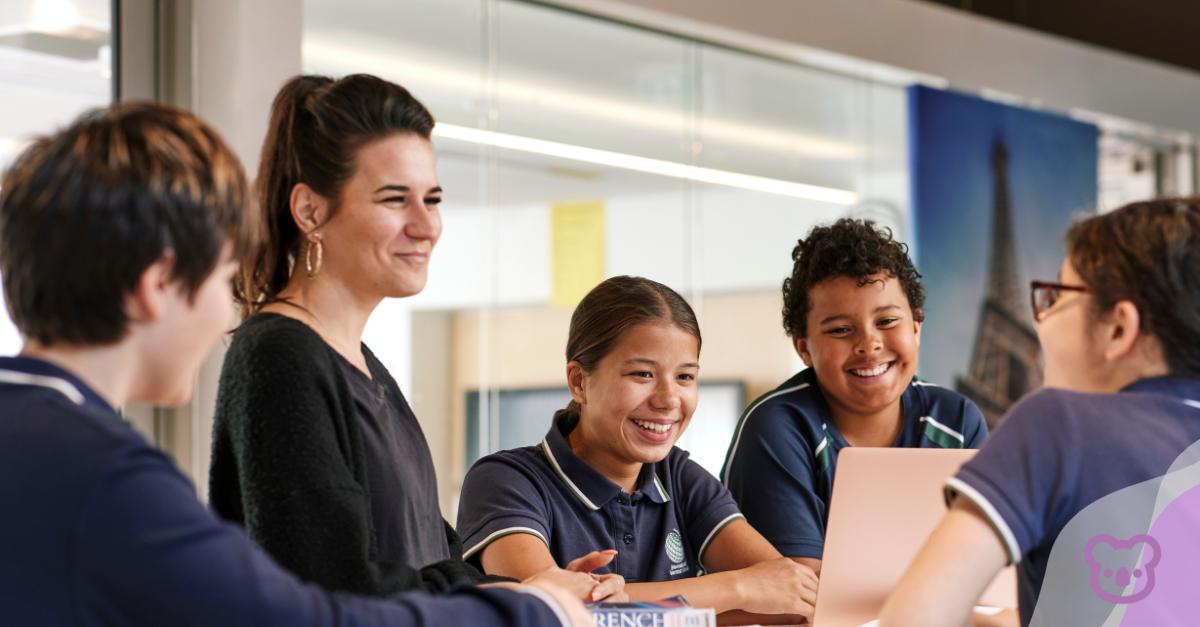
Visiting the International Grammar School in Sydney last month was like visiting another world; or should I say, many different worlds. Multilingualism is key, and the school prioritises preparing students for a global world. With the largest language offerings in all of Australia, they offer immersion studies from pre-school onwards.
Six languages are taught at the IGS; French, German, Italian or Japanese are available as the mandatory second language from Preschool to Year 10, and a third language — either Chinese or Spanish — is mandatory in Years 7 and 8.
Celebrating their 50th anniversary next year, of truly doing things differently, they have continued to remain true to their founding mandate of a bilingual education for all students.
Students graduate from IGS, not only with academic prowess but fluency in two or more languages, overseas travel and study experiences and a view that language is” not only a vehicle for exchange and interaction but is part of our cultural identity and what makes us human.” Claire Bailey, IGS.
Luisa Navanteri, the Director of Languages at IGS says that “the most valuable things learnt in multilingual education is cultural awareness and understanding combined with confidence in communication. These students graduate with leadership and public speaking skills, which will open doors for them and allow them to apply their skills to all parts of their lives.”
So clearly, IGS is a success story. It is a school that is doing things right and getting results for its students. This is obvious by consistently high HSC rankings and ATAR scores (in the top 20% of all schools in NSW for the past 10 years), top university entrance levels, and student’s individual stories of success out in the world. So, why aren’t more schools doing this?
Quite simply, multilingualism is not valued by the current university entrance or government examination processes. Students cannot take their high school exit exams in any other language but English. LOTE subjects are available as exams, but again, this values language as a subject in school and not a means of communication. In a world where AI and translators make everything possible, would it be so farfetched to ask for options to take your maths exam in Chinese or to take a history test in Italian?
IGS teaches students in many languages. However, at the end of the day, whilst the student will have self-satisfaction and communication skills in many languages, university entrance will not consider or ask about multilingualism. Unless the student is going on to study that LOTE, they will not have it considered as any particular benefit. English is so engrained in Australia that it is not even considered to be the official language….because it is the ONLY language.
Australia will sadly be left in the “English-only” section of the world unless policy and attitudes can catch up to the global world that surrounds us.
Photo credit: International Grammar School