












With almost half of technician and trade occupations in national shortage, a new partnership between Pearson and WorldSkills Australia is looking to strengthen vocational pathways, lift the status of trade careers and prepare apprentices for a workplace increasingly shaped by artificial intelligence.
There is no shortage of discussion about Australia’s skills crisis. There is, however, a growing question about whether the country is doing enough to make vocational education an attractive, respected and effective pathway into the workforce.
A new partnership between Pearson and WorldSkills Australia is looking to address some of those challenges, bringing together expertise in learning, assessment and credentialling with WorldSkills’ established network of vocational competitions and industry connections.
Announced during Australia’s Jobs & Skills Month, the collaboration comes against a backdrop of persistent workforce shortages and significant changes to the nature of skilled work. Jobs and Skills Australia’s 2025 Occupation Shortage List found that 49 per cent of technician and trade occupations were experiencing national shortages. At the same time, artificial intelligence and other emerging technologies are changing how many of these occupations operate.
The challenge, according to the two organisations, is not simply to produce more apprentices. It is to ensure vocational training keeps pace with changing workplace demands while maintaining the practical expertise and craftsmanship that underpin skilled professions.
Pearson Australia Country Head Taha Haidermota believes AI is raising expectations of tradespeople rather than making their skills less relevant.
“AI is changing what trades look like, but it’s not replacing the need for skilled hands and sound judgement; it’s raising the bar for both,” Haidermota said.
“By bringing Pearson’s learning, assessment and credentialling expertise together with WorldSkills Australia, we can ensure modern vocational training preserves core craftsmanship while equipping learners with the digital capabilities modern workplaces demand, so apprentices graduate ready to work with new tools, not behind them.”
It is an important distinction. Much of the public discussion about AI and employment focuses on jobs that might disappear. In the trades, the more immediate question may be how technology changes the skills required to do the job. Digital capability will increasingly sit alongside technical knowledge, practical experience and the ability to exercise sound judgement.
The partnership is intended to help ensure training providers and employers recognise that shift.
The transition from training to employment
Another issue the partnership hopes to address is the often difficult transition between completing education and securing meaningful employment.
Pearson’s 2025 Lost in Transition research estimated that delays in moving from education into employment cost Australians $12.5 billion in lost earnings annually. Its modelling suggested that reducing the transition period from 24 to 18 weeks could add $5 billion to the economy.
Haidermota argues that the problem is partly systemic, with disconnects between what students learn and what employers expect creating unnecessary delays in becoming work-ready.
“Systemic disconnects between classroom learning and employer expectations slow down job readiness, but shortening this transition by just six weeks could inject AU$5 billion back into the economy,” he said.
“We can accelerate this process by creating clearer, more streamlined pathways directly into industry, and that includes vocational skills.”
There is a familiar issue here for the wider education sector. Training and qualifications have little value if the connection to employment is unclear, inefficient or poorly understood by employers. The challenge is to make sure the skills being taught translate into the capabilities businesses actually need.
For vocational education, that means stronger engagement between training providers and industry, clearer expectations around practical competency and better recognition of the skills apprentices develop along the way.
Changing the perception of trades
The partnership also confronts a more deeply entrenched problem: the perception that vocational education is somehow a second choice.
Despite persistent shortages across skilled occupations, university pathways continue to carry considerable cultural weight in Australia, while apprenticeships and trade qualifications are too often presented as alternatives for those who do not pursue an academic route.
Haidermota believes that perception needs to change, and that simply telling young people trades are valuable is not enough.
“With almost half of technician and trade occupations in national shortage, we must highlight that skilled trades offer genuine, high-value, future-ready careers,” he said.
“Part of the problem is that vocational achievements don’t always carry the same cultural weight as academic ones, so we need to change how we recognise and celebrate trade talent, not just tell people it’s valuable. These skills are the glue that hold our country together.”
It is a point worth considering beyond the immediate partnership. Australia has spent considerable time debating university participation, graduate outcomes and the future of higher education, but the skills required to build, maintain and operate the country are just as fundamental to its economic future.
The success of vocational education should not be measured solely by enrolment numbers or qualification completions. It should also be reflected in the status afforded to skilled professionals, the quality of their training and the opportunities available to progress through a career.
The Skillaroos provide a compelling example
There is already evidence of what Australia’s vocational education system can achieve when talent is supported by quality training and mentorship.
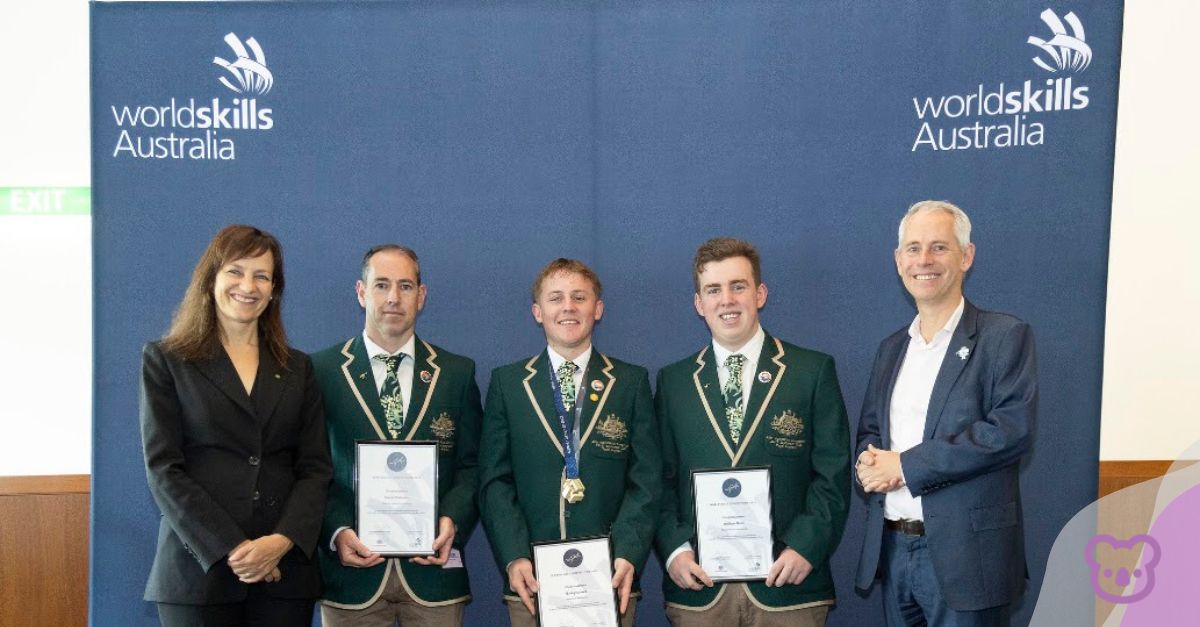
The Skillaroos returned from the WorldSkills Competition in Shanghai with three podium finishes and 10 Medals for Excellence. Among the medal winners was NSW fitter and machinist Bailey Lowes, who secured silver after developing his engineering skills through school, TAFE, competitions and the support of teachers and mentors.
Lowes’ experience offers a useful counterpoint to the idea that vocational education is simply a route into a job.
“I came into this trade with no background in engineering and had to build every skill through school, TAFE, competitions and with the support of incredible teachers and mentors,” he said.
“What I hope to show others is how far vocational skills can actually take you and that a vocational pathway can be a genuine, fulfilling career – not just a job.”
WorldSkills Australia CEO Trevor Schwenke said the Skillaroos’ performance demonstrated the capacity of the Australian system to produce internationally competitive talent, but also highlighted the need to extend that level of excellence more broadly.
“The Skillaroos’ outstanding success in Shanghai proves that Australia’s vocational education system has the power to produce world-class talent when backed by dedicated educators and rigorous training,” Schwenke said.
“However, the persistent national shortages across trade occupations highlight a clear gap in scaling that excellence to broader workforce pathways. Our goal is to take the elite standards set by our Skillaroos and make them accessible to every apprentice across the country.”
That last point is perhaps the most significant. Australia can celebrate its international competition successes, but the real test is whether the quality, discipline and standards demonstrated by the Skillaroos can be reflected in vocational training across the country.
Connecting training with industry
For WorldSkills Australia, bringing Pearson into the local partnership is intended to add another dimension to its existing work.
Pearson was appointed a WorldSkills Global Premium Partner last year, with the Australian collaboration building on that relationship.
“Pearson brings world-class expertise in digital learning, assessment, and credentialing that complements our deep roots in skills competitions and industry networks,” Schwenke said.
“Building on Pearson’s role as a WorldSkills Global Premium Partner, which was announced last year, this local collaboration supports us to bridge the gap between classroom training and industry demand far more effectively.”
The organisations plan to take that work into the 2027 WorldSkills Australia National Championships in Adelaide, where they will co-present a Skills Symposium involving TAFEs and registered training organisations from across the country.
The symposium will bring together Pearson’s global assessment standards and WorldSkills Australia’s practical competition framework, with the aim of improving the alignment between training, assessment and employer expectations.
Haidermota said the collaboration would also bring education, industry and government closer together to address concerns about graduate work readiness.
The broader ambition is to ensure apprentices leave training with validated practical skills and the confidence to contribute in the workplace from day one.
For Haidermota, changing the national perception of vocational education will require more than individual initiatives.
“It requires a united effort across government, educators, and industry leaders to treat vocational education as what it is – a primary driver of national economic growth,” he said.
“When we celebrate trade talent and back it with seamless pathways into work, we elevate vocational training across the nation and give it the recognition it has earned.”
There is a considerable distance between announcing a partnership and changing the way young Australians, parents and employers think about vocational careers. Pearson and WorldSkills Australia will need to demonstrate that their collaboration delivers practical improvements, rather than simply another set of commitments to skills development.
But the underlying issue is difficult to ignore. Australia needs skilled workers, technology is changing the nature of skilled work, and the pathways into those occupations need to keep pace.
The country does not have the luxury of treating vocational education as the consolation prize in an education system that continues to place academic achievement on a higher pedestal. If the skills shortage is to be addressed, the status, quality and accessibility of vocational pathways need to be part of the national conversation.
The Skillaroos have shown what Australian vocational talent can achieve on the world stage. The next challenge is making sure that opportunity is available to far more than a handful of exceptional competitors.












