











In 2022, about 1 per cent of Australian job ads linked to law qualifications asked for an AI skill. By 2025, it was nearly 16 per cent.
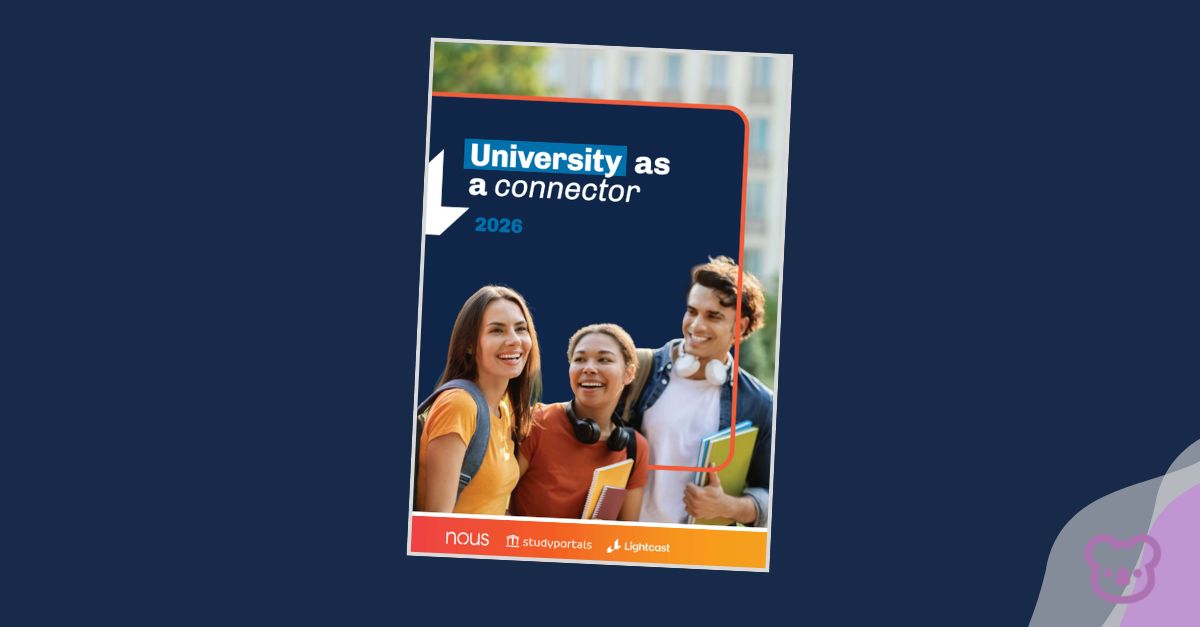
That pace is the backdrop to the second edition of University as a Connector, which we have produced at Nous Group and Studyportals, with Lightcast labour market data. Australian universities recruit international students into many fields linked to workforce need. But recruitment alone does not ensure their skills translate into relevant work in Australia, at home or elsewhere.
A sector caught in the migration debate
The report lands as international students are increasingly discussed as migration numbers, with the sector drawn into debates about housing, population and border control. All political parties favour a smaller, more tightly managed system, even as Australia relies on skilled migration and faces shortages in critical fields.
International education is often discussed as three different things – a money tree for universities, a source of skilled workers for employers and a pathway to migration for individuals. For students, those distinctions are largely artificial. What they study shapes the jobs open to them, while visa settings influence where they can use those skills. As migration pathways narrow, universities need to ensure an Australian qualification delivers value whether graduates stay or build a career elsewhere.
Workforce alignment is not a migration shortcut
The first University as a Connector report argued that universities create most value when they connect student demand with employer and community need. The updated analysis finds that disconnect widening across Australia, Canada, the United Kingdom and the United States.
From 2022 to 2025, employer demand moved faster than student interest in large fields including business, engineering, nursing and health sciences. The scale of the challenge is clear in engineering, where Australia is estimated to need 150,000 additional engineers over the next decade. Australia remains relatively well aligned, but demand in business and health grew as student interest declined. International students are part of these pipelines, but that does not make every shortage a case for more migration.
The job doesn’t end at enrolment
Recruiting international students into high-demand fields does not ensure they enter work that uses their qualifications. As post-study rights narrow, universities with employers-as-partners need to build better pathways earlier through curriculum, work-integrated learning, professional recognition, industry networks and career support.
Students’ post-graduation, particularly international student, then take different paths. Research by Studyportals and Cambridge IELTS shows that 57 per cent of international graduates in Australia remain in the country after study, while 43 per cent return home or move to a third country. Canada retains 70 per cent, compared with 47 per cent in the United States and 42 per cent in the United Kingdom. Those who leave are not necessarily ‘lost’ as they contribute skills elsewhere and extend Australia’s professional, commercial and alumni networks. Success should be whether these students are actually prepared for their chosen path, not only whether they stay.
For international students, these different pathways make informed choices and portable outcomes essential. Universities have a responsibility to show students where employer demand is growing, without presenting a skills shortage as a guaranteed job or migration pathway. They also need to explain professional recognition, visa uncertainty and how well a qualification will travel, so students can make informed choices whether they stay in Australia, return home or move elsewhere.
Capabilities need to travel too
The law figure is not an outlier. By 2025, AI skills were requested in 15.2 per cent of Australian job ads linked to information management, 5.4 per cent linked to marketing and 4.8 per cent linked to communication and journalism. Combining technological fluency with communication, problem solving and judgement gives graduates skills they can use wherever they work.
Three choices for universities
For international education, the choices are practical:
- Support informed choices. Use labour-market intelligence to explain where demand is growing, where shortages are more complicated and what outcomes international students can reasonably expect.
- Build employment pathways early. Connect curriculum, work-integrated learning, employers, professional recognition and career support before the final semester.
- Design for mobile careers. Prepare international students graduates to work in Australia, return home or move elsewhere, and sustain the networks connecting those pathways.
The argument of University as a Connector is that universities create more value when they connect student demand, learning and employment. That means building clearer pathways into work and capabilities that travel, whether international graduates stay, return home or move elsewhere. Doing this well will make their contribution to students, employers and communities easier to see.
The University as a Connector report was released on 28 October 2026: 2026 University as a Connector
The original 2023 paper is also available at Nous-Group-Studyportals-University-as-Connector.pdf
Webinars: 24 November, 11am–12pm AEDT; 1 December, 3–4pm GMT. Further information and registrations.
Zac Ashkanasy is Principal, Nous Group, and Carlie Sage is Director, Analytics and Insights APAC, Studyportals











