










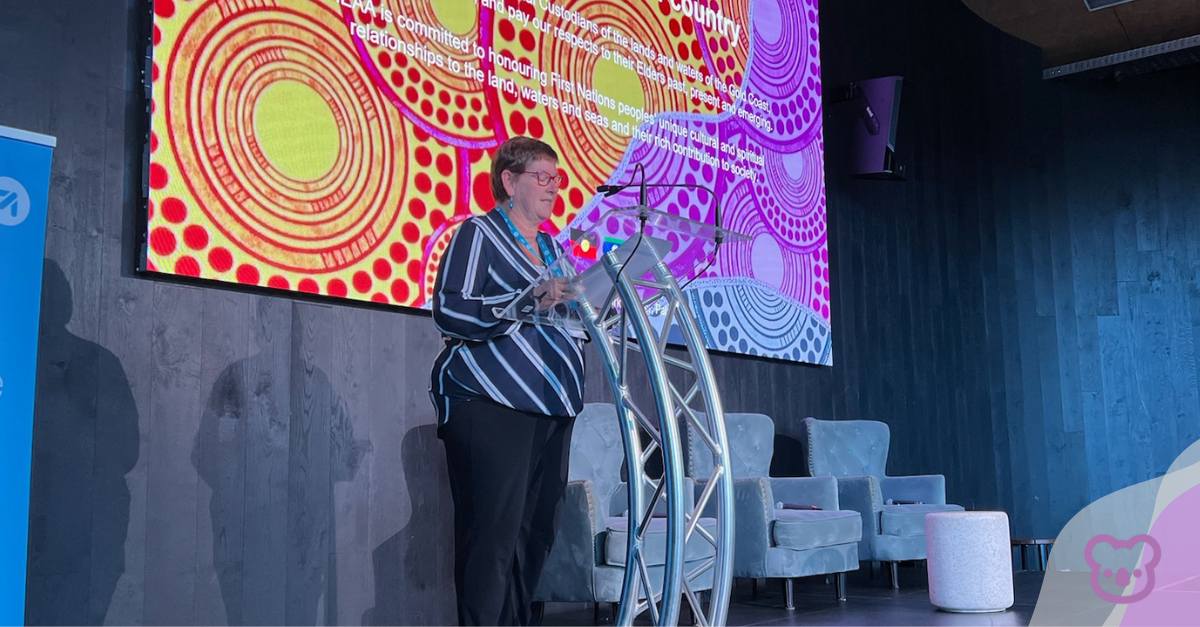
Whilst delegates at the 2024 IEAA Admissions & Compliance Forum settled into Day 2, the Education Services for Overseas Students Amendment (Quality and Integrity) Bill 2024 was introduced to the current Parliament. Did it distract us from our deep dive into international admissions and compliance?
Delegates phones were buzzing with the detail from the 177-page Explanatory Memorandum. In true style, the Forum insights and presentations continued as the delegates – who run our institution engine rooms – are very used to change and distraction!
AI in Admissions
The Forum opened with a Masterclass facilitated by Stefan Tapescu, Founder of Youni & Admission Minds: AI Revolution in University Admissions and Compliance. The use of AI in admissions was a major theme throughout the Forum – Stefan’s Masterclass definitely set the scene for emerging discussions and musings in this space.
It is anticipated that 80% of admissions will be automated in the not-too-distant future with increased AI use in the assessment and verification of application documentation. Deep Learning models with computer vision capabilities can be used to verify the authenticity of documents submitted by applicants, such as transcripts and diplomas. Deep Learning powered chatbots can answer applicant’s questions about admissions requirements, programs, deadlines and campus life. (Comfortingly), there will always be a need for human intervention in the assessment of complex admissions cases and the subjective assessments of Genuine Student criteria.
As an unscripted complementary practical example, PTE highlighted in their Day 1 presentation how they use AI in their scoring process (combined AI and human examiners) and use AI models to detect and combat gaming behaviours by test-takers.
As one involved in the regulatory space, I found the discussion on the AI Act intriguing. The use of artificial intelligence in the European Union will be regulated by the AI Act, the world’s first comprehensive AI law. In this Act, admissions is considered “high-risk AI” – what this means in practice is that there is an obligation under the Act for high-risk AI developers to design admissions systems that embed meaningful human control and intervention.
I am still left pondering how the use of AI in admissions, which by its nature uses biased data sets, can lead to fair, consistent and transparent admissions outcomes. How will we quality assure AI findings?
Admissions & Compliance Insights
It wouldn’t be an admissions and compliance forum without admissions and visa data & insights. Acumen reported that application trends are back to pre-COVID behaviour: multiple applications with a strong preference for one destination. They believe that postgraduate outcomes will become more important and a key lever for applicants.
QS reported that a quarter of students will consider at least seven universities and over half will consider at least five. 39% of students link their application experience to the quality of teaching they can expect from the university.
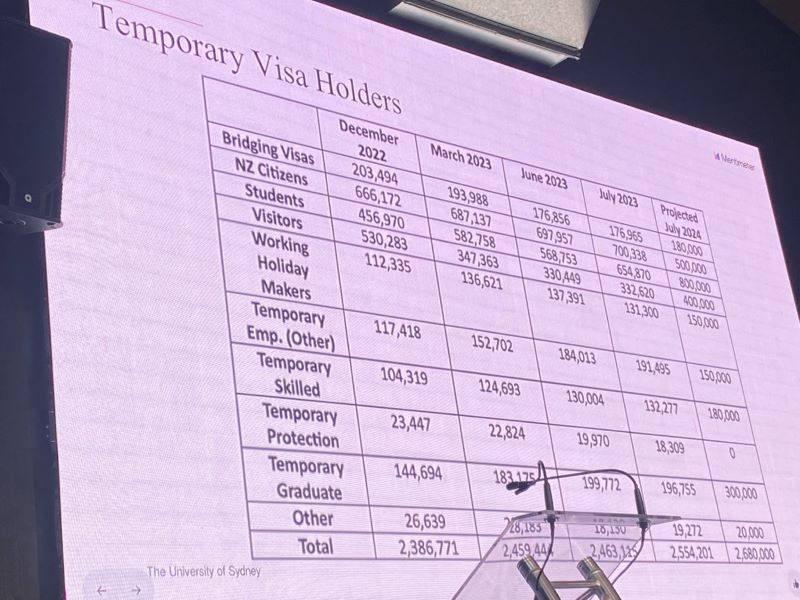
Anna Kirkham presented to the forum on GS vs. GTE and the complexities of ‘permanent temporariness’ in the context of the Temporary Visa Holder numbers below:
James Goodsell, from the Department of Home Affairs, updated the Forum on the current state of play of the Student Visa Program. Current concerns for DHA are people moving onshore to try and circumvent offshore visa processing barriers and slower timeframes and an increasing number of protection visa applications.
The current median processing time for Priority A applications is 31 days; Priority B applications 45 days; & Priority C applications 84 days. James provided a suite of visa statistics which will be interesting to readers of this article, including those below:


Assurance & Audit
Toby Saer, from the Department of Education, updated the Forum on the DET’s draft International Education and Skills Strategic Framework and the three reviews, undertaken in 2023, that collectively found that the quality and integrity of the student visa program was at risk. These reviews uncovered active collusion to exploit international students by a minority of education agents – the proposed changes to the ESOS Act aim to disrupt and depose these ‘bad actors’. Consultation on the Framework closes on June 14th with the Final Framework to be released later this year.
Regulatory compliance also featured in the Forum program with two presentations on best practice in regulatory compliance by Capital Review Group & IEP Advisory. Delegates listened with interest to experienced intel on common missteps and oversights by education providers in ESOS compliance.
Congratulations to the IEAA Admissions & Compliance network on this event. In the words of our Day 2 presenter – Anita van Rooyen – you are ‘change agents’!