










Australia’s housing challenges are forcing developers to think differently, and one of the country’s largest providers of purpose-built accommodation is making it clear that the future extends well beyond student housing.
The Living Company, best known to many in the international education sector through its Scape student accommodation brand, has announced a series of major milestones across its expanding housing portfolio. New retirement living developments are underway in Brisbane, construction has commenced on a build to rent project in Sydney’s Zetland, and a significant co living development in nearby Waterloo has secured development approval. Together, the projects represent a substantial investment in Australia’s evolving housing landscape and demonstrate how one of the country’s biggest accommodation operators is broadening its reach beyond students.
For observers of international education, this evolution is significant. Student accommodation operators have developed considerable expertise in professionally managed communities that combine private living with shared amenities, strong operational support and a focus on resident wellbeing. Increasingly, those same principles are being adapted to meet the needs of other groups including young professionals, renters seeking flexibility and older Australians looking for connected retirement communities.
The Living Company says its latest projects reinforce its commitment to responding to Australia’s changing demographic and housing needs through a diversified portfolio spanning student living, co living, build to rent and seniors housing.
Founder and Joint Chief Executive Officer Stephen Gaitanos says Australia’s housing needs are becoming increasingly diverse and believes professionally managed living communities will play a growing role in meeting those demands. He says the company’s focus remains on creating places that foster belonging, wellbeing and community while combining quality design, sustainability and shared experiences.
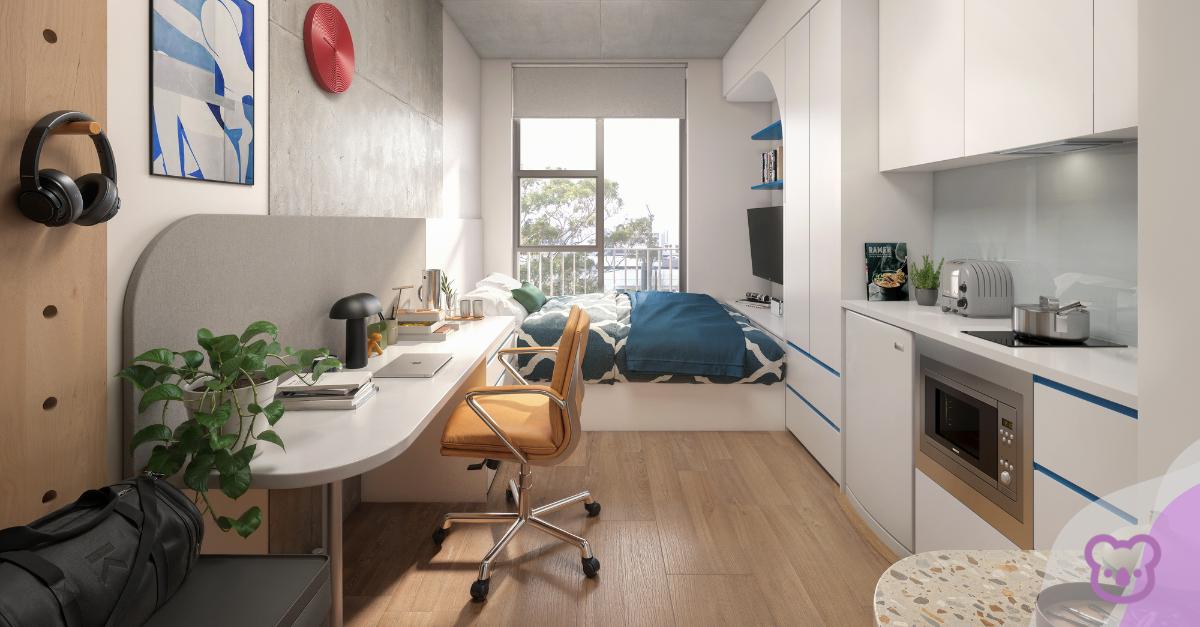
One of the most notable announcements is the approval of a new co living development in Waterloo, Sydney. The seven storey project will deliver 283 self contained studio apartments capable of accommodating up to 333 residents in one of Sydney’s fastest growing urban renewal precincts. Located on Young Street, the development will include communal facilities, retail space and publicly accessible open areas alongside sustainability initiatives including rooftop solar, rainwater reuse, native landscaping and a targeted four star Green Star Buildings rating.
The project has also been designed in partnership with Aboriginal owned design practice Yerrabingin and incorporates a Connecting with Country framework that acknowledges the Gadigal and Bidjigal Traditional Custodians through landscape design, public art and native planting. Construction is expected to begin in 2027 with residents moving in from 2029.
The announcement comes as construction is already underway on Zetland Parkside, a nearby build to rent development scheduled to open in January 2029. Together, the Zetland and Waterloo projects illustrate how institutional investors are increasingly viewing professionally managed rental housing as an important part of Australia’s future residential market.
While these developments are not aimed specifically at international students, they reflect housing models that have become increasingly familiar to the sector. Co living offers private accommodation combined with shared social spaces and managed services, creating environments designed to foster community while addressing affordability and flexibility. These characteristics have long been central to purpose built student accommodation and are now finding broader application across Australia’s residential market.
The company’s Brisbane projects focus on another rapidly growing demographic. New stages at Aveo’s Parkside Carindale and Robertson Park retirement communities represent a combined investment of around $150 million. Parkside Carindale will add 94 independent living apartments across nine levels, while Robertson Park will deliver another 38 apartments designed to support accessible and independent living.
Aveo Chief Executive Officer Tony Randello says demand for contemporary retirement communities will continue to grow as Australia’s population ages. He says the new developments are designed to help residents remain connected to the suburbs, relationships and lifestyles they know while providing homes focused on accessibility, comfort and independence.
Taken together, the announcements highlight an important shift within Australia’s accommodation industry. Companies that once concentrated on individual housing sectors are increasingly creating integrated platforms that serve people throughout different stages of life. Student accommodation, build to rent, co living and retirement villages are becoming less distinct businesses and more components of a broader housing ecosystem.
For international education, that matters. The operational expertise developed through student accommodation has helped establish models that prioritise community, professional management and resident wellbeing. As Australia continues to grapple with housing shortages and changing demographics, those models are increasingly influencing how accommodation is delivered far beyond university campuses.
The Living Company, which manages more than $17 billion in assets across 118 properties and more than 30,000 beds and units, believes this integrated approach represents the future of Australian housing. Whether that vision ultimately reshapes the broader market remains to be seen, but the company’s latest investments suggest the lines between student living and mainstream residential housing are becoming increasingly blurred.