









The Australian Government has contracted Deakin University to identify good practices in international student engagement and develop a series of guides and resources to enhance it.
In starting out, the team at Deakin employed a research process that included:
- a desktop analysis of existing literature and good practice examples;
- three surveys with more than 6,000 responses from international students, international student graduates and staff working for education providers and ancillary organisations who are directly involved in supporting international students;
- 11 consultation workshops with 213 stakeholders; and
- interviews with 40 key stakeholders.
The results from the surveys are in.
The survey was completed by 3,466 current international students; 1,752 international student graduates; and 956 education provider and ancillary organisation stakeholders.
All areas of international education were represented in the survey results and consultations: 29% from higher education; 13% from vocational education and training; 12% from ELICOS; & 10% from schools.
What did they say?
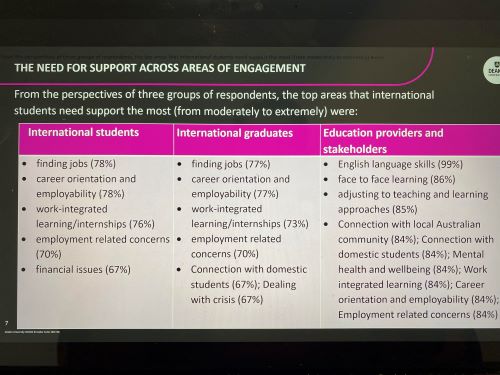
The difference in the perspectives of students and those who support them is stark.
Employment and Employability
Whilst career orientation and employability; employment-related concerns; and work-integrated learning internships are considered important by education providers with an 84% positive response, they’re not at the forefront of their concerns. They are, however, numbers 1,2, 3 & 4 for international students and international student graduates.
One would hope that the teaching and learning focus of the support staff surveyed equates strongly with the international students’ motivations to find a job.
Seeking Help
There has been an urban myth in international education that international students don’t seek help when they need it – these survey results from both our current and graduated students has very much debunked this myth.
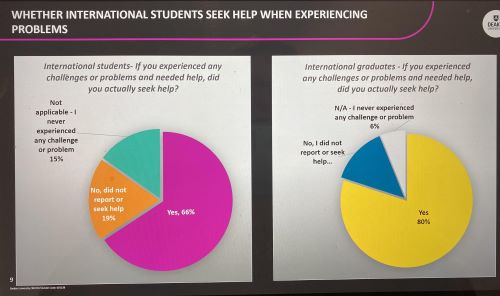
International students who responded that they did not report or seek help did so because:
- they did not know the process (15%)
- they did not know how to articulate the problem (11%)
- they were unaware that support would be available (11%)
- they did not want to get in trouble (10%)
- fear that my request will be rejected (9%)
Interestingly, international student graduates added the following responses to the same question, which makes me wonder if their study experience has been tardied across time:
- did not think anything would be done about it (9%)
- fear of discrimination (8%)
There’s so much more to uncover from these results as the series of ten (10) Best Practice Guides; a Virtual Map; and resources to support international student engagement are developed by the project team.
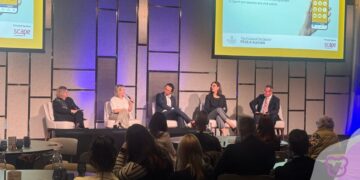
The project is set to conclude in March, 2024 – so watch this space!
ISANA International Education Association is presenting on this project twice over the next month if you’re interested in hearing more: this Thursday, August 31st, there’s an online webinar with project team member Danielle Hartridge and project lead Professor Ly Tran is the keynote speaker at the 2023 VicTas State Conference.