









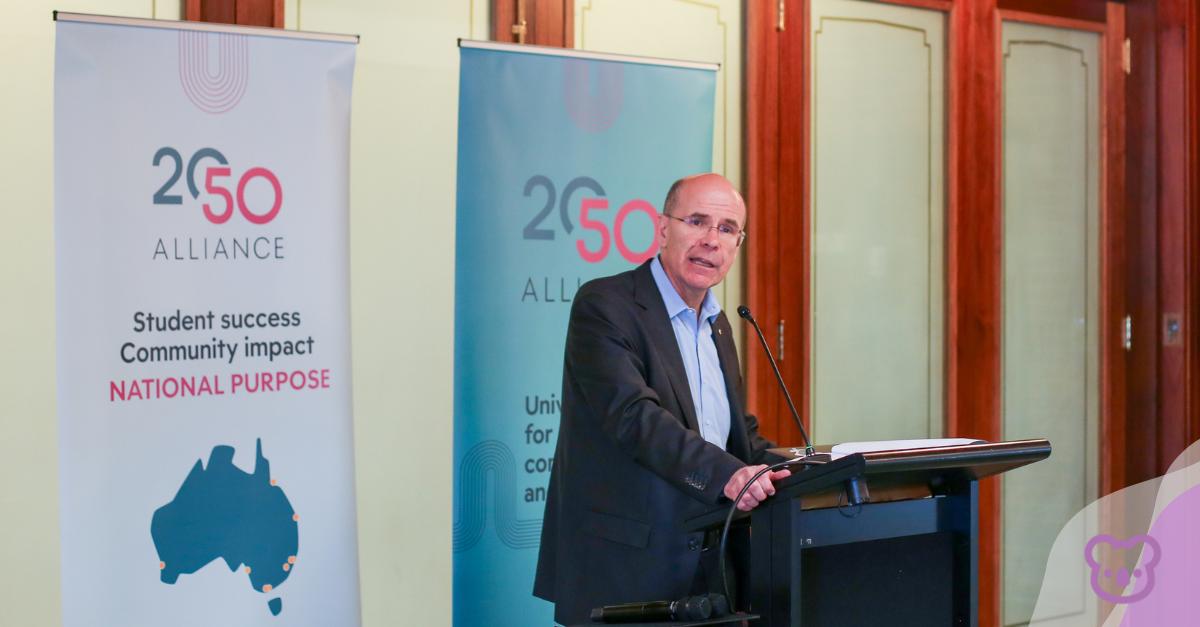
Australia’s university fee system is back under scrutiny, with a coalition of university leaders, student representatives and higher education policy experts gathering in Canberra yesterday to map out a pathway towards fairer student fees and greater access to higher education.
Convened by the 2050 Alliance, the meeting comes amid growing concerns that the Job-Ready Graduates package, introduced by the former Morrison Government in 2021, has failed to achieve its stated goals while leaving students paying significantly more for their degrees.
According to figures released by the Alliance, students paid an additional $368 million in university fees in 2024 compared with what they would have paid under the previous funding model. At the same time, universities received $813 million less in government funding to teach and support students.
The policy dramatically increased student contributions for a range of disciplines, particularly in the humanities, law and commerce. Some arts degrees now cost students more than $50,000, while certain double degree combinations can approach the $100,000 mark before graduates enter the workforce.
The debate around university fees has intensified as Australia seeks to meet ambitious education targets outlined in the Universities Accord. The Federal Government has committed to lifting tertiary attainment rates, with a goal of 80 per cent of working-age Australians holding a university degree or vocational qualification by 2050.
Distinguished Professor George Williams AO, Chair of the 2050 Alliance and Vice Chancellor of Western Sydney University, said the current system was limiting opportunities for young Australians.
“Access to higher education is one of the greatest enablers of social mobility in our society,” Williams said.
“As it stands, university degrees are increasingly becoming accessible only to those who have access to the bank of mum and dad.”
Williams described the Job-Ready Graduates reforms as one of the most significant higher education policy failures in recent decades, arguing that the financial burden placed on students is discouraging participation at a time when Australia needs more skilled graduates.
The concerns are particularly relevant for students from disadvantaged backgrounds. The 2050 Alliance says its modelling shows commencements by students from low socioeconomic backgrounds have fallen by almost 10 per cent since the introduction of the Job-Ready Graduates package. In courses carrying the highest student contributions, including law, commerce and humanities, the decline is reportedly closer to 20 per cent.
Those figures raise questions about whether fee increases have had unintended consequences for equity and participation. Critics of the policy have long argued that increasing the cost of certain degrees would not necessarily steer students towards fields identified as national priorities, but could instead deter university participation altogether.
2050 Alliance Chief Executive Officer Paul Harris said the current funding model risks creating a two-tier higher education system.
“The current fee structure is pushing students away from university and creating a two-track education system,” Harris said.
“Without urgent reform, it will become too late to achieve our 2050 targets.”
For international students, who already face substantially higher tuition fees than their domestic counterparts, the debate may appear distant. However, the broader conversation about affordability, access and participation has implications across the entire higher education sector. Universities facing funding pressures often rely more heavily on international enrolments to support teaching, research and student services.
The Alliance’s push for reform also comes as universities continue to grapple with rising operating costs, increasing demand for student support services and heightened expectations around graduate outcomes.
While no specific replacement for the current fee system has yet been proposed, today’s meeting marks the beginning of what the Alliance hopes will become a sector-wide roadmap for reform. With participation targets looming and student debt continuing to climb, the question facing policymakers is whether Australia’s current approach to university funding is helping build the workforce of the future or making higher education less accessible for the very students it aims to support.
For many students weighing up the cost of a degree against mounting living expenses and housing pressures, the answer may already be becoming clear.