








Australian Catholic University is turning its Rome campus into a year-round base for research, executive education and international partnerships, signalling a broader international strategy that goes beyond simply bringing students to Australia.
ACU has been operating in Rome for a decade. Now it wants the campus to do considerably more than host students for a semester.
The expanded Rome operation will bring together education, research and international engagement, with ACU positioning the campus as a connection point between Europe, Australia and the Indo-Pacific.
ACU Provost and Deputy Vice-Chancellor (Academic) Professor Julie Cogin said the move reflected a different way of thinking about international education.
“For a long time, international education has been about bringing students to Australia. This is also about taking ACU to the world,” Professor Cogin said.
For much of Australia’s international education sector, internationalisation has historically been measured through students crossing borders into Australian classrooms. ACU’s Rome model is a reminder that international engagement can also mean establishing a physical presence where partnerships, research, executive education and academic relationships are built locally.
The expanded campus will support closer collaboration with Catholic, Pontifical and European universities, Church institutions and other international partners.
ACU also plans to expand executive and professional education from Rome, with a focus on areas including artificial intelligence and human flourishing, safeguarding, education, health and social cohesion.
The university will establish the ACU Rome Research Exchange, bringing scholars together, supporting visiting researchers, strengthening doctoral connections and developing joint research projects across Europe, Australia and the Indo-Pacific.
ACU Rome Academic Director Professor Darius von Güttner said the aim was to make the campus a practical connection point for researchers and institutions.
“We want to make ACU Rome a practical point of connection for scholars and institutions,” Professor von Güttner said.
“That means making it easier for researchers to find one another, spend time together, develop ideas and build projects across institutional and national boundaries.”
Research activity in Rome will draw on ACU’s existing strengths across human flourishing, technology, education, health, business, law, philosophy and theology.
ACU Rome Director Claudio Betti said the expanded model would build on relationships developed during the campus’s first decade.
“Over the past ten years, we have built relationships across Rome with universities, Church institutions and many other partners, while welcoming students and academics from around the world,” Mr Betti said.
“The next chapter gives us an opportunity to build on those relationships while opening ACU Rome to a much wider range of people, ideas and activities.”
ACU Pro Vice-Chancellor (Global) Richard Dobek said Rome was an important component of the university’s international strategy.
“Rome gives ACU a practical way to build deeper partnerships in Europe while giving our students and academics a clearer path into the region,” Mr Dobek said.
“It also gives our European partners a stronger connection to Australia and the Indo-Pacific. That flow of people, ideas and opportunities is what makes ACU Rome so valuable.”
ACU opened its Rome campus in 2015 in partnership with The Catholic University of America. The university will continue to offer global learning opportunities to students, including through its Semester in Rome program.
A larger question may be whether this is where international education is heading more broadly.
As competition for international students becomes more intense and universities look to build relationships beyond recruitment, physical international bases can offer something a conventional offshore marketing operation cannot: somewhere for academics, researchers, executives and partners to actually meet.
Rome also gives ACU something that cannot be created through a Zoom call or an agent network. A place.
That does not automatically make an international campus successful. The value will ultimately depend on what happens inside it: the partnerships created, research produced, students connected and opportunities generated.
But after ten years in Rome, ACU is clearly betting that its European presence can become considerably more than a place Australian students visit for a semester.
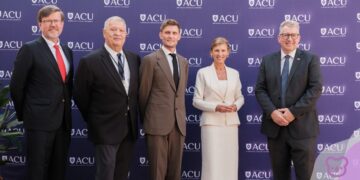
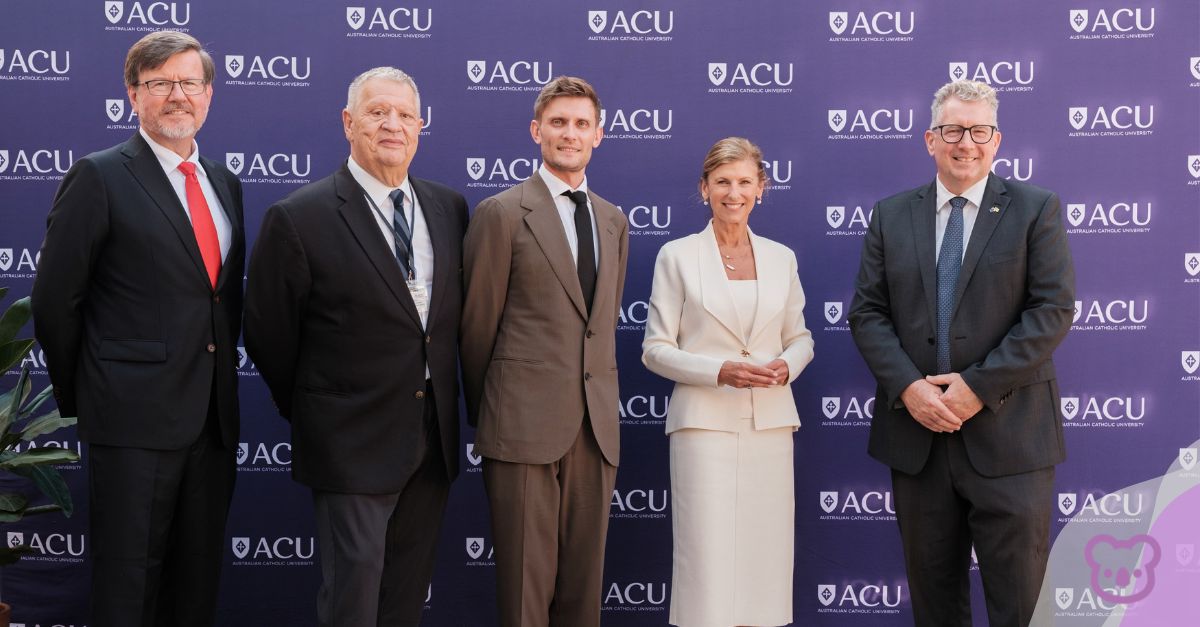
Photo: ACU Rome Academic Director Professor Darius von Guttner; ACU Rome Campus Director Professor Claudio Betti; ACU Pro-Vice Chancellor (Global) Richard Dobek; ACU Provost and Deputy Vice Chancellor (Academic) Professor Julie Cogin; and Australian Ambassador to the Holy See His Excellency the Hon Keith Pitt at the ACU Rome Campus expansion event.