











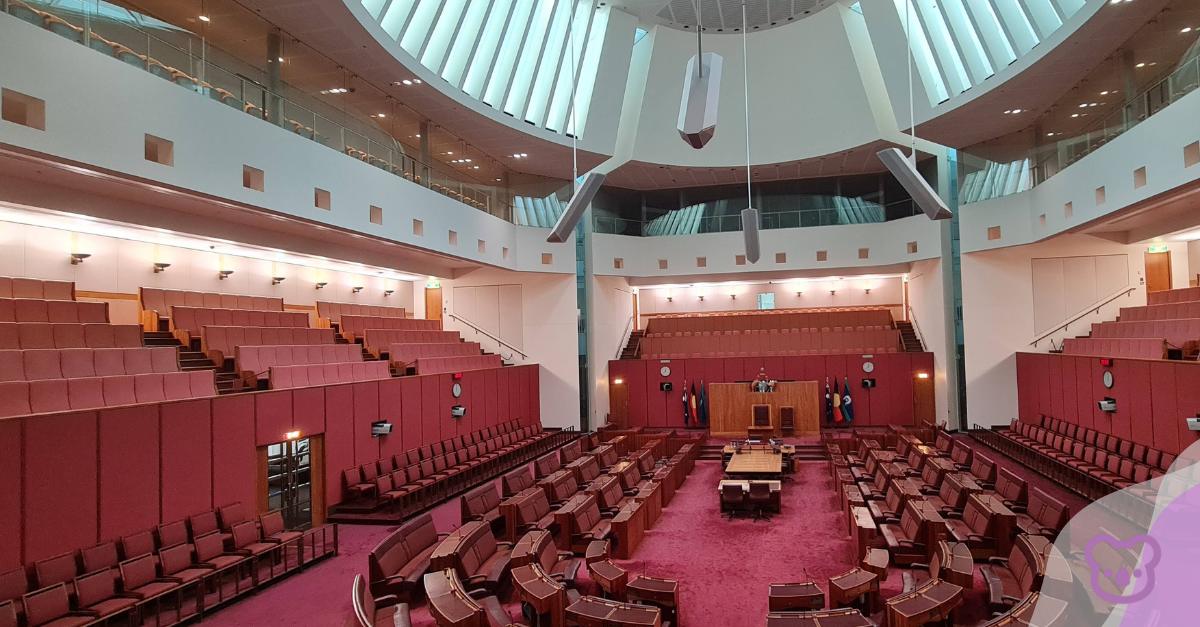
While many of us were enjoying sessions at the 2026 Australian International Education Conference, our federal public servants were again facing questions during October’s supplementary budget estimates.
I’ve trawled through the Hansard transcripts so that you don’t have to and below is a summary of issues relating to the international education sector.
Administrative Review Tribunal (ART)
The ART reported that as at 30 September it had 136,236 cases on hand, up from 130,983 on 30 April. Unlike previous ART appearances, there were no details provided of student visa cases on hand.
However, during questioning of the Department of Home Affairs, officials reported that as at 31 August 2026 there were just under 54,000 student visa matters on hand, compared to 52,452 as at 30 April. These figures are expected to decline, given new processes allowing the ART to dismiss matters on the papers without holding a hearing.
Home Affairs
Home Affairs Estimates focused largely on the government’s recently announced migration reforms, with comparatively little new information about international students.
Officials confirmed that:
- Detailed modelling of the expected impact of the September migration reforms on net overseas migration, including restrictions on student dependants, had not yet been released and was subject to a parliamentary order for production.
- Assistant Minister Julian Hill had recently issued three notices of intention to suspend particular courses and providers.
Department of Foreign Affairs and Trade (DFAT)
Foreign Arrangements Scheme
Liberal Senator Jessica Collins questioned DFAT officials about universities’ new obligations to manage foreign interference risks in individual research collaborations.
Recent amendments to the Foreign Arrangements Scheme (TKN 310826) extend its scope beyond institution-level agreements, requiring universities to establish policies and procedures to identify and manage risks associated with researcher-to-researcher collaborations. DFAT confirmed that the new provisions were not yet in force and that the government would not have the same powers to cancel or prohibit individual research collaborations that it has for institutional arrangements.
Officials said more than 23,000 arrangements had been notified under the scheme since 2020, with universities accounting for 84 per cent.
Questioned about research collaborations with Iranian institutions, DFAT said a review in 2024 had identified no continuing institutional arrangements outside permitted exceptions involving students. However, this did not establish whether individual researcher collaborations continued.
DFAT said it was working with universities and other agencies on implementing the new obligations, acknowledging that identifying and managing individual research relationships would be a significant task for universities.
In separate questioning at Education Estimates, officials confirmed that changes to the Higher Education Standards Framework were being developed to introduce research security requirements that TEQSA would regulate. The University Foreign Interference Taskforce was also being refreshed to strengthen coordination between universities and government agencies.
New Colombo Plan
Senator David Pocock raised allegations of sexual assault involving an Australian university student participating in an Engineers Without Borders Humanitarian Design Summit in Vanuatu in June 2026, supported through the New Colombo Plan.
Pocock told Estimates that the student had alleged she was sexually assaulted while receiving emergency medical treatment, that a program facilitator failed to intervene and that Engineers Without Borders subsequently mishandled the incident and her personal information.
When asked by Pocock when DFAT first became aware of the alleged sexual assault, DFAT officials said they were unaware of the allegations. An official took the question on notice, undertaking to seek further information and respond. Pocock also sought assurances about measures to prevent other students being exposed to similar situations.
Horizon Europe opportunities for universities
DFAT officials also discussed Australia’s planned participation in the EU’s €95.5 billion Horizon Europe research and innovation program from 2027.
The program would provide Australian universities with opportunities to collaborate with European researchers and compete for research funding. Universities Australia has strongly supported Australia’s participation, describing it as a major win for research, innovation and economic growth.
Education
National Planning Level
The Department of Education reported that new overseas student commencements in 2026 could reach approximately 244,200, more than 50,000 below the national planning level of 295,000.
Officials told Estimates that 233,600 commencements had been recorded as at 23 October, with a further 10,600 students expected to commence before year-end. This contrasts with 2025, when commencements reached 282,000 against a national planning level of 270,000.
Asked about the impact on universities, officials acknowledged that some institutions were likely to fall short of their budgeted international student commencements. They identified visa processing and refusal rates, along with changing student preferences, as contributing factors. Officials stressed that the national planning level was not a forecast of demand.
Australian Tertiary Education Commission (ATEC)
ATEC Chief Commissioner Professor Barney Glover acknowledged that some universities were experiencing a significant downturn in international student commencements.
Glover said ATEC had been discussing with universities how they planned to manage declining international enrolments, as part of preparations for the 2028–2031 mission-based compacts. He said some universities would need to manage a different international student profile alongside the expansion of domestic student places.
Tertiary Education Quality and Standards Agency (TEQSA)
There were no questions for TEQSA related to international students.
National Student Ombudsman
The National Student Ombudsman is yet to capture the attention of Senators and there were again no questions asked of it.
Department of Employment and Workplace Relations (including Jobs and Skills Australia), Australian Skills Quality Authority (ASQA), Fair Work Ombudsman (FWO)
Unlike the previous round of Estimates, there was little of direct relevance to international education in the questioning of the Department of Employment and Workplace Relations, the Fair Work Ombudsman or the Australian Skills Quality Authority.
Department of Foreign Affairs and Trade (DFAT) – Austrade
There were no questions for the Australian Trade and Investment Commission (Austrade) on international education. Questioning largely focussed on the impact on the tourism sector of changes to the Working Holiday Maker scheme.
Estimates highlights?
Regular readers of The Koala’s Estimates wrap-ups will know that there is usually something entirely unrelated to international education that catches this author’s attention. Unfortunately, this round failed to deliver anything quite as memorable as Senator Raff Ciccone’s hot-mic moment last time.










