









Australia’s international education sector has become pretty comfortable talking about volatility. Visa settings change, planning levels move, processing times stretch and new rules arrive with a fresh collection of acronyms. Institutions adjust, agents adapt and everyone waits to see what happens to enrolments.
But there is a group that does not have the luxury of waiting to see what happens.
Education agents are already changing how they behave.
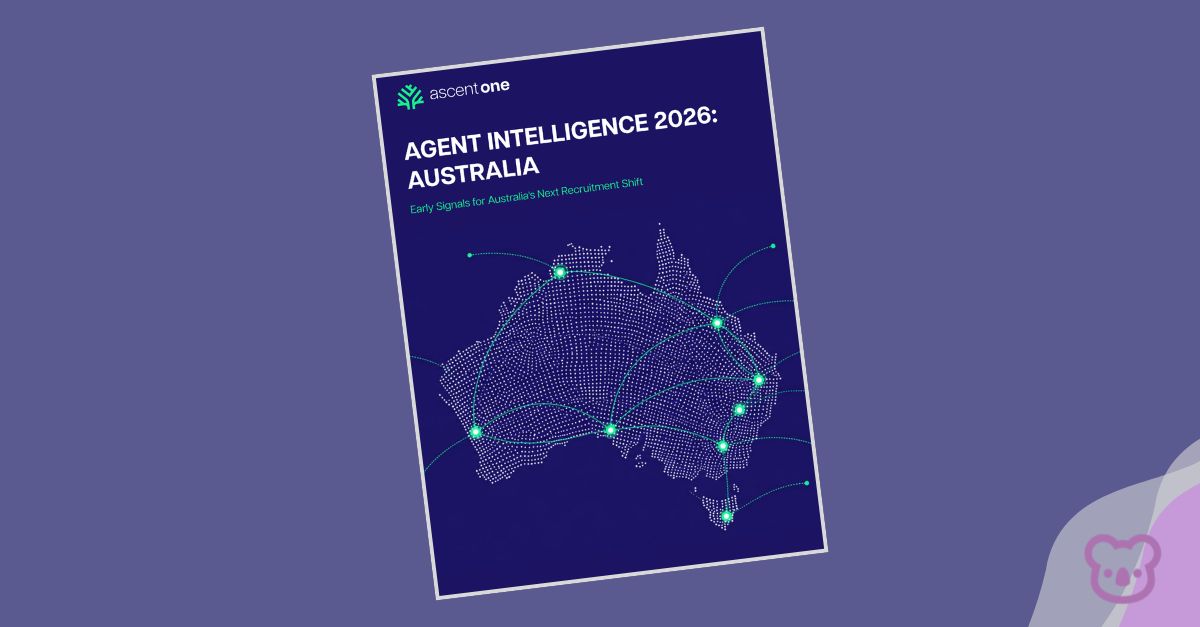
That is one of the clearest messages from Agent Intelligence 2026: Australia in Focus, the latest white paper from Ascent One, which draws on the views of more than 1,100 education agents. And while there is plenty in the report that will be familiar to anyone working in international education, the scale of the shift in agent confidence is worth paying attention to.
Of the agents surveyed, 83% work with Australian institutions and 61% say Australia is their most important destination. Australia remains firmly on the radar. But almost four in five Australia focused agents also say the country is now much or somewhat harder to recruit for than their other destinations.
That is a contradiction.
Australia remains a market agents want to sell, while increasingly becoming a market they have to explain.
The report describes Australia as high cost, high volatility and increasingly high risk compared with competing destinations. In the UK, just over half of agents say recruiting is harder. Canada is viewed as having more predictable visa timelines, while Singapore has tighter controls but, importantly, greater consistency.
Australia appears to be developing a different reputation. Not necessarily that the rules are always tougher, but that understanding where the rules begin and end can be difficult.
One agent quoted in the report puts it rather bluntly: “The inconsistency and confusion surrounding the Genuine Student (GS) assessments… frankly, it feels like they are just as confused about the rules as we are.”
That is more than a complaint about bureaucracy.
It goes to the heart of trust.
Agents are sitting between institutions, governments, students and families. Their business depends on being able to give people reasonably confident answers about what happens next. If they are unsure about how a requirement will be interpreted, they have two choices: take the risk or slow the process down.
Increasingly, it appears they are choosing the latter.
According to the Ascent One report, 88% of Australia focused agents say increased accountability requirements have made them more careful about the applications they submit. That is the highest level recorded for any destination measured.
Three quarters now ask for written confirmation before advising a student.
That statistic deserves more attention than it might initially receive.
An agent asking for something in writing before advising a student is not simply a workflow change. It suggests the agent wants protection from getting the answer wrong. In an increasingly regulated environment, that is understandable.
But it also tells universities something.
If your agent network needs written confirmation before it feels comfortable giving advice, the issue is no longer just compliance. It is confidence.
And confidence is one of those things that tends to disappear from recruitment data long before it appears in enrolment data.
The friction points identified in the report tell a similar story. Course availability and caps are the biggest issue, cited by 36% of agents, followed by documentation requirements at 33%, application status updates at 31% and entry requirements at 29%.
None of these issues sound particularly dramatic in isolation.
But international recruitment is made up of thousands of interactions just like these. Is the course available? Is the student eligible? Which documents are required? Has the application moved? Is the requirement the same as it was last week?
Every unanswered question adds a little friction.
Enough friction and the student starts looking elsewhere.
One agent quoted in the report captures the problem particularly well, saying visa grants can take anywhere from two weeks to five months for similar profiles, making it impossible to give families clear timelines and resulting in stress, deferrals and lost intakes despite confirmed offers.
That is the downstream impact of uncertainty.
And it is why the conversation about Australia’s international education competitiveness cannot simply be reduced to visa policy.
Of course visa settings matter. Processing times matter. Planning levels matter. Post study work rights matter.
But so does the experience of actually trying to navigate the system.
This is where universities have more control than they sometimes acknowledge.
They cannot control how long a visa application takes once it reaches government.
They cannot determine the next change to national policy.
They cannot stop another country from becoming more attractive.
But they can control how quickly they respond to agents. They can make their requirements clear. They can ensure different parts of the institution are giving consistent answers. They can provide better visibility of applications. And they can decide whether agents are treated as genuine partners or simply as a recruitment channel that gets measured at the end of the funnel.
That last one really matters.
The language of partnership has been used liberally across international education for years. But partnership is tested when things become difficult. When the rules are changing, when an agent has a nervous family on the phone and when nobody is quite sure whether yesterday’s advice still applies.
That is when the relationship either works or it doesn’t.
The recommendations from Ascent One are therefore fairly straightforward. Use agent behaviour as an early warning system. Reduce uncertainty where possible. Improve visibility and consistency in agent management. Listen to the people who are dealing with students and families on the ground.
None of this requires another national strategy.
It requires institutions to get better at the things that are within their control.
The agents surveyed are not saying they have walked away from Australia. Far from it. Australia remains an important destination and, for many, the most important one. They continue to see value in the country’s education system and in the opportunities available to international students.
What they appear to be saying is that selling Australia is becoming harder work.
And that should matter.
Because agents are often the first people to see a change in student sentiment. They hear the questions from parents. They see which countries students are considering. They know when a visa delay is becoming a deal-breaker. They know when an institution is easy to work with and when it is becoming a source of headaches.
By the time those signals show up in enrolment data, the behaviour has already changed.
Australia’s international education sector spends plenty of time looking for external threats to competitiveness.
Perhaps we should spend a little more time listening to the people standing closest to the student.
Because the message from more than 1,100 agents in the Ascent One research is not that Australia is finished.
It is that patience is not unlimited.
And in a market where students have more destinations to choose from, making Australia unnecessarily difficult to navigate is starting to look like a competitive problem of our own making.
Access the paper here.