







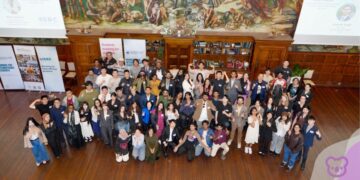






Australia’s scientific excellence has once again taken centre stage, with the nation’s top researchers, innovators, and educators recognised in the 2025 Prime Minister’s Prizes for Science.
The awards celebrate those who are expanding the boundaries of knowledge and innovation — from breakthroughs in health and climate science to transformative advances in technology and national security.
Congratulating this year’s recipients, Universities Australia Chief Executive Luke Sheehy said the awards highlight not only the brilliance of individual scientists but also the collective value of research to Australia’s future.
“Our scientists are national heroes,” Mr Sheehy said. “Every day, they are working to make Australia a stronger, safer, and more successful country — asking the big questions and solving real-world problems. From pioneering breakthroughs in climate and health to advancing technology and security, this year’s recipients highlight the diverse talent driving Australia’s scientific excellence.”
Science, at its core, is a nation’s investment in possibility. From the vaccines that protect global health, to the renewable technologies powering the energy transition, to the AI systems that enhance productivity and safety — research underpins the systems that sustain modern life.
The Prime Minister himself noted that Australia’s scientists “help to drive our nation, add to what – and who – we are, and expand the realm of what is possible.”
Yet behind each discovery lies a web of long-term investment, collaboration, and support. Breakthroughs are rarely moments of luck — they are the result of sustained funding, institutional stability, and a research culture that values curiosity as much as it does commercial outcomes.
That’s why this year’s awards are as much a celebration of scientific achievement as they are a reminder of the critical role research plays in national prosperity, security, and social wellbeing.
A Moment for Reform
Mr Sheehy said the current strategic review of Australia’s research and development (R&D) system offers a rare chance to reshape the nation’s approach to science policy.
“Science is not a luxury – it’s a necessity,” he said. “From the energy transition to emerging technologies, from global health to our sovereign capabilities, the work of Australia’s researchers is critical to our prosperity and security.
We are in the middle of a rare opportunity to drive systemic reform. We need to seize this moment and build a research system that continues to get the best out of Australia’s scientists.”
Universities Australia is urging government to take bold steps to ensure researchers have the tools, funding and infrastructure they need to succeed, including:
- Cutting red tape and improving national coordination for R&D, with government investment lifted to at least the OECD average.
- Better support for PhD candidates, including higher stipends and a national research workforce strategy.
- Strategic investment in research infrastructure, co-located with industry to encourage collaboration and innovation.
- Targeted incentives for industry partnerships, including a national pre-seed funding program and tax measures to encourage private R&D.
- A coordinated approach to international collaboration, including joining Horizon Europe, the world’s largest collaborative research network.
The success of this year’s Prime Minister’s Prize recipients serves as proof that when Australia invests in science, it invests in its people — and in its future.
Research doesn’t just produce discoveries; it builds capability, creates jobs, and enhances national resilience. From developing cleaner energy systems to protecting biodiversity and improving health outcomes, the impact of research reaches every Australian, every day.
As Universities Australia notes, the task now is clear: to ensure the nation’s scientists have the support, recognition, and investment they need to continue expanding the realm of what’s possible — for Australia, and for the world.












