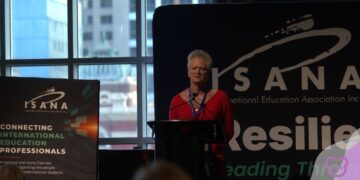



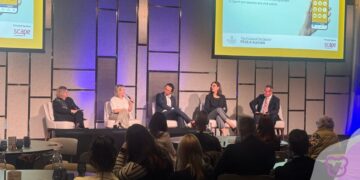







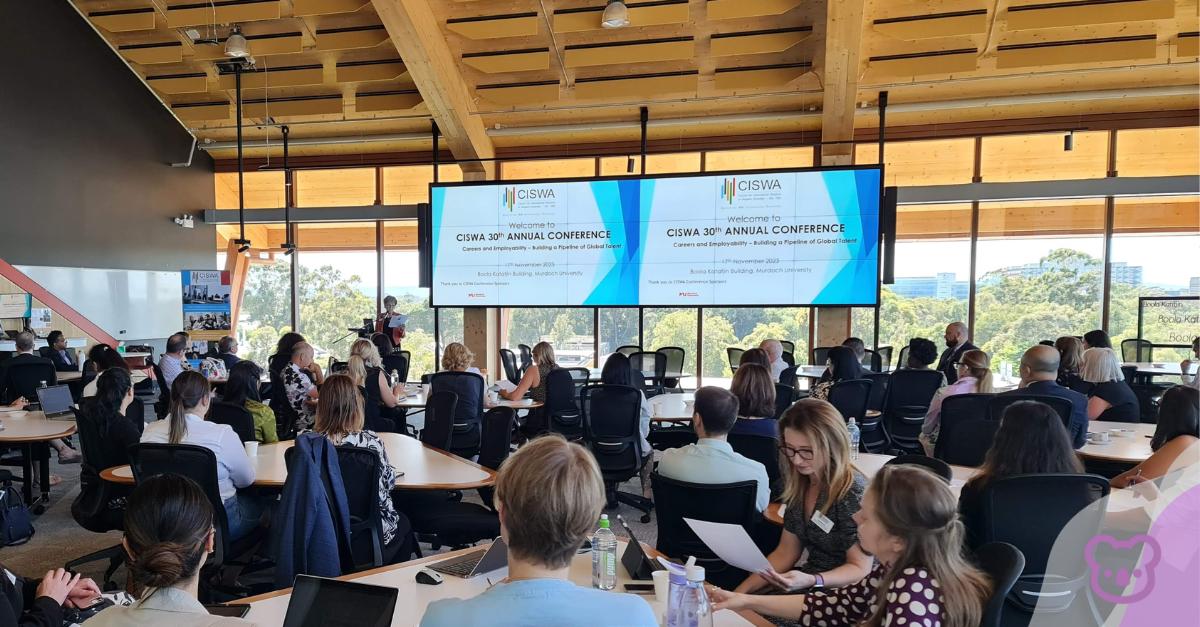
Today, CISWA celebrates its 30th annual conference with around 90 in attendance.
The Council for International Students of Western Australia or CISWA is an independent, voluntary, non-profit group promoting the well-being of international students studying in Western Australia.
Originally funded by AusAid, CISWA was established in 1963 in response to the demand for support services for the then 1000 international students studying in Western Australia. Over fifty years on, CISWA remains the only organization of its kind in Australia, while the size of the international student population has changed.
The always animated WA Minister opened the conference for International Education The Hon David Templeman. Whilst he didn’t break into song on this occasion, although he did threaten to, his remarks were a poignant reminder of what International Education is based on – “relationships” he said. He went to say that it is “how we share the story of our state and nation with the rest of the world” and there is “So much to benefit from having international students here”.
The Koala agrees.
Futurist Gihan Perera provided the Keynote and provided a boost to the WA Centric attendees by comparing time zones. WA is in fact, in the world’s most populous time while the easter seaboard resides in the words 21st ranked time zone. No reaction from attendees on that point.
He outlined why Australia is one of the most highly sought-after migrant destinations using metrics such as – life expectancy, stable currency and high levels of education, among others. “Australia is the place to be at this point in time” he asserts. Being a futurist, he moved to what a future might look like outlining two scenarios, one that is planned and can be prepared for. The other is one that can’t be, but we do know what skills may be needed. He lists the following ten skill sets:
- Cognitive Load management
- Computational Thinking
- Digital Literacy
- Novel and Adaptive Thinking
- Sense-making
- Design Thinking
- Social Intelligence
- Diversity Mindset
- Fierce Collaboration
He engaged the audience by using many anecdotes and examples of reimagining the way things have been done or said. Two of these are, rather than asking children what they want to be it could be “what problem do you want to solve?” and he explored the Apple v Google approach to customers.
Each anecdote comes back to the central tenant that information is democratising and the customer is at the centre of the process. “You are smart, you know what’s best for you” – I Matter.
Morning tea.
In the first session post morning tea Dr Alex King, Executive Director of Strategic Policy at Dept Jobs, Tourism, Science & Innovation provided a broad state industry background and rationale for broadening the state’s base via International education.
He provided a thorough retrospective view of COVID and its effects on the WA landscape including anecdotes about the return of international students and renewed life on campuses of institutions.
A new International Education Strategy: The focus of the new International Education Strategy will be sustainable growth. Constraints include cost of living and accommodation in the sector. Transnational education presents an opportunity for the state.
Heather Kettle, Student Experience and Mobility I International Policy Branch, International Division, Australian Government Department of Education provided an in-depth update on the Government reviews with an emphasis on Strengthening Quality and Integrity.
She assured the audience that with the 100 plus recommendations for the sector coming from 5 different reviews, there is a conscious effort to land these and get these “right”. She foreshadowed a strategic update would be forthcoming from the Minister without committing to a date.
The key message slide sums up the latest information on offer:
There is a lot of work underway, and the government is committed to ensuring we get it right.
We want an international education system that is the right size and shape:
- Cements our global position as a premium education destination
- Delivers a quality experience for international and domestic students
- Diversifies offerings including source countries, courses and TNE
- Gives students the right skills to be employable including WIL
- Is mindful of capacity limits including accommodation
The Government will continue to work with the international education sector and states and territories to ensure a quality education experience for international students and to support integrity in the international education sector.
The Koala would observe that the government is thinking about what the size and shape of the international education sector looks like. The Koala also highlights the term “premium destination”. The Koala is assured this refers to aspirations of high quality.
Next up, Derryn Belford, CEO StudyPerth spoke about the collective priorities of Study Perth in growing the sector. Immediately, the notion of a growth strategy as outlined by Dr King and Belford in WA appears at odds with the Commonwealth’s integrity and quality approach that will likely foster a reduction of international students.
On top of marketing, where numbers to WA are looking good, Belford spoke of Suring up the WA proposition. The pillars are:
Employment – A significant amount of work is being done through a model developed by Study Perth in a) The right visa settings b) Students ready for work, and c) business ready to employ.
Accommodation and affordable, secure accommodation are key to the proposition. A survey of 2500 students in September indicated most are resigned to paying more than expected or being further from the campus. 73 per cent rank their current accommodation as very or quite suitable, 22 per cent not very suitable and 5 per cent not suitable at all. Of this lowest group, they often found themselves in crowded accommodation settings.
Superior support for International Students – providing a drop-in centre and social schedule of events to keep students engaged and familiar with the city.
To keep up to date, you can follow StudyPerth on Linkedin at here.
Last before lunch was Sarah Frankel, Practice Lead at Estrin Saul Lawyers talking to the Migration Review.
The major question posed by Frankel was the retirement of the Genuine Temporary Entrant test (GTE) and the introduction of the Genuine Student test, which is largely unknown at present. What would this look like, and how will this applied? It is the elephant in the room.
Lunch.
After a very nice Murgh Makhani (Butter Chicken) and more time to network, attendees heard from Suzie Turner, Associate Director, Urbis, who spoke on The Past, Present and Future of Student Accommodation in WA.
Turner outlined the tight situation the government finds itself in – requiring labour to fill skills shortages with all-time rental availability lows (with the slides to back it up). Where will new people to WA live?
The answer – it’s pretty much doom and gloom. Rentals across all categories are almost full, building costs are up, with builders falling over. Perth (WA) has a 10.8 students to PBSA bed ratio, the highest in the country and traditionally, PBSA providers have stayed away from Perth even with the sector begging.
Conclusion? Turner says, “Investors need to know their investment is sound”. To which the Koala responds How much will a move by the feds to an integrity and quality agenda away from the growth strategy hurt this confidence?
Carey Trundle, Fair Work Ombudsman, was next on deck. Trundle spoke on “Working with the FWO to protect international students from workplace exploitation.”
“Workplace compliance is everyone’s business.” Trundle reminded attendees. She outlined the ombudsman’s role and set out the regulatory priorities for the ombudsman in 23/24, including Large corporations and Universities.
You wouldn’t necessarily think the ombudsman is required in our sector however, alarmingly while migrant workers make up 7 per cent of the workforce, this group makes up:
- 17% of all formal disputes completed
- 5% of all anonymous reports received
- 15% of all litigations initiated
There were 568,000 student visa holders in Australia in 2022/23. This period saw the most allegations raised were categorised as:
- Payslips and record-keeping
- Final pay
- Wages – not paid for time work and unpaid work trial
- Wages and conditions
How can you assist?
- Promote the information, tools, resources and service offerings
- Support Comms campaigns
- Encourage International Students with workplace problems to contact the FWO
You can contact the FWO here.
Afternoon tea.
Last but certainly, not least, Dr Linda Hui Yang – Managing Director Intercultural Development Institute (ICDI) presented a Mini Master Class on Intercultural Competence.
Dr Yang’s enthusiasm rang through. She took attendees through a number of interactive activities with meaning towards intercultural competence.
The model that attendees worked through involved Behaviour / Attitude / Knowledge / Skills and groups were encouraged to discuss an intercultural “experience” and evaluate it using the model.
The room explored formal v informal education and how important the elements of an informal education: employment, sport, and extracurricular activities contribute to the overall educational experience of international students.
This fast-paced mini master class is one this little Koala recommends.
A big thank you to CISWA for inviting the Koala along.