







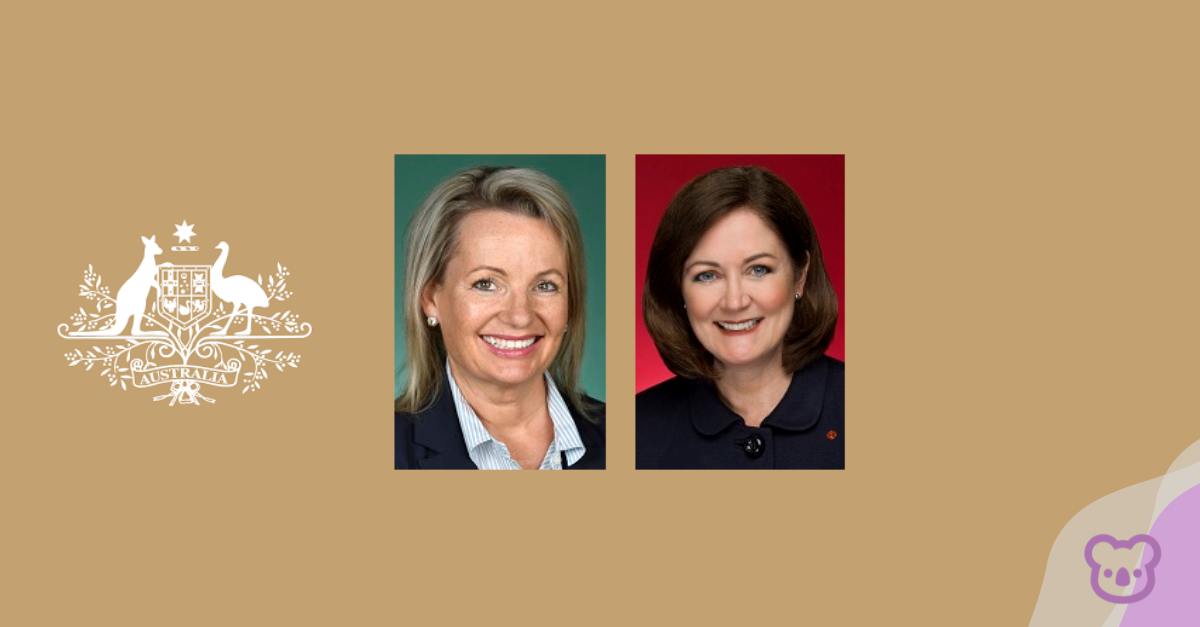
The Coalition has expressed “serious concerns” about the methodology being used by the Government to calculate international student caps. In a joint statement, Deputy Leader of the Opposition, Sussan Ley, and Shadow Minister for Education, Senator Sarah Henderson said, “Every day generates more questions than answers about the Albanese Government’s flawed methodology used to allocate foreign student caps across the higher education and vocational sector”. They also said the Minister for Skills and Training, Andrew Giles, had been “caught out lying” about ghost college numbers.
Enrolment caps
Senator Henderson is the Coalition’s representative on the Senate Education and Employment Legislation Committee that is undertaking the inquiry into the Education Services for Overseas Students Amendment (Quality and Integrity) Bill 2024, and it appears that she is listening to the sector’s concerns.
This latest attack focuses on the flaws in the Government’s methodology used to calculate provider caps, saying “experts and the sector have raised the prospect that the methodology Labor may have applied to student caps appears to be totally automated” (emphasis added, there’s no ‘appears to be’, as far as The Koala is aware).
Sanctioned vocational colleges being allocated provider caps, pilot training schools on the verge of collapse and the rewarding of a minority of providers that have maximised profits are examples cited by the Coalition, which is now saying that the approach “threatens key areas of the economy”.
The methodology for calculating enrolment limits is not specified in the ESOS Amendment Bill, it will be a separate legislative instrument. Nonetheless, the Coalition’s position gives a glimmer of hope to the international education sector that it will not allow the Bill to pass in its current form, saying that “the Albanese Government’s scheme is riddled with incompetence, secrecy, uncertainty and unfairness”.
Although the sector should be in no doubt that the Coalition continues to support imposing caps on international students, as it has repeatedly welcomed the idea of a cap. “The Coalition supports capping international students, but we will continue to scrutinise this process and will do so until we get the answers we are seeking,” the joint statement says.
“Over 150 ghost colleges axed”
It was the media release headline from the Minister for Skills and Training, Andrew Giles, on 21 August, that initially caught the attention of The Koala. The Age coined the term ‘ghost colleges’ in 2023 to refer to education providers in the Melbourne CBD enrolling students on a student visa, without delivering any training.
The Koala ‘fact checked the release’ (TKN 23/8/24) and found that the Government was referring to ‘dormant’ providers in the release, rather than operating colleges that were not delivering any training. In the release, the Minister said it had “weeded out” the 150 dormant operators.
Fast forward to the second hearing of the Senate Committee on the ESOS Amendment Bill on 26 August, and the appearance by Saxon Rice, CEO, Australian Skills Quality Authority (ASQA). Senator Henderson’s opening question for Rice was, “how many so-called ghost colleges have, in fact, been shut down?”, which was taken on notice.
What we learned from Rice during the hearing was:
- The 150 ‘ghost college’ providers referred to by the Government were lapsed providers, none had been operating for the past 12 months, and none had any students in the period of 12 months or more. Of the 150, 18 were CRICOS registered.
- Of the 3800 providers regulated by ASQA, 999 are CRICOS providers.
- 165 providers are under investigation by ASQA (relating to 200 ‘serious matters’), around 100 of these are CRICOS providers.
Rice also told the Committee, “I’m not aware that ‘ghost colleges’ is a definitive term. The way in which ASQA refers to ghost colleges is in relation to non-genuine providers and particularly in relation to delivery of international education”.
Following the release of ASQA’s responses to the questions on notice, Claire Field unpacked the data. She found that she could not replicate the Government’s claim of ‘150’, but what she could do is identify a list of 144 lapsed providers. Field calls into question the use of the ‘ghost college’ to describe some of the lapsed providers, “They include two providers which are known to me and which are among the best private providers Australia has produced”.
This leads us to the Coalition accusing Minister Giles of lying, when in fact “These organisations simply ceased providing vocational courses. They are not ghost colleges at all”.
“The Coalition expects Minister Giles to correct the record today and will pursue him over this deliberate deception”.
To end on a positive note, even if there is a political point-scoring motive, the statement says, “the fact that the vast majority of Australia’s vocational and higher education providers are responsibly run and deliver world-leading high quality services has been ignored by Labor”.
The coalition’s release can be seen here.