












Higher Education Australia (HEA) has put employer connections at the centre of its postgraduate proposition, launching a model that combines a Master of Information Technology with professional development and the opportunity to undertake paid, course-related work before graduation.
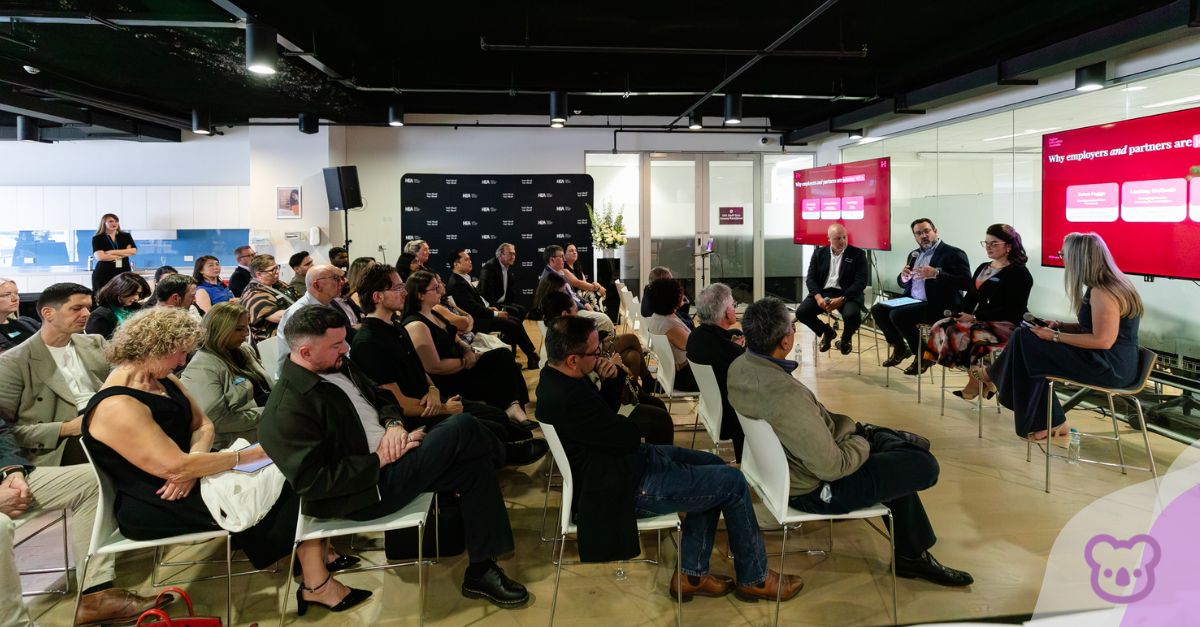
The Melbourne-based provider introduced its offering to education stakeholders at a launch event on Friday, ahead of its first student intake on 15 February 2027. Its Professional Edge program is designed to connect classroom learning with workplace experience, professional mentoring and the networks students need to establish their careers.
“Every family asks an agent the same thing: what happens after the degree?” said Rachelle Matousek, CEO and Co-founder of HEA.
“Employers tell us a new graduate takes around two years to be ready. We’ve brought those two years forward.”
Through Professional Edge, students begin developing professional skills in their first semester, with the opportunity to undertake up to 18 months in a paid role relevant to their field of study.
“They don’t start their career at graduation. They start it while they study,” Matousek said.
The proposition addresses a familiar challenge in international education: how to connect the promise of a qualification with the practical experience employers expect, particularly in a competitive graduate employment market.
Bringing employers into the equation
HEA’s model is built on the premise that professional readiness requires more than technical knowledge. Its Professional Edge program combines individual coaching, professional preparation, skills mapping, portfolio development and employer connections, with ongoing support intended to continue once a student enters the workplace.
For employers, the model offers access to a different talent pool while giving students the opportunity to develop workplace capabilities alongside their studies.
Zahra Peggs, Chief Operating Officer of TSA Group, said the program offered students an early introduction to workplace expectations.
“They start that journey right at the beginning of their education. They’re learning those norms, those ways of being effective in the workplace, right from the outset,” Peggs said.
She said TSA Group had faced challenges attracting the talent it needed at rates it could afford, describing the program as an opportunity to access a different pool of candidates.
For Ben Cohen, Director and Principal Lawyer at Cohen Lawyers Australia, the potential benefit is similarly practical.
“Hiring IT people in Australia is an expensive proposition, much like hiring lawyers,” Cohen said.
Cohen made clear that participation in the program would not guarantee employment. He retains responsibility for assessing candidates and making hiring decisions.
“I vet the CVs and offer the job myself. There’s no guarantee. But if they’re good and they mesh with my team, I’m going to give them a job.”
HEA is offering access to employment opportunities, not an automatic placement or job outcome. Student readiness, the availability of suitable roles and individual employer decisions will determine who secures paid work.
The quality of those opportunities, and how effectively students balance employment with postgraduate study, will ultimately shape the experience.
Angela Gaylard, CEO of The Man Cave, highlighted the ongoing relationship between the provider and employers as a point of difference.
“Often with other programs the student is handed over, and then the third party walks away. Professional Edge works with the employer through induction, mentoring and coaching,” Gaylard said.
“In many cases they start about six months into their master’s. While they’re still building their skill set, we’re working beside them.”
Professor Amandeep Sidhu, founding partner of Zetta Cognition, also pointed to the potential value of longer placements, saying students could work on a project “from start to end”.
Together, the employer perspectives suggest the model is intended to extend beyond a conventional work placement, with an emphasis on continuity, supervision and the development of capabilities in a real workplace.
Price and employability in a crowded market
HEA’s Master of Information Technology is a two-year program with elective choices and optional specialisations in artificial intelligence, business analytics, cybersecurity and project management.
The provider has announced a founding offer of $30,000 for the full degree, including Professional Edge, for the first 25 students enrolling in the February 2027 intake. The standard international student course fee is $48,000.
The combination of a lower introductory price and a structured pathway towards relevant work gives HEA two clear points of difference to communicate to prospective students and the education agents advising them.
But the proposition will need to stand up on both fronts. A competitive fee may attract interest, while the employment component will depend on HEA building and maintaining a network of employers with genuine workforce needs and suitable roles.
Students will also need to meet workplace expectations while completing their qualifications, making the quality of support and the compatibility of study and work central to the model’s success.
HEA co-founder Raj Malhotra framed the initiative as a response to a disconnect between employer demand and graduate readiness.
“Australia needs skilled people, and employers can’t find them. Meanwhile, talented students are graduating without the experience to get a start,” Malhotra said. “We built HEA to close that gap, so everyone wins.”
Whether the model can deliver on that ambition will become clearer as its first cohort progresses through the degree and begins taking up employment opportunities.
For education agents, the immediate question is whether the offer represents a credible fit for students seeking a postgraduate IT qualification with a stronger connection to work. For HEA, the task is to translate the launch proposition into a consistent student experience, backed by enough appropriate employers to make the opportunity meaningful.
The first intake is scheduled for 15 February 2027. The launch has introduced the model to the market. Its longer-term credibility will rest on what happens after students enrol.
To find out more about Higher Education Australia, visit heau.edu.au.











