








International education was a recurring thread during the latest round of Senate Estimates, surfacing across multiple portfolios in discussions spanning migration caseloads, processing backlogs and system capacity.
Additional Budget Estimates (Senate Estimates) were held in the week of 9 February, although publication of one transcript was delayed. If you’re not a regular reader, Senate Estimates gives non-government senators the opportunity to question public servants and government senators about government programs, policies and anything else that is on their mind.
Federal Circuit and Family Court of Australia
Student visa matters were raised during the questioning of the CEO and Principal Registrar of the Federal Circuit, Mr David Pringle. He confirmed a sharp rise in total migration filings, increasing from around 3,500 matters five years ago to an expected 10,000–11,000 this financial year, growth he described as “exponential”. Pringle said that student visa matters have historically accounted for 50–55 per cent of the caseload.
Pringle said that the current surge is being driven largely by protection visas, but the Court expects student visa cases to rise as refusals move “downstream” from Home Affairs through the Administrative Review Tribunal. Processing times, which had stretched to three to four years, remain lengthy at around 50 months, although clearance rates have improved significantly.
Administrative Review Tribunal (ART)
The ART reported that as 31 January, the ART had 129,444 cases on hand:
- This is a four per cent increase since the end of October 2025.
- The ART currently has 50,686 student visa cases on hand, up from 48,826 on 30 November 2025.
- 6,373 student visa related decisions were made in the seven months up to 31 January. This compares to 5,644 in the entire 2024-25 year.
One of the lines of questioning that arose again at Senate Estimates, as it did in December 2025 (TKN 111225), was the reason for the large number of student visa reviews being remitted or overturned (the last reported figure was 44 per cent of outcomes resulted in a changed decision). ART’s Chief Executive Officer and Principal Registrar, Mr Michael Hawkins AM, re-confirmed that applications are often refused due to missing documents – such as confirmations of enrolment, English language evidence and access to funds – only for those documents to be produced at ART, resulting in a changed decision.
There was a short discussion about recent changes to the Migration Act 1958 relating to how the ART will decide certain review applications without an oral hearing that will alleviate some of the ART caseload.
Home Affairs
On temporary visa data, Home Affairs reported:
- At 30 November 2025, there were 2.857 million temporary visa holders in Australia, down from 2.925 million at the end of October
- At 31 December 2025, of the 412,578 bridging visa holders, 107,000 were students
Education
The most intriguing line of questioning came from Liberal Senator Maria Kovacic and related to the amendments to the Education Services for Overseas Students Act 2000 at the end of 2025, following the passage of the Education Legislation Amendment (Integrity and Other Measures) Bill 2025.
Kovacic asked the Department of Education how many courses had been automatically cancelled under the new provisions of the Act. The answer, as we now know, was none.
That, however, was not the intriguing part.
The interest lay in the follow-up exchanges. Officials indicated that nothing was currently in the pipeline, with the Department focused on implementing the ban on agent commissions for onshore transfers. However, Karen Sandercock, First Assistant Secretary, International, added that other arrangements were still under discussion and consideration.
Kovacic responded that it was “our understanding that there were ministerial cancellations planned from day one”, to which Labor Senator Jess Walsh replied: “there’s evidence that needs to be collected, and all the work is under consideration”.
There was also quite a long line of questioning about the National Planning Level, the increase from 295,000 for 2026, and the formula used to calculate new overseas student commencements (NOSCs), but we didn’t learn anything we didn’t already know.
Tertiary Education Quality and Skills Agency (TEQSA)
There were no questions for TEQSA related to international students.
Australian Skills Quality Agency (ASQA)
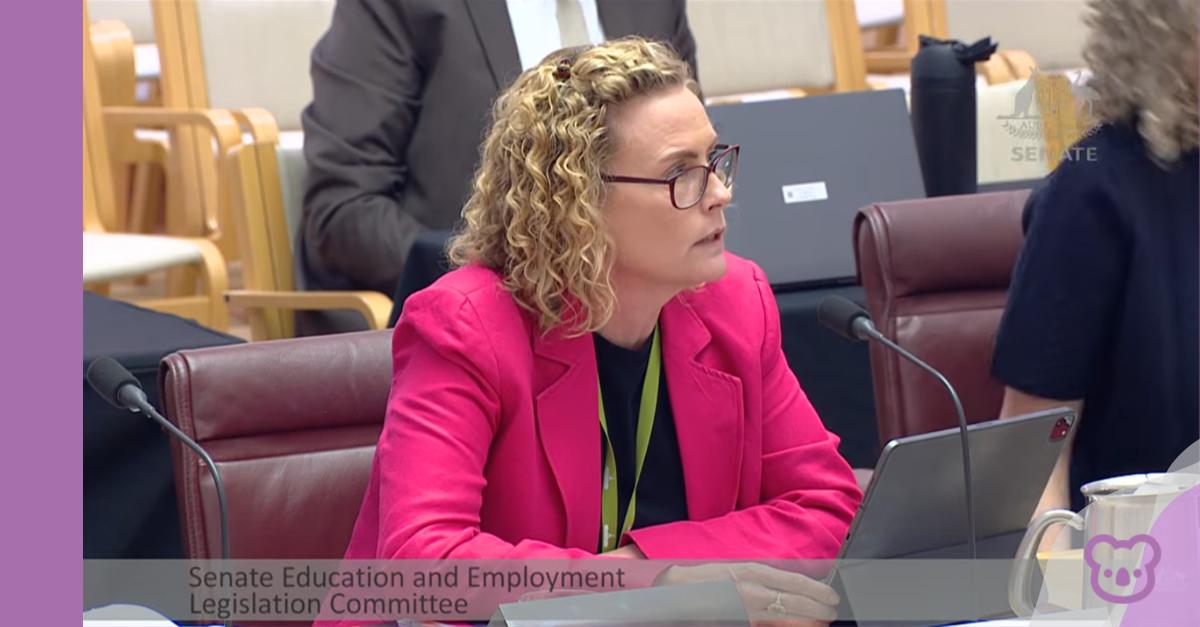
During the questioning about ASQA’s notice of intent to 36,600 individuals to cancel qualifications, Chief Executive Officer, Saxon Rice, confirmed that only one provider was CRICOS registered. She also confirmed that it was not the international student cohort of that provider that ASQA was concerned about. Rice said that ASQA’s concerns were primarily about “providers who are only registered to deliver to domestic students”.
Department of Foreign Affairs and Trade (DFAT)
There was no mention of international students during the DFAT hearing, nor for Austrade or Tourism Australia.
National Student Ombudsman
The Commonwealth Ombudsman, with the National Student Ombudsman, was scheduled to appear late on the first day of the Legal and Constitutional Affairs Legislation Committee, but were released from appearing. This was also the case in December 2025. The Koala is keeping an eye on this.
For the sector, there were no major revelations in this round of Senate Estimates, although The Koala will be watching closely for any indications that course cancellations are being planned.
Photo: Saxon Rice, CEO of ASQA appearing before Senate Estimates.