












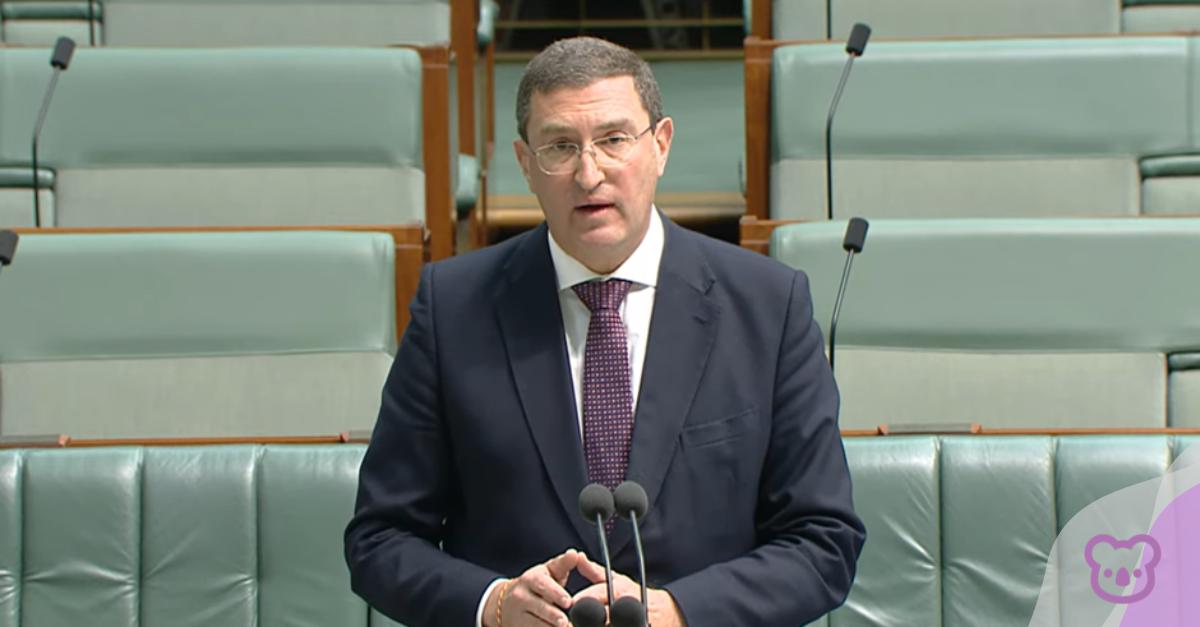
I recently called out an article in The Australian for what I believed was a misrepresentation of comments made in Parliament by Shadow Minister for Education, Julian Leeser, in response to the Government’s latest higher education legislation, the Universities Accord (Opening the Doors of Opportunity) Bill 2026.
The headline in The Australian, Coalition plans to slash student numbers and impose ‘Australian values’ on universities, led me to Leeser’s actual speech in Parliament. And that’s where I found the issue I actually want to discuss.
As reported in The Koala (TKN 290626), one of the things this legislation will do is establish the legislative framework under which the Australian Tertiary Education Commission (ATEC) would allocate international student places.
“Plans to slash student numbers”
As I called out in my LinkedIn post, Leeser said nothing about “vowing to slash” student numbers. In fact, what he said was:
“International students make up the largest component of Net Overseas Migration. In any attempt to address the NOM, international students will play a part. I said very clearly that I understand the value of international students to Australia.
I also said: We will want to make changes to the settings around international students, but I want the sector to know that we want to work closely with you to develop these policies and announce them in due course.”
What Julian got wrong
But something else caught my attention when I read Leeser’s speech.
“To get a student visa, you need a confirmation of enrolment. Unless a university is allocated international student places, they will not be able to issue that confirmation,” Leeser said.
This is not what the Bill says. Following the failure of the Education Services for Overseas Students Amendment (Quality and Integrity) Bill 2024, there is currently no legislative mechanism allowing the Government to impose provider-level caps on international student numbers. The proposed legislation does not change that. It will not prevent providers from issuing confirmations of enrolment above their allocation.
Instead, the Bill requires ATEC to consider a provider’s performance against its previous allocation when determining future allocations. It does not establish any direct statutory consequences for a provider exceeding its allocation.
Andrew Norton reaches much the same conclusion (TKN 080726), arguing that the Bill will actually leave the sector “with something similar to the current national planning level allocations”.
The absence of penalty provisions surprised Norton, who said the Bill “does not create any power to suspend visa processing for providers that reach their allocation, as the 2024 bill did. It imposes no financial penalty for exceeding an allocation”.
What Julian got right
That isn’t to say Leeser got everything wrong. He also identified concerns about the Bill that are widely shared across the sector.
“The minister decides the number of students available. He can control how they’re distributed. He can do that by making an international allocation pool determination and then giving directions to ATEC under the new section 46B of the ESOS Act.”
“This means the minister has huge flexibility to determine the quantum, the location and the field of study for any future international student growth.”
Submissions are now open to the Senate Committee inquiry into the legislation (TKN 060726). According to Leeser, the Coalition has not finalised its position on the Bill and it will make a decision “based on evidence” following the inquiry.
The sector will no doubt welcome the Coalition testing the legislation through the Senate inquiry. But if it intends to propose amendments, those amendments should be based on what the Bill actually does, rather than what political rhetoric suggests it does.