












Big conferences can be intense for even the most seasoned networker, with scores of new faces, sessions packed with urgent industry updates, and the ever-present exhibition hall crammed with organisations and people you’ve only ever met in your inbox.
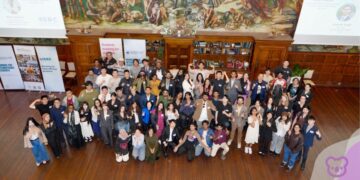
Hosted in Australia for the first time since 2016, the annual APAIE conference felt different, and in a good way. From smiling student volunteers at every door, to the frothy pink cherry trees lining the avenues of the Japanese university stands, there was colour, humour, and a genuine desire to connect around every corner. Delegates from 66 countries were curious and questioning, keen to make the most of opportunities to chat face to face without the constraints of air miles and time zones.
At the same time, the conference theme of collaborating for sustainable impact was being dissected and deconstructed during 6 parallel sessions every day, morning and afternoon. I wouldn’t attempt to summarise everything that was discussed, but here are some tasty slices of APAIE goodness from sessions I attended with my trusty digital notepad. If you’re more of a visual thinker, catch the mind map versions too!
Finding opportunities to include everyone in international education
“The proud mission of those who have been able to receive education must be to serve, in seen and unseen ways, the lives of those who have not had this opportunity” (Daisaku Ikeda)
Jon Chew (Navitas) explored the uneven distribution and potential consequences of learning loss after COVID-19 across the globe, which is still playing out in myriad ways in our institutions and student experiences. We also gained diverse perspectives on inclusivity from the Institute of International Education, where Jonathan Lembright, Diana Jahja and Vivek Mansukhani touched on innovations in Myanmar, Indonesia, and India to extend the benefits of international education to those who may never set foot outside their home country. Another session showcased a Study NSW-funded initiative designed to bridge the gap between student skills and workforce needs – in this case involving partnerships between universities (notably Charles Sturt and Wollongong), local industry in regional Australia, and enabling technology from Global Study Partners.
A call to do better on student enquiries and experience
“Students still like talking to people, not just chatbots” (Chris Davis, Edified)
Edified’s Enquiry Experience Tracker analysis revealed areas for improvement in how universities and agents worldwide handle student enquiries. In short, the picture isn’t great, and we could all do much better, if only we actually responded to prospective students’ questions! In another session, Varsha Devi Balakrishnan delved into a parallel view from The Social Source, which offers real-time data on student trends, focussing here on students from the Southeast Asian diaspora. Varsha was joined by Deakin University’s Karen Gould and the University of South Australia’s Gabrielle Rolan for a quick tour of current sentiment from Malaysia to Vietnam. The message from this and other sessions was clear: we need to listen better, more often, and more authentically to student voices, right across the student journey.
Harnessing data, networks, and global partnerships
“You have to be intentional about the data you gather and analyse – understanding WHY you’re doing it is so important” (Jennifer Wilkinson, London Metropolitan University)
There was plenty of data across many of the sessions, but Vedika Taunk (Humber College, Canada) and Jenny Wilkinson (London Metropolitan University, UK) took us into the detail of how they use data to understand recruitment needs and implement change. Just as important as gathering and analysing data, however, is understanding what NOT to use – both speakers emphasised that there is such a thing as too much data, and we can waste a lot of valuable time analysing vanity metrics and data we can’t action. I couldn’t agree more!
As a key theme in the conference, partnerships were front and centre, including an insightful session from leaders at transnational campuses in Mauritius (Curtin University), Malaysia (University of Nottingham), and Singapore (Newcastle University) sharing impacts of overseas campuses on local community and innovation. Members of the Universitas 21 network also shared insights and kicked off roundtable discussions about what makes a strategic partnership and global network sustainable and rewarding for all.
Highlighting the humans behind the institutions
At a time when international education is grappling with the ongoing complexities of shifting policy, volatile global politics and challenging economic conditions, hope lies with the hardworking humans who support this vibrant sector, bringing experience and wisdom when it is needed most. For me, these authentic, sustainable partnerships and evolving networks are what conferences like this are all about – and APAIE 2024 nailed it.












