











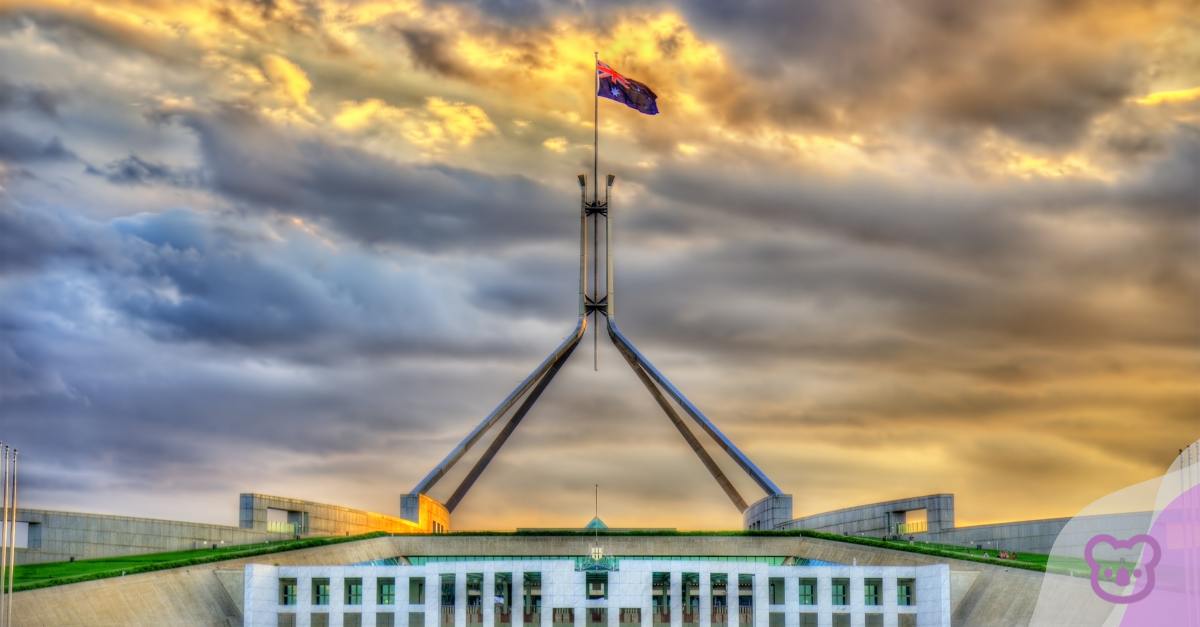
With the Prime Minister recently completing the drive to up Dunrossil Drive in Yarralumla to see the Governor General, we now know the election date is set for 3 May, 2025. Here’s some advocacy advice to ensure International Education is a positive election issue.
Talk to your Candidates – they’ll be about
Now is the time to talk to candidates in your electorate. I know it can be painful when you’re walking up to the train station or going grocery shopping with a candidate being there handing out flyers but now is the time to stop and discuss International Education.
Candidates, especially those in marginal seats, which are more and more prevalent these days, want to win. So, ask them “what are you doing for international education?” Tell them the sector has been beaten up this past period and it just isn’t good enough.
BBQ Conversations
“BBQ Conversations” is a term that was coined in a session by Sally Gatenby and Andrew Tijs at last year’s AIEC and is something the Koala has strongly supported.
The Koala’s personal experiences underscore their premise: So many people just don’t know what we do. “Is that like an exchange program?” people ask when I say I work in International Education. They are surprised to know it is the 3rd largest export sector and employs approximately 250,000 people.
Talk to friends, talk to family. It’s important.
Media Polls
Various media outlets will use internal polls on issues to drive content creation. One such is the ABC’s “Have your say: What matters to you this federal election?” It can be seen here.
This is a great opportunity to discuss international education and the effects of recent policy shifts.
Keep a look out for additional media outlets running similar polls and take the time to contribute.
What to say? Association Election Platform’s
The International Education Association of Australia (IEAA) recently announced its election platform (TKN 3/3/25). It proposes 18 priorities across three areas: Integrity and Good Governance; Economic development and Skills Integration; and Soft Power Diplomacy and Community Integration. It is an extremely useful reference.
Universities Australia released their “2025 federal election statement” in December of last year. In international education, there are four key priorities that UA is urging the government to consider, these are:
- Work with universities to develop a new international education strategy.
- Grow Australia’s international education sector sustainably without reducing its size or value.
- Expand the delivery of international education offshore.
- Support more students to undertake study and research in the region.
English Australia’s Federal Election Statement 2025 identifies six priority actions for the government to consider and highlights the successes of International Education in Australia.
Independent Higher Education Australia’s (IHEA) 2025 Federal Election Platform comprises 14 pillars under the three themes of Student-Centricity, International Education, and Regulatory Burden.
5 suggested key messages
Message 1: The vast majority of international students don’t stay in Australia permanently.
Just over 8 in 10 international students return home or move onto a 3rd country after acquiring their Australian qualification. Only 16 per cent pursue permanent residency. Just over 60 per cent of students who shifted to a skilled permanent visa held three or more temporary visas prior to obtaining a permanent one. It isn’t easy!
Universities Australia (19/12/22) “Australia must join global race to settle international students” https://universitiesaustralia.edu.au/media-item/australia-must-join-global-race-to-settle-international-students/
Australian Bureau of Statistics (1/12/23) “Pathways to permanency” https://www.abs.gov.au/articles/pathways-permanency
Message 2: Studies have refuted the link between housing stress and international students.
Property Council of Australia “Myth busting international students’ role in the rental crisis” https://www.propertycouncil.com.au/submissions/myth-busting-international-students-role-in-the-rental-crisis
Group of Eight “Policy brief: International students and housing and other cost of living pressures” https://go8.edu.au/policy-brief-international-students-and-housing-and-other-cost-of-living-pressures
Mu and Soong (2025) “Scapegoating International Students for the Rental Crisis? Insights from Large-Scale Evidence (2017–2024)” https://link.springer.com/article/10.1007/s10734-025-01397-0
Message 3: The sector is worth $50.5b. Approx $13b in economic activity generated here via students working, while $37.5b is export revenue. This is money that comes from overseas and is injected into our economy.
Source: Australian Bureau of Statistics (25/9/24) “Recording of international students in the balance of payments”
https://www.abs.gov.au/articles/recording-international-students-balance-payments
Message 4: International education generates 68 per cent of international tourism spend in Australia.
This represents the total international student expenditure in the 2019 calendar year, including students here for less than 12 months and more than 12 months, as a proportion of total international visitor spend. Comparatively, the proportion of expenditure in Australia by international students here for less than 12 months of the total international visitor expenditure was 39 per cent. Austrade explained that the way in which the data is analysed depends on the definition of visitor in the context of the visitor economy.
Source: Inquiry into Australia’s tourism and international education sectors (Page 14)
Message 5: While Australia is often referred to as a quarry with a view. International Education is the largest export we don’t dig out of the ground. In fact, it’s Australia’s third largest and it employs around 250k people.
This is an easy one to remember and lends some gravitas with the politicians.
The Koala wishes all candidates well in the upcoming election and wishes you well in convincing them that international education is an important part of Australia’s society and economy.











