








The creative industries have always been good at changing the rules.
Now, they are changing faster than the people working in them can afford to ignore.
Technology, shifting business models, changing audiences and increasingly complex social and cultural environments are reshaping how creative work is produced, managed and, increasingly, monetised.
For creative practitioners, that means being good at the creative part of the job may no longer be enough.
That is the backdrop to the Australian Performing Arts Conservatory’s launch of a new suite of postgraduate courses in Creative Business Management designed around creative leadership, entrepreneurship and the broader skills needed to navigate increasingly complex creative careers.
The offering includes Master’s degrees in Leadership, Digital Marketing, Event Management and Project Management, alongside Graduate Certificate and Graduate Diploma pathways.
The move follows findings from the 2025 Creative Workforce Scoping Study conducted by Creative Australia for Service and Creative Skills Australia (SaCSA), which identified workforce challenges across Australia’s creative economy, including demand for stronger business, management and leadership capabilities.
There is an increasingly obvious gap between the romantic idea of the creative practitioner and the reality of the modern creative career.
The artist, performer, producer or designer might also be expected to manage a project, lead a team, understand a business model, market their work, navigate new technologies, work across disciplines and make decisions in an increasingly complicated cultural environment.
In other words, the creative industries still need creative people. They just increasingly need creative people who can do a lot more.
APAC CEO Sanjay Bhaskaran said the new programs recognise that practitioners are increasingly leading projects, teams, organisations and enterprises alongside their own creative practice.
“Creative talent remains fundamental, but contemporary creative careers also require people who can navigate complexity, bring others together around an idea and create the conditions in which creative work can flourish,” he said.
APAC Head of Postgraduate Studies Dr Jodie Taylor said the programs are intended to develop practitioners who can respond to technological and cultural change while also thinking critically about the responsibilities that come with creative work.
That includes creative leadership, entrepreneurship, marketing, project and event management, emerging technologies and strategic thinking, alongside research, communication, ethical practice and creative problem-solving.
It is a fairly broad brief, but that may be the point.
Creative careers have never been particularly good at staying in their lane.
A graduate might move between employment, freelance work, entrepreneurship, consultancy, research, project leadership and their own creative ventures during a career. Preparing someone for one narrowly defined job therefore risks preparing them for a labour market that may not exist for very long.
APAC says its new programs will instead use project-based and practice-informed learning, allowing students to develop their own projects, work with industry contexts and collaborate across disciplines.
That emphasis on adaptability is particularly relevant in Queensland, where the creative economy is being backed by significant production and infrastructure activity.
In 2025-26, Screen Queensland supported 117 projects, generating an estimated $541.8 million in direct Queensland production expenditure and more than 6,600 employment opportunities.
The Brisbane 2032 Olympic and Paralympic Games will add another layer of opportunity across events, performance, media and cultural production.
But there is a bigger question sitting underneath those numbers.
If Queensland is going to grow its creative economy, it will need more than productions, venues and funding. It will need people capable of turning opportunities into sustainable creative businesses, projects and careers.
That makes the skills conversation more interesting than simply asking how many creative jobs will be created.
The more difficult question is whether education is preparing people to operate in an industry where the definition of the job keeps moving.
APAC’s postgraduate offering is built around the idea that it should.
The ambition is not simply to produce graduates who can step into the creative industries as they exist today, but practitioners who can help shape what those industries become next.
For an industry being reshaped by technology, economics and culture simultaneously, that might be the more useful definition of employability.
Applications are now open for APAC’s February 2027 postgraduate intake. For more information, see here.
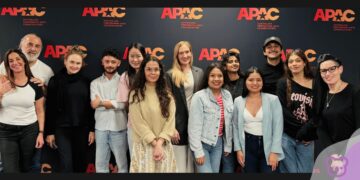
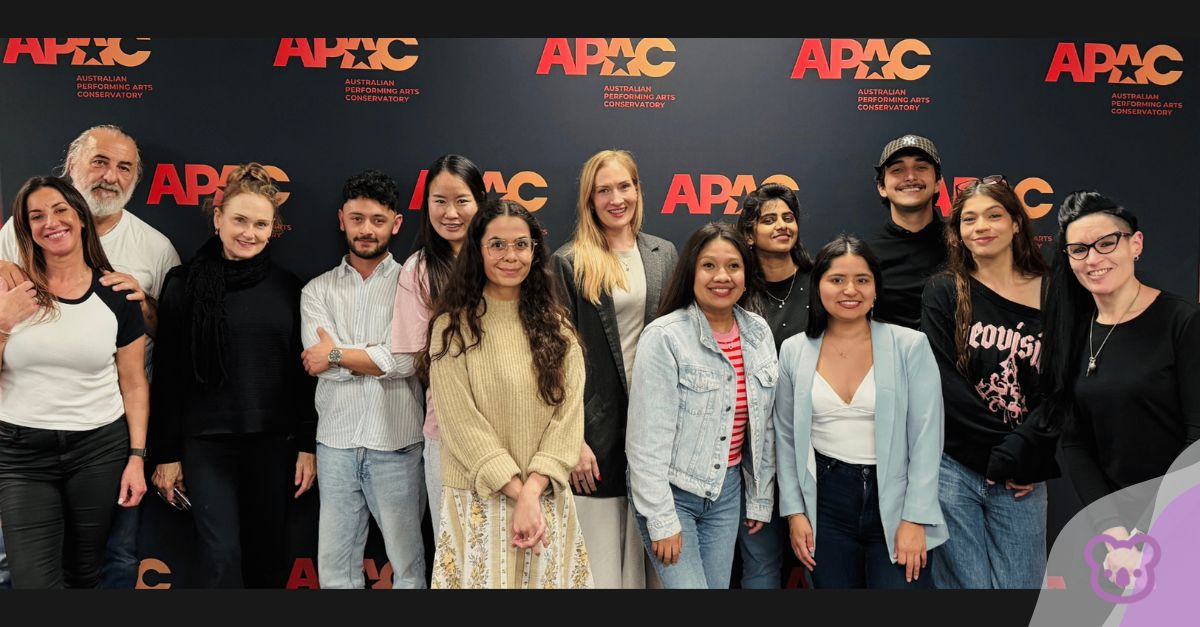
Photo: APAC Head of Postgraduate Studies Dr Jodie Taylor with the first cohort of Master of Creative Business Management students at APAC’s Brisbane campus