


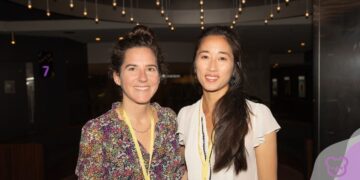



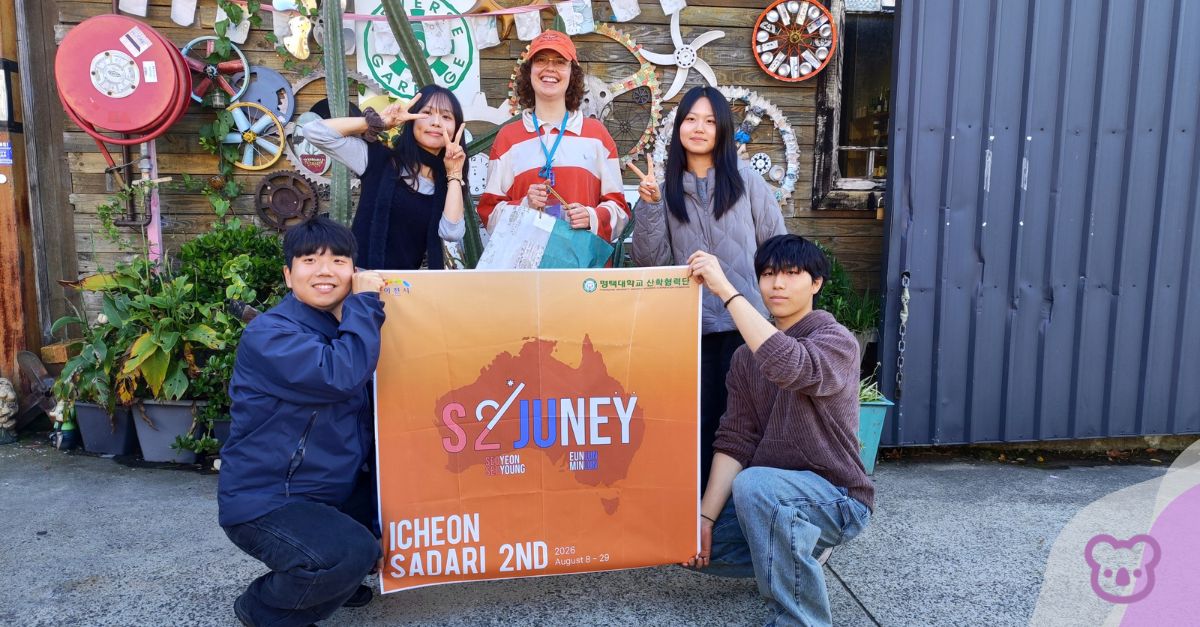
For the second consecutive year, 14 participants in the Gyeonggi Youth Ladder Program have spent time in Sydney, combining their studies at the University of Sydney Centre for English Teaching with opportunities to explore Australian culture, businesses and professional life. OZiHOUSE supported the program through homestay arrangements and the organisation of three Professional Insight Tours.
For their third and final tour, the group visited Reverse Garbage in Marrickville, discovering a very different side of Australian business and community life and seeing how an environmental idea that began more than 50 years ago continues to make an impact today.
Reverse Garbage was established in 1975 by a group of teachers and community workers concerned about the amount of useful industrial material being sent to landfill. Their solution was simple: rescue discarded materials and find new ways to use them, particularly in classrooms.
Five decades later, the organisation has grown into an internationally recognised environmental cooperative and registered charity focused on reuse and repurposing.
Education Manager Sam Daykin welcomed the group, while Louie O’Carroll, one of Reverse Garbage’s Reuse Educators, shared the organisation’s history and led participants through the premises.
They saw an extraordinary range of materials rescued from businesses and industries – expired firefighter hoses, rolls of fabric from a closed business, carpet samples, window frames and countless other items that could easily have been thrown away. Instead, they are given another opportunity to be useful.
Louie then facilitated a reuse-making session, giving the group firsthand insight into what a typical Reverse Garbage workshop looks like. Participants created artworks entirely from materials often considered single-use, using them to explore and communicate environmental issues through art.
The visit also raised an interesting business question from one of the participants: How does Reverse Garbage make money?
Although a charity and not-for-profit organisation, Reverse Garbage still has rent and operating costs to meet. Much of its income comes from selling recovered materials and delivering educational programs, both at its Marrickville site and through outreach programs such as school visits. Grants also provide some support, but the organisation is largely self-funded through these activities.
It was a valuable lesson that social and environmental purpose does not necessarily sit apart from business. An organisation can create positive impact while also developing a sustainable operating model.
Louie also explained the growing volume of waste entering landfill and the importance of thinking about what happens to materials before they are thrown away. Participants were introduced to the hierarchy of waste management and why reuse can be preferable to recycling, given that recycling itself requires energy and resources and not every material can ultimately be recycled.
The visit was the final of three Professional Insight Tours during the program. Earlier, the participants visited Bread & Butter Project, gaining an insight into social enterprise and community impact, and took part in a special marketing session with Adam O’Neill from Asia Advisory and Professor Chris Baumann from Macquarie University.
Each experience offered a different window into Australian working life, from social enterprise and marketing to environmental sustainability.
At Reverse Garbage, the focus was on a much bigger question: how can we meet today’s needs without compromising the ability of future generations to meet theirs?
The visit provided a powerful example of what can happen when local people see a problem, come together and develop a practical solution. What started with a group of teachers concerned about landfill has evolved into an organisation that continues to educate, employ, sell, reuse and keep valuable materials in circulation.
For the Gyeonggi Youth Ladder participants, it was a fitting final professional insight – one that encouraged them to look beyond the traditional workplace and consider how businesses, communities and individuals can all play a role in creating a more sustainable future.
Experiences such as these can add another dimension to international study programs, allowing students to step outside the classroom, meet people working in different fields and see firsthand how ideas are translated into real-world action.
Daniel Yuen is Head of Operations and Growth at OZiHouse.











