









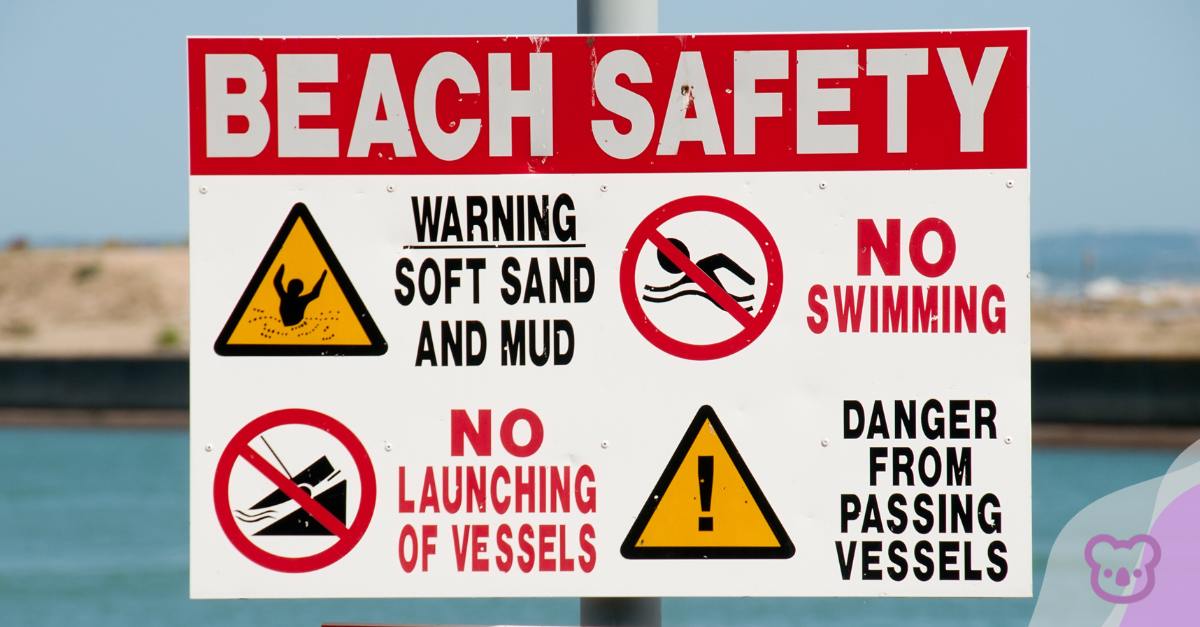
As we move closer to a new semester intake, a new study calls for the development of language around beach safety due to misinterpretations and translation challenges, mainly by international students and CALD communities but not exclusively.
The Koala spoke with Dr Masaki Shibata, an expert on beach safety and a researcher whose focus is improving it for all. He says “Coastal drownings are a regular tragic event we hear about every summer in Australia.”
“Young adults are especially at risk” he says, “They account for 25% of drowning deaths caused by rip currents according to the Royal Life Saving Society and Surf Life Saving Australia in 2023”.
It is no surprise that Culturally and Linguistically Diverse (CALD) groups and generally foreign groups who haven’t had the same exposure to beach conditions as locals face even more challenges.
The study by Dr Shibata published in Safety Science, examines Australian university students’ interpretations of the flags, terms and graphics on beach safety signs. The survey, conducted with 220 students (136 local and 84 international) showed that almost half of both groups believed that the sign, swim between the flags, is a message for both swimmers and surfers; hence, surfers need to stay between the flags.
Shibata says “Regarding terms on beach signs, the study showed 55% of local students and 75% of international students did not understand the common terms shore dump and shore break. Of those who claimed to understand them, some described shore dump as rubbish on the shore, and shore break as two currents split by a reef or rock”.
The Koala noted for those who may have trouble interpreting written text, this is where pictures are helpful.
Shibata says, “The language used on the signs has to be concise and simple, but at the same time, it needs to deliver the full message.”
This can be an incredibly difficult task. Shibata explains, “People have had different experiences of the coastal environment, and hence their interpretations of the message can differ based on their own particular experience.”
Is this really a cultural thing?
Not so says Shibata “If it were, why do over 55% of domestic students in the study still not understand them? The simple language often used on safety signs omits any “unnecessary” information. But because of this, readers are required to choose the most appropriate meaning of the word – e.g. “dump” as a kind of wave motion, not rubbish – for a particular context such as the beach, and then infer the appropriate relationship between the other words that appear with it.”
He says “the best example is the term shore break, how many readers would be likely to associate the word “break” with solid objects such as cliff or rocks rather than waves which are, technically speaking, liquid?”
“If we carefully look into the meaning of the word and the relationship between associated words, we may be able to improve the text on our signs for better comprehension and translation.” He said.
Common examples of misinterpretations include:
- Shore dump =. Shore refers to a location and dump refers to an action. However, users need to guess the Subject of the action (i.e. wave) from these two words.
- Shore break =. Users may associate break with more solid objects such as rocks or cliffs; hence, understand it as cliff collapse.
- High Surf = Surf is often translated as surfing (e.g. in Japanese). Therefore, users may believe that “high surf” is advice for surfers.
- Shore dump is translated as a place to put rubbish on the shore in Chinese. (Google Translate)
- Bluebottle is translated as blue coloured bottles in Japanese and Chinese (Google Translate)
- Swim between the flags = 21% of international students believed that this sign means “stay out of the flags if they can’t or don’t swim (e.g. walk, wade, and play).
- Red and yellow flags = some beachgoers associate the colour of red and yellow with danger like traffic lights. So, they see the flags as an indicator of danger zones.
The Koala applauds Dr Shibata’s work and knows all to well the challenges international students face when arriving in Australia in the summer months. Many international students simply have not experienced beaches and coastal waters in the way Australians have.
Dr Masaki Shibata is a Lecturer and Researcher at Monash University and offers advice and training on beach safety to international students and CALD communities. For more information, Masaki can be contacted here.