










In October this year a remarkable event happened in the Australian university sector that passed many by, as we were struggling with keeping up with the day-to-day debacle that is the current policy debate.
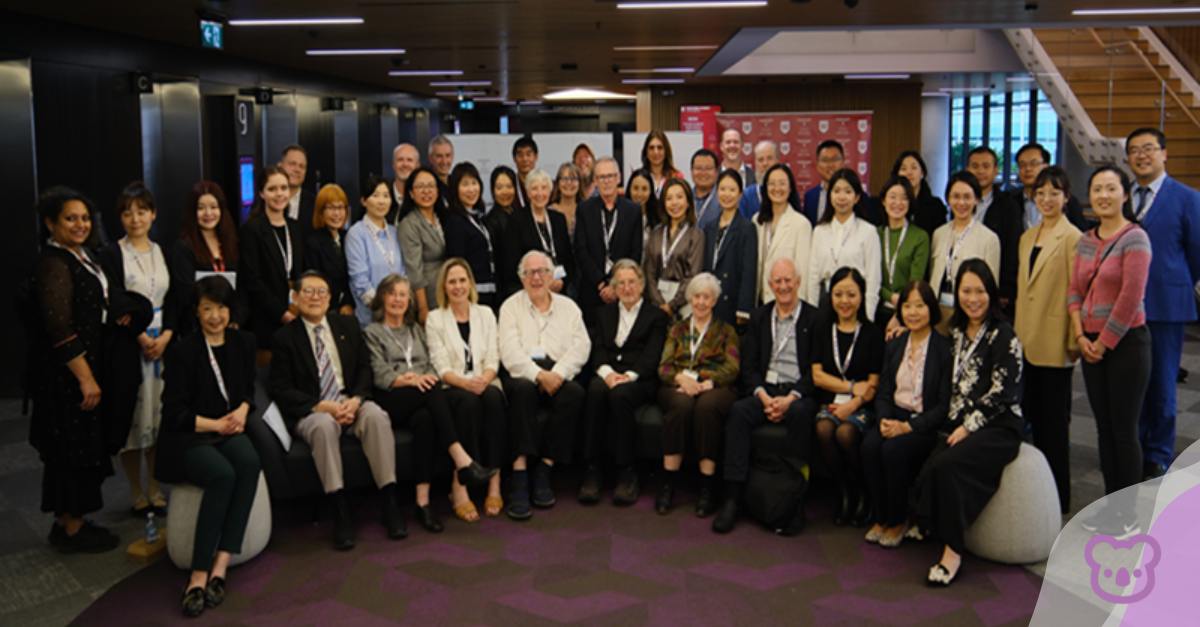
For the first time ever, an Australian Studies in China conference was held in Australia – co-hosted by Foundation for Australian Studies in China (FASIC) and The Institute for Australian and Chinese Arts and Culture (IAC) at Western Sydney University. This was a significant milestone for the Australia-China universities relationship. It was attended by approximately 30 Chinese scholars and 40 Australian scholars from a broad range of institutions and representing a range of disciplines in both countries. The enthusiasm and positivity on display at the event reflected a renewed sense of engagement between the two countries and their universities.
China is home to the world’s largest community of Australian studies scholars. The advent of this community of scholars is deeply tied to the beginnings of Australia’s international education sector, having been founded by the original ‘Gang of Nine’ scholars from China who attended the University of Sydney in the 1970s as some of Australia’s first Chinese international students.
Over time, increasing numbers of academics and students have engaged with research and study that touches in some way on Australia’s history, culture, literature, arts and economy. These scholars have been brought together through a network in China and are facilitated via the 40 Australian Studies Centres that are based at universities right across the country – from Inner Mongolia, to Fujian, to Shaanxi and Anhui.
To those of us sitting in Australia, it can seem strange that people in another country look to study “us”. We tend to have a sense that we are too small, or too connected with Britain or with the USA or with other countries in our region to warrant a discipline of scholarship in our own right. But it is indeed Australia’s place within the world, and our history of connection and migration and the arts and culture the innovation that follow that is the subject of study of many who are engaged in this community.
Australia’s way of engaging with this phenomenon is via FASIC. Initially this role sat with the Australia China Council, a part of DFAT. Today, FASIC functions as an independent, non-political and not-for-profit organization whose remit is to engage with scholars and students who are researching or teaching a subject that engages with Australia.
FASIC’s facilitated the successful BHP Chair of Australian Studies at Peking University between 2011 and 2020. This initiative played a key role in the increasing energy behind the study of Australia in China. Three successive preeminent Australian academics from three Australian institutions held the role which promoted academic engagement and collaboration with Australia.
Today, the organization offers a yearly grant round for postgraduate students and early career academics to spend time in Australia working within an Australian institution and with an Australian supervisor. It funds those who teach courses about Australia to visit Australia to work with Australian teaching academics to build contemporary, relevant and effective curriculum. FASIC awards prizes to students in translating pieces of Australian writing and prizes for original pieces of work about Australia. And the organization runs international conferences such as the one aforementioned – a way of bringing together experts from both China and Australia together across a range of disciplinary backgrounds to collaborate and discuss new ideas and potential areas of shared interest.
FASIC plays a remarkable role in the Australia-China university relationship and in the larger bilateral relationship. The organization is a platform for building genuine understanding, fostering good-will and facilitating people-to-people links.
This is particularly important for the many Chinese university students who may never have the opportunity to travel onshore to Australia. For these students, participating in a course about Australia may be their only – or their first! – introduction to our country, its history and its unique position in the globe.
The need to support and facilitate engagement with Australian studies scholars is becoming increasingly important as the USA-China relationship looks set to continue down an uncertain path. Signaling Australia’s unique identity and its universities’ commitment to ongoing research engagement will be increasingly important in the coming four years.
As the China-Australia relationship continues to move forward, there is an opportunity for Australia’s university sector to further engage with FASIC in new and different ways that can present positive signals to Chinese institutions, students and government about commitment to the relationship and genuine partnership.
To hear more about FASIC and opportunities for your institution to engage with the program of work or discuss potential new initiatives, get in touch at alehmann@fasic.org.au