
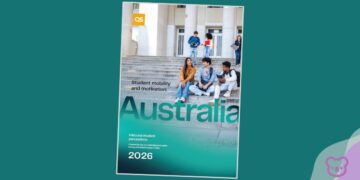












Global student mobility is back in a big way, and the new ApplyBoard Trends Report 2026 paints a picture of an international education sector that’s expanding fast, shifting quickly, and becoming more competitive by the day. For Australia, the story is promising — but also a little sobering.
The headline is this: worldwide interest in studying abroad is now stronger than before the pandemic. But the students driving that growth aren’t necessarily coming from the places they used to. Instead, the momentum is coming from Africa and Latin America, with countries like Nigeria, Kenya, Ghana, Brazil and Colombia surging up the charts. Meanwhile, the big traditional marketsof India, Vietnam and parts of Southeast Asia are steady, but not exploding the way they once did.
And that matters for Australia, because for years we’ve leaned heavily on a very small number of markets. The ApplyBoard data politely suggests we might need to spread our wings a bit.
There’s another shift worth noting: the global pecking order of favourite study destinations. Canada has climbed back into first place, the US holds second, and Australia comes in at third. Still incredibly strong, but it’s clear that students are weighing up a mix of value, policy settings and long-term opportunity, and their calculations are getting more sophisticated.
Affordability has now moved from a “nice to know” to a deal-breaker. Students are comparing tuition down to the dollar, scanning housing markets before they even look at courses, and watching visa rules like hawks. The report says clearly: students want stability, transparency and a sense that the destination they choose won’t shift the goalposts halfway through.
Australia still has major competitive strengths. Post-study work rights remain a huge drawcard, especially for students in IT, health and business. And our institutions continue to enjoy a strong reputation for academic quality and safety. But in a world where students are comparing global city to global city, not just country to country, the pressure is on for us to keep improving affordability and accommodation options.
Another interesting trend from ApplyBoard: “tier two” cities globally are booming because students are hunting for lower living costs without sacrificing outcomes. It mirrors what we’re starting to see here at home, with regional centres and smaller urban hubs becoming more attractive as purpose-built student accommodation expands and rents remain (relatively) sane.
The report doesn’t spell doom for anyone, far from it. It’s more of a friendly nudge: the world is shifting, students are shifting, and the countries that move with them will win the next decade of international education.
For Australia, the message is clear. We’re still a top-tier destination with a lot to offer. But maintaining that position will require stable visa settings, serious investment in housing, competitive pricing and stronger engagement with the emerging markets now powering global demand.
The next wave of international education is already forming. The question for Australia is whether we’re riding it — or watching it roll past.
The report can be seen here.












