













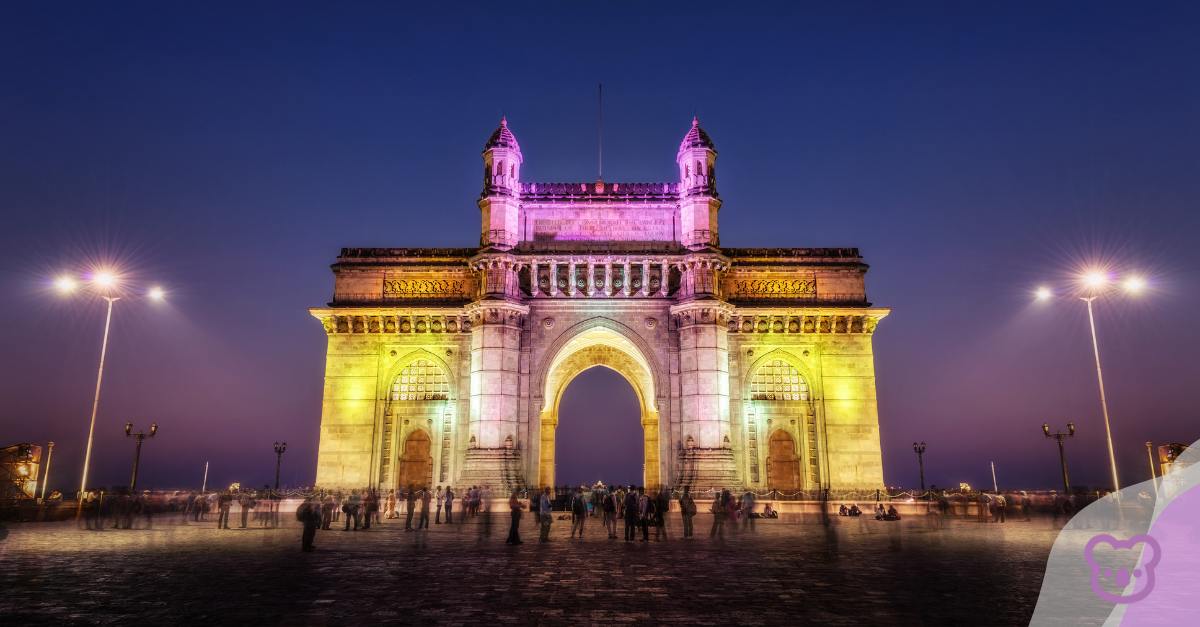
German Federal Chancellor Olaf Scholz took part in the 7th Indo-German Government Consultations in New Delhi on 24 and 25 October. Under the motto ‘Growing Together with Innovation, Mobility and Sustainability’, he met Indian Prime Minister Modi for talks on 25 October and gave a speech with him at the Asia-Pacific Conference of German Business. Scholz then chaired the seventh joint government consultation together with Modi. You may rightly ask: Where does the Indo-German love story come from?
The German economy urgently requires qualified skilled labour from abroad because the shortage of skilled workers has been hampering economic growth for years. The situation in the third-largest economy (yes, Germany has ousted Japan from the throne due to its weak currency) will be drastically exacerbated in the coming years; according to an analysis (Institut der deutschen Wirtschaft 2024), 19,5 million workers from the so-called baby boomer cohorts will be lost to the German labour market in the next twelve years. They will retire due to their age. At the same time, only 12,5 million younger workers will join them by 2036. If the government does not take urgent and active countermeasures, the consequences will be a loss of prosperity and upheaval on the labour market.
Germany is one of India’s largest trading partners in Europe, with investments in sectors such as automotive, engineering, chemicals and information technology. German companies see India as a promising market and production location, supported by skilled labour recruitment programmes and strategic partnerships in technology and innovation development. If you want to experience ‘Germany in India’, you should travel to Pune (Maharashtra). Over 600 German companies are active here. The interest in Germany is huge – many Indians are learning German here to prepare for a career or studies in Germany.
Germany feels compelled to reduce its dependence on China in order to better mitigate economic and geopolitical risks. The COVID-19 pandemic and the war in Ukraine have highlighted the vulnerability of global supply chains and the dependence on China as a critical production location. To strengthen the resilience of its economy and promote strategic autonomy, Germany is increasingly focusing on India. As a dynamic growth market and stable partner, India offers potential for diversification in areas such as technology, sustainable development, and energy, which is forward-looking for the German economy.
The start of the change in policy was already signalled in 2022. The Indo-German Migration Agreement was signed in December 2022. It aims to exchange skilled labour between the two countries and facilitates visa procedures for workers in fields such as technology, engineering and healthcare. The agreement includes measures for the professional recognition of Indian qualifications in Germany and promotes the integration of skilled workers through targeted programmes and support services.
A lot has happened since then: there have been a total of seven government consultations and the Federal Cabinet adopted a policy document ‘Focus on India’ on 16 October 2024, which sheds light on the further development of bilateral relations with India. The document highlights the strategic partnership between Germany and India, emphasising cooperation in areas such as climate protection, security, business and technology. India is presented as an emerging global player with which Germany is working together on issues such as the energy transition, security in the Indo-Pacific and multilateral cooperation.
The new strategy document emphasises that Germany wants to promote the recruitment of skilled workers from India in order to address the labour shortage in key industries. It describes measures to simplify the issuing of visas and the professional recognition of Indian qualifications. Germany is also supporting programmes to recruit and integrate qualified workers from India in order to meet demand, particularly in the IT, engineering and care sectors. Therefore, the number of skilled workers visas has now been increased from 30,000 to 90,000 yearly.
However, it is not just about labour forces, but also about India’s best talent: students. India has been one of the most important countries of origin for international students at German universities for ten years. Over 50,000 students from India are enrolled at a German university. This number is growing dynamically every year and offers enormous potential for Germany. Most of these students study Engineering or IT degrees. As a result, German universities – public and private alike – can play a pivotal role in realising the government’s strategy.
The potential of foreign students, and in particular the great potential of Indian students, is not yet being fully utilised. Only around a third of all foreign students stay in Germany for more than ten years after graduating. The Federal Employment Agency (Bundesagentur für Arbeit) wants to make better use of the potential of students from India in order to combat the shortage of skilled labour in Germany. The Federal Labour Agency is pursuing a strategy of attracting skilled workers from India to Germany, but above all of keeping Indian students in Germany. Studying in Germany and entering the German labour market have not yet been sufficiently interlinked. This gap needs to be closed and this is where all those in positions of responsibility are called upon. Many Indian students study in Germany in English. The lack of or insufficient knowledge of German causes problems on the German labour market.
There are currently 138,000 Indians in Germany in employment subject to social security contributions, 85,000 more than five years ago. On average, they earn around 5,300 euros gross per month – the overall German median is 3,796 euros. 54% of Indians in Germany are considered highly qualified.
8% of young Indians up to the age of 35 could imagine living and working in another country in the world. In view of India’s large population, this corresponds to a potential of up to 40 million people. The Indian labour market does not currently offer sufficient prospects. Therefore, the Indo-German Lovestroy has real potential to become ‘a partnership for life’ and offers both sides a great win-win opportunity.












