










When Federal Education Minister Jason Clare addressed the Australian International Education Conference in October, he offered a reminder of what the sector can sometimes lose sight of amid discussions about enrolments, visa settings, revenue and policy reform.
He told the story of a young woman from a Delhi slum who had invited him into her family’s modest home during a visit to India. Her father worked as a barber across the path from their home, and the family shared a small space with very limited resources.
Despite those circumstances, she had finished school, graduated from Delhi University and, as Clare revealed, had been accepted into a master’s degree at the University of Sydney.
Her journey, he suggested, was a powerful illustration of what education can make possible.
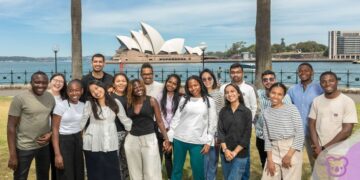
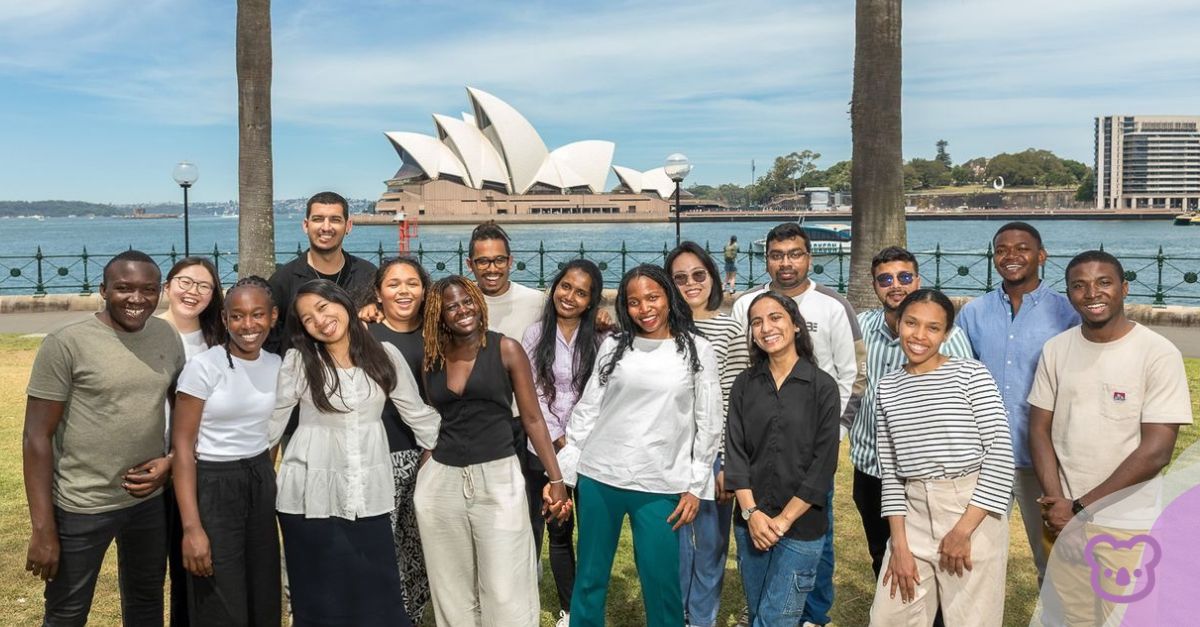
It is a story that sits comfortably alongside a growing collection of initiatives at Sydney, where scholarships are being used not simply to attract international students, but to widen access to higher education and support talented people from disadvantaged communities.
The University’s work in this area began in 2019 with an India-focused scholarship program, developed in partnership with organisations working in disadvantaged communities. In 2024, the initiative expanded beyond India, broadening its reach to students from other developing countries.
The expansion also aligned with the University’s Sydney in 2032 Strategy, which places social equity at the heart of its future, with a commitment to creating a more diverse and inclusive university community and recognising the transformational power of education.
The Sydney International Equity Scholarship is perhaps the clearest expression of that commitment.
Working with non-profit organisations that understand the communities they serve, the University identifies talented students from low socioeconomic and marginalised backgrounds who might otherwise struggle to access an Australian education.
The support is substantial, covering full tuition fees, overseas student health cover, accommodation and all meals, a $12,000 annual living allowance, return flights, textbooks and other study-related costs for up to two years.
The importance of the model is perhaps best understood through the experiences of its recipients.
One is Luiz Augusto Duarte de Araújo, who grew up in a favela in Rio de Janeiro, Brazil. Supported through the EduMais organisation, which had helped him through school and his undergraduate studies, Luiz received a Sydney International Equity Scholarship to undertake a Master of Interaction Design and Electronic Arts.
Reflecting on what the opportunity means, he offered a particularly telling observation:
“Maybe I can be the person who will open this door, to people from my community.”
It is a simple statement, but it captures something important about the longer-term ambition of these programs. The opportunity is not necessarily confined to the individual recipient. It can also create a pathway, an example and a sense of possibility for others who come from similar circumstances.
Luiz hopes to return to Brazil after completing his degree and share the knowledge and experience he gains in Sydney with his community.
There are similar stories emerging from India. Sana Hussain Shaikh, an IT graduate from Mumbai, received a fully funded scholarship to undertake a Master of Computer Science. She completed her undergraduate studies while working part-time and contributing towards her college expenses. Identified through the University’s partnership with the Aseema Charitable Trust, she now hopes to use her technology skills to develop solutions that improve the safety of women and older people in India.
The University’s partnerships with organisations such as Asha Community Health and Development Society in India and EduMais in Brazil are central to this approach. Rather than relying solely on traditional international recruitment channels, Sydney is working with organisations that have established relationships with disadvantaged communities and can identify talent that might otherwise go unnoticed.
The commitment also extends beyond equity-based postgraduate scholarships. The Sydney International Undergraduate Academic Excellence Scholarship provides full tuition fee support to outstanding international students, with diversity of nationality and intended degree among the considerations in selecting recipients.
A partnership with Vietnam’s VinUniversity also provides financially disadvantaged Vietnamese students with opportunities to undertake a semester of study in Sydney through a dedicated Diversity, Equity and Inclusion scholarship. Separate arrangements with the US-based Fund for Education Abroad provide opportunities for eligible American students to participate in study abroad programs at Sydney.
Taken together, the initiatives reflect a broader understanding of international education, one that recognises the value of diversity and the importance of creating opportunities for students who might otherwise be excluded.
Clare made a similar point in his conference speech, observing that international education is not a one-way street. Not everyone can afford to travel to Australia, he noted, but Australian institutions can also take education to the world through campuses, partnerships and other forms of engagement.
His broader message was that international education does more than employ Australians and contribute to the economy. It connects Australia to the world and changes lives.
That is a useful perspective for a sector that can sometimes become consumed by the mechanics of recruitment and competition for international students. Attracting talent matters, but so does recognising talent that might otherwise never have the opportunity to flourish.
Sydney’s scholarship programs offer a practical example of how universities can give something back to the markets and communities with which they work, while enriching their own campuses through a greater diversity of experiences and perspectives.
There is also a longer-term dimension. When scholarship recipients return home with new skills, qualifications and networks, the benefits can extend into local industries, communities and future generations of students.
International education is often measured in student numbers, revenue and economic contribution. Perhaps it is worth paying a little more attention to another measure: the opportunities created for people who, without that support, might never have made it through the university gates.
As Clare’s story illustrates, sometimes the impact of international education is best understood not through a set of sector statistics, but through the life of one student.










