













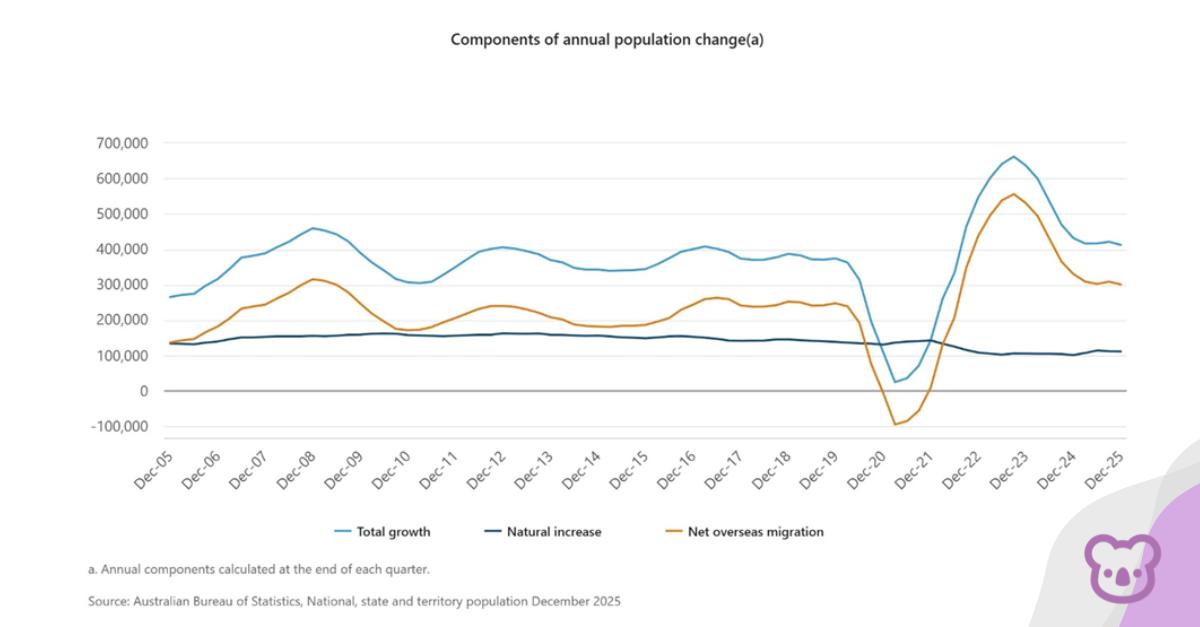
Net overseas migration (NOM) has continued to fall, with new Australian Bureau of Statistics (ABS) data showing NOM reached 301,000 in the year to December 2025, down 29,500 people, or 9 per cent, from the previous year.
Home Affairs Minister Tony Burke said the figures showed NOM had fallen by more than 45 per cent from its post-COVID peak in 2023, while NOM from temporary visa holders wad down 10 per cent over the year.
For international education, the key figure is that NOM from international students is also down 10 per cent over the year and has now returned to pre-COVID levels.
ABS data shows that in the December 2025 quarter, net overseas migration was 56,600 people, decreasing by 31,500 people from the previous quarter, continuing the broader decline from the post-pandemic migration peak.
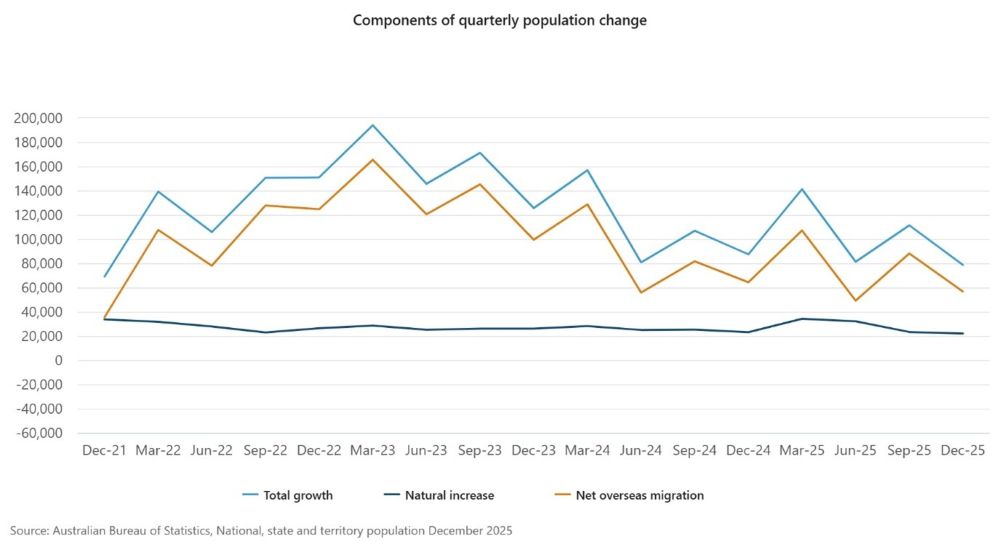
Australia’s population reached 27.8 million at 31 December 2025, growing by 1.5 per cent over the year. Net overseas migration accounted for 301,000 of that growth, while natural increase contributed 111,500.
Alongside the release, the ABS issued a reminder that net overseas migration should not be confused with Overseas Arrivals and Departures data. The agency said NOM is the official measure of migration because it captures changes in Australia’s usually resident population, while arrivals and departures data records border crossings.
The distinction matters for international education. Student arrivals are often cited in migration debates, but the ABS notes that arrivals data can count the same student multiple times if they travel during their course. In NOM data, by contrast, a student is counted when they move to Australia and again when they leave after completing their stay.
Burke also used the release to draw a link between falling numbers of temporary visa holders and international students and the Government’s migration priorities, saying: “The numbers of temporary visa holders and international students also continue to fall, as we prioritise the skills that we need to care for our sick and elderly and build homes.”
The remark reflects the Government’s increasingly explicit tendency to view international education through a migration and workforce lens. While many international students aspire to remain in Australia after graduation, reducing a sector worth billions of dollars to a mechanism for addressing labour shortages is unlikely to sit comfortably with many providers.
It also highlights the sometimes-contradictory position international students now occupy in public policy debates. Students are regularly criticised for their contribution to migration numbers, yet are simultaneously expected to help meet Australia’s future workforce needs. The result is a policy conversation in which international students are alternately portrayed as a migration problem and a skills solution.
The decline in international students’ contribution to net overseas migration is consistent with the Government’s efforts to reduce student numbers through tighter visa settings and other policy interventions. Whether viewed as a migration success story or an international education challenge, the latest figures suggest those policies are now delivering their intended effect.












