










Proposed restrictions on international students and graduates bringing family members to Australia have emerged as the main point of concern in the sector’s response to the government’s latest migration changes.
While sector bodies broadly supported measures intended to curb visa hopping, many warned that the restrictions on family members would deter genuine students and further weaken Australia’s competitiveness as a study destination.
What was announced
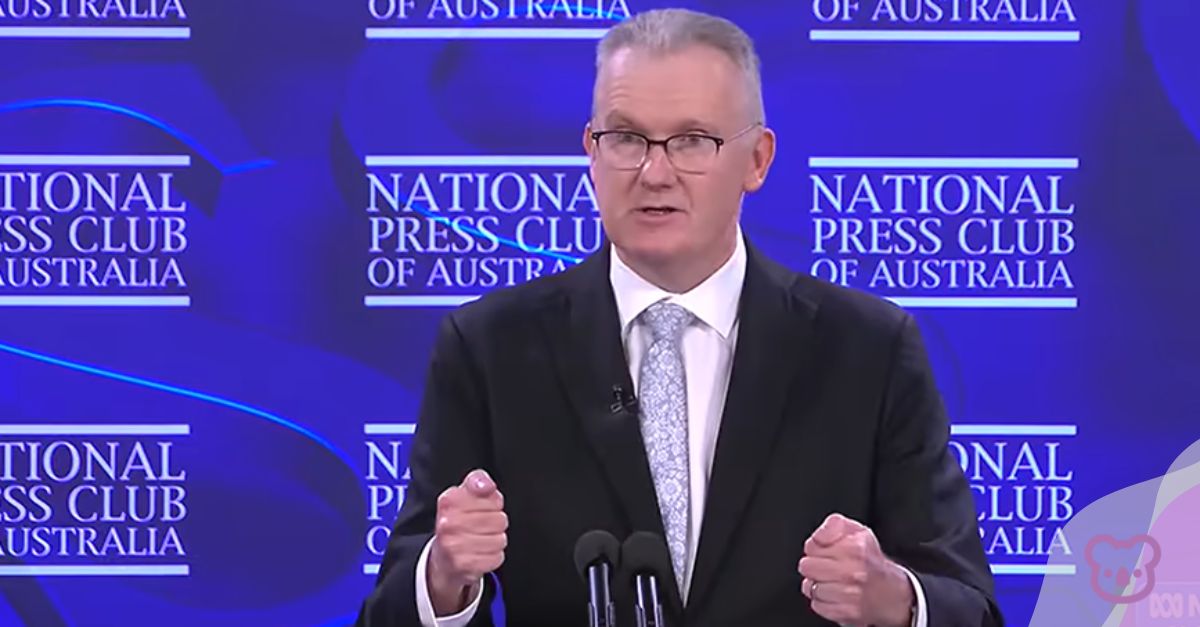
In his much-anticipated National Press Club address, The work of managing the migration program: Who arrives, who stays, who leaves?, Minister for Home Affairs and Minister for Immigration and Citizenship Tony Burke announced several changes affecting international students and graduates:
- Future holders of student and temporary graduate visas will generally no longer be able to include family members in their visa applications, with exemptions for PhD candidates and students from Pacific and ASEAN countries.
- International students wishing to transfer to another provider will be required to make a new visa application.
- Subsequent student visas will generally be granted only where the student is progressing to a higher-level qualification.
Although Burke identified three exempt groups in his speech, Home Affairs has since described the measure as restricting secondary applicants on “most student visas”. The full range of exemptions has not yet been published.
Two existing settings will remain unchanged: the 2027 National Planning Level will stay at 295,000 new overseas student commencements, while students extending their visa to complete their course with the same provider will not be affected by the new restrictions.
Asked about the effect of the changes on future international student demand, Burke pointed to the unchanged National Planning Level. He said providers would retain scope to operate successfully, but the government wanted to ensure that “what they’re selling is an education, not a migration outcome”.
Separately, Burke foreshadowed changes to the code governing migration agents.
Implementation will be staged
Home Affairs has confirmed that the migration changes will be progressively rolled out over the next 12 months, with some elements of the broader package already in force.
Ministerial Directions 121 and 122, covering processing priorities for temporary skilled visas and provisional and permanent skilled visas respectively, took effect on 19 September. These directions do not implement the student visa changes, but the speed with which they were introduced shows that parts of the broader package can move quickly.
While the implementation timetable for the student and graduate measures has not yet been released, it remains entirely possible that they will be introduced in time to affect the first-semester 2027 intake.
Questions also remain about the process and cost of applying for a new visa to transfer providers.
The sector responds
The sector broadly supported measures intended to address visa hopping and welcomed the decision to maintain the 2027 National Planning Level. However, most representative bodies expressed concern about the impact of restricting family visas on genuine students and Australia’s international competitiveness.
International Education Association of Australia CEO Phil Honeywood described the announcement as a “mixed bag”. IEAA welcomed the government’s determination to clamp down on visa hopping and the exemptions for PhD candidates and overseas government-sponsored students, but warned that students from important source countries would choose other destinations if they could not bring their partners.
“We will definitely lose talented young people as a result of today’s announcement,” Honeywood said.
Universities Australia (UA) welcomed the decision to hold migration and international student planning levels steady, contrasting the government’s approach with calls for much deeper cuts by One Nation earlier in the week.
“Cutting migration too hard comes with consequences for our economy, our universities, our workforce and the services Australians rely on,” Universities Australia CEO Luke Sheehy said.
Sheehy argued that current settings were already making it difficult for the sector to reach the government’s National Planning Level. International student commencements are eight per cent lower than last year, while the $2,500 student visa application charge, slow visa processing and other barriers are making Australia harder to choose.
The Regional Universities Network was more critical, describing the restriction on family visas as the latest in a series of decisions making Australia less attractive to global talent. CEO Alec Webb warned the measure would particularly affect regional communities already relying on skilled international graduates to help meet workforce shortages.
RUN nevertheless welcomed the exemptions for postgraduate research students and students from Pacific and ASEAN countries, as well as measures targeting course hopping and the conduct of high-risk providers.
The 2050 Alliance similarly supported changes designed to strengthen the integrity of onshore student movements but rejected the family visa restriction as an integrity measure.
“The decision today to restrict student visa holders from having family members join them is not a targeted measure to improve integrity,” the Alliance said.
It warned the change would have consequences for students, universities and local communities and could work against the government’s stated objective of diversifying Australia’s international student cohort.
Postgraduate student representatives focused on the boundaries of the research exemption. The Council of Australian Postgraduate Associations (CAPA) welcomed the carve-out for PhD candidates but called for it to be extended to all higher-degree-by-research candidates, including research masters students, and for the position of research graduates to be clarified.
“Asking a 35-year-old to spend four years apart from their children is not feasible for attracting top research talent,” CAPA National President Jesse Gardner-Russell said.
CAPA also urged the government to consider exemptions for postgraduate coursework students, particularly recipients of competitive scholarships. Its analysis found that 61 secondary visas were granted for every 100 postgraduate research student visas in 2025–26, compared with 15 for every 100 university coursework student visas.
The Association of Australian Education Representatives in India (AAERI) expected a more limited impact in the Indian market, estimating that fewer than 10 per cent of Indian students are married and travel with dependants. AAERI welcomed confirmation that Australia would continue to honour its trade agreement commitments with India and supported requiring students seeking another student visa to demonstrate genuine academic progression.
However, it called for implementation guidelines, transition arrangements and clear communication to be provided quickly so students, institutions and education agents could give accurate advice.
Higher education policy analyst Andrew Norton warned that the effect of the family restrictions could extend well beyond the 45,000 to 49,000 secondary student visas granted in a typical recent year.
“An unknown share of primary visa holders will now not consider Australia,” Norton said.
Some prospective students would not want to spend several years apart from their families, while the income earned by accompanying partners may also be an important part of financing study. Norton expects universities reliant on South Asian markets to be most affected.
Making the case for international education
UA has also stepped up its public advocacy for the sector, promoting new material on LinkedIn under the banner International education – a sector worth backing.
The five-page social media publication describes international education as “more than education”, highlighting its contribution to economic growth, local jobs, workforce needs and Australia’s international connections.
It draws on a more detailed factsheet released in April, which describes international education as a $55 billion export industry supporting 250,000 jobs. The new material concludes that international education is “not a policy problem to manage” but a national strength that must be protected.
The test for the final settings will be whether they address visa hopping and other integrity concerns without deterring the genuine students Australia still wants to attract.