











A PRISMS notification has been sent out by the Department of Education notifying providers that there has been an update to South Asian Country Assessment Levels.
The update states, “On 8 January 2026, Evidence Levels of several countries in South Asia were adjusted. This change in Evidence Levels will assist with the effective management of emerging integrity issues, while continuing to facilitate genuine students seeking a quality education in Australia.”
An unofficial assessment has been made and sent to the Koala. It would appear the following has occurred:
Bangladesh has moved from AL 1 to AL 3
Bhutan has moved from AL 2 to AL 3
India has moved from AL 2 to AL 3
Nepal has moved from AL 2 to AL 3
Sri Lanka has moved from AL 1 to AL 2
Assessment Levels were last updated on 30 September 2025.
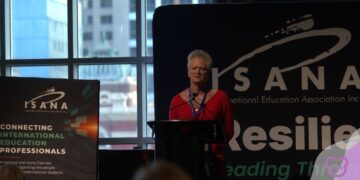
Phil Honeywood, CEO of the International Education Association of Australia (IEAA), says of the changes, “Over the last 24 hours, I have had a long discussion with Minister Hill about the sector’s concerns, primarily with two aspects of the assessment level changes. First and foremost, the frequency of change is causing confusion amongst providers here and agents offshore. Secondly, at the very time we are trying to ensure a good start to the year intake, we again appear as though we are not quite sure which countries we seek to recruit from. The Minister made it clear that Australia has now become the least worst country of choice amongst the Big 4 (USA, UK, and Canada). On his recent trip through South Asia, he was provided with what he believes to be clear evidence of an upsurge in fraudulent financial and academic aspects of applications. As a result, he has a strong view that the only way to better filter genuine students is for documentary evidence to be prioritised.”
Ravi Lochan Singh, CEO of Global Reach, a major agency which recruits students to Australia and other destinations from South Asia, says, “It was anticipated that the evidence level would decline for India, given the recent surge in visa rejections. It was evident that the Home Affairs was identifying fraudulent cases in the visa application process. Attrition has also been a concern. However, the changes implemented for Nepal and Bangladesh are unexpected. The visa success rate for students from Nepal and Bangladesh has been exceptionally high over the past few months. Amidst the ongoing political turmoil in Nepal and Bangladesh, it is plausible that some students may have applied for protection visas or other forms of visas. These changes have created a more equitable playing field for students from the subcontinent, as they now need to demonstrate their compliance with the English language and financial requirements set forth of Home Affairs. Unless the institutions are deemed low risk. I expect that to change too. However there is a need to be extra alert that dodgy students don’t take advantage of low risk institutions.”
“Fraud is evolving and becoming increasingly challenging to detect promptly. At this time we are detecting two distinct types of fraud: 1)financial documents that appear to be genuine and due to complicity of bank officials, they somehow pass the verification by agents and universities. 2)This type of fraud, known as “search funds,” is more sophisticated. we have observed instances where students seeking funds approach search fund agents who check funds held by unrelated individuals in various banks using the same name (e.g., parents or grandparents of the applying student). The funds are genuine but do not belong to the student’s family. This type of fraud is challenging to detect.”
“Home affairs is aware of them and so are agencies and we know that over the last few years there are students who may have slipped through the verifications and they have caused the attrition and have risked India’s risk level.”
“I also expect the risk levels for institutions to also slip. This will be due to the wide use of aggregators who have worked with uncontracted subagents. Some universities were deliberately targeted by dodgy uncontracted agents known as package agents. These package agents charge students a significant amount and then route the applications through some of the aggregators.”
The prisms update can be found here.