











As Australia’s international education sector continues its recovery, another policy debate has emerged over the delicate balance between tenant protections and attracting investment in purpose-built student accommodation (PBSA).
The Student Accommodation Council has warned that proposed changes to Victoria’s Residential Tenancies Act could unintentionally discourage investment in new student housing projects, potentially worsening accommodation shortages for domestic and international students alike.
The proposed reforms would cap the amount renters are required to pay when ending a fixed-term lease early. While the property industry says it supports stronger consumer protections, it argues that applying the same rules to purpose-built student accommodation ignores the unique way the sector operates.
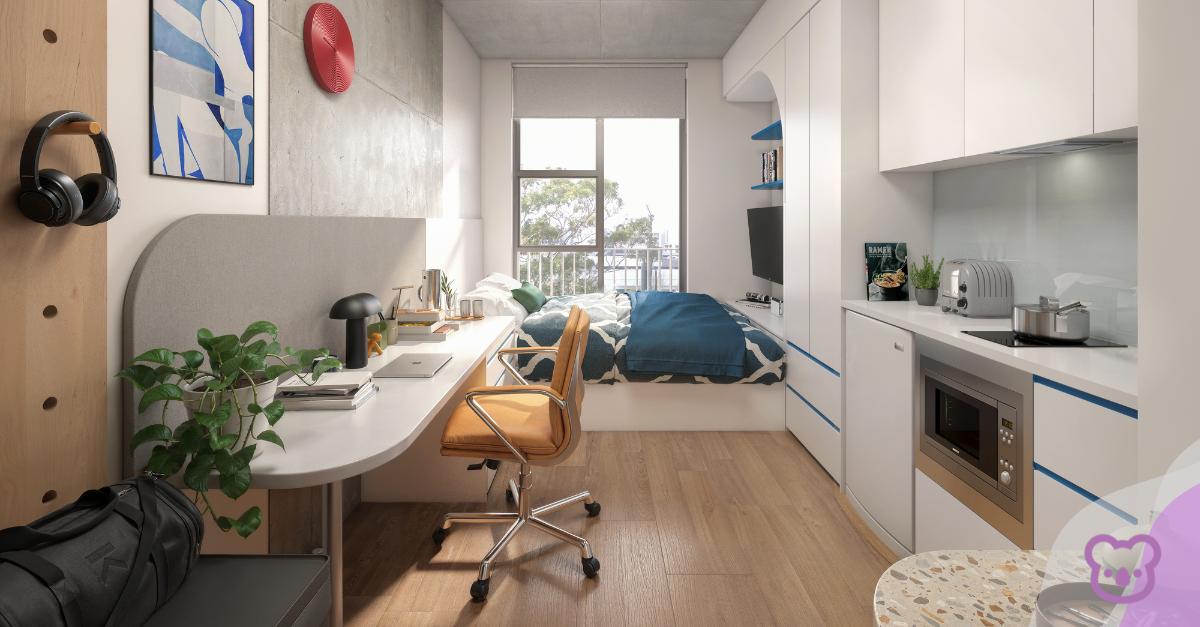
Unlike traditional residential rentals, PBSA developments are largely leased around university semester intakes. Once the main leasing period has passed, filling vacant rooms mid-semester can be extremely difficult, leaving operators carrying extended vacancies that cannot easily be recovered.
Student Accommodation Council Executive Director Dr Adele Lausberg said purpose-built student accommodation should be recognised as a distinct asset class.
“Victoria is a magnet for the brightest young minds from around the globe. Our education sector is a huge drawcard for international students, many of whom rely on purpose-built student housing.
“Student numbers are increasing and we cannot afford to drive away more projects that would house the students that play such a vital role in our economy.”
Dr Lausberg warned that capping break lease compensation could transfer significant financial risk onto accommodation providers, weakening the commercial case for future developments.
“Student accommodation is designed around the academic year. If a student leaves after the main leasing period, particularly after semester has started, that room may be very difficult or impossible to re-let for the remainder of the year.
“A capped compensation model may sound simple, but for student accommodation it shifts substantial unrecoverable vacancy risk onto providers and weakens the investment case for new projects.”
The Council is urging the Victorian Government to exempt purpose-built student accommodation from the proposed break lease provisions or develop a framework specifically tailored to the sector’s operating model.
The debate arrives at a time when student housing has become one of the defining infrastructure challenges facing Australia’s international education industry. Strong international enrolments have placed increasing pressure on accommodation markets across Melbourne, Sydney, Brisbane and Perth, while governments have simultaneously tightened migration settings and sought to address broader housing affordability concerns.
Koala News has consistently reported that the conversation around international students and housing is often more nuanced than public debate suggests. While students are frequently cited as contributing to rental pressures, industry groups argue that purpose-built student accommodation is part of the solution rather than the problem. Every new dedicated student bed can reduce demand on the private rental market by providing accommodation specifically designed for students.
The Council also points to New South Wales as an example of how policy uncertainty can influence investment decisions.
“Sydney is already showing the consequences of policy settings that make student accommodation harder to deliver,” Dr Lausberg said.
“Despite acute housing pressure, Sydney’s identified pipeline is materially lower than Melbourne’s, and only a small share of those beds are currently under construction.”
The sector argues Victoria is already competing for international capital under difficult conditions.
Research commissioned by Mandala Partners found Victoria’s Absentee Owner Surcharge had already contributed to the cancellation of a proposed 201-bed student accommodation project in Melbourne, with the report estimating the project would have generated around $60 million in construction activity and $3.8 million in tax revenue.
Dr Lausberg said additional regulatory uncertainty could further weaken Victoria’s competitiveness.
“Melbourne is one of Australia’s most important education destinations. At a time when the city needs more dedicated student housing, Victoria should be strengthening investor confidence, not introducing new uncertainty.
“These are capital-intensive, long-term projects that depend on regulatory certainty. In Victoria, feasibility is already being tested by the Absentee Owner Surcharge, and further uncertainty through break lease reforms risks making Melbourne less competitive for the global capital needed to deliver new student housing.”
The issue highlights a recurring challenge facing governments across Australia. Policies designed to improve affordability and strengthen renter protections can have unintended consequences if they reduce the willingness of investors to finance new housing supply.
For international education, where accommodation availability increasingly shapes both student experience and institutional competitiveness, the outcome of Victoria’s consultation may have implications extending well beyond the property sector. As universities continue rebuilding international enrolments, ensuring there is sufficient, affordable and fit-for-purpose student accommodation will remain a critical component of Australia’s education export success.