










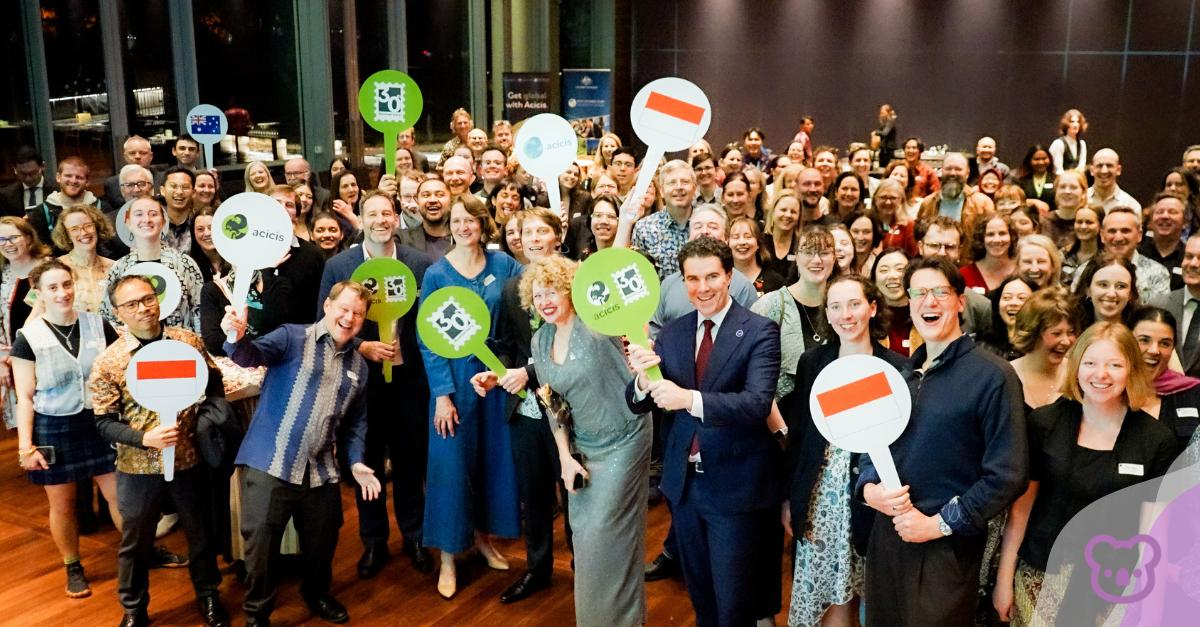
On 10 September 2025, Canberra played host to a milestone event: the Acicis consortium celebrated its 30th anniversary in style. Alumni spanning three decades, university partners, government representatives, and friends gathered to honour a vision that began in 1995.
The evening opened with remarks from Consortium Director Liam Prince, who traced the history of Indonesian studies in Australia and paid homage to Professor David Hill, the founding figure behind Acisis. He emphasised how the consortium’s creation opened a pathway (“a doorway,” as he put it) for thousands of Australian undergraduate students who have since passed through Acicis programs in Indonesia.
One of the more memorable moments came from the Hon. Penny Wong, Foreign Minister, who reflected on the importance of what Acicis does in equipping young Australians with cultural fluency and deeper understanding of their neighbour. The Hon. Tim Watts, Special Envoy for Indian Ocean Affairs, also spoke, reminding the audience that Acicis was created with a modest grant from the Keating Government in 1994—“a small contribution with a huge impact.” He credited the consortium’s decades of work for helping underpin trust and understanding between Australia and Indonesia.
Alumni stories gave the evening a personal touch. Dr Natali Pearson (2000 cohort) spoke about how Acisis shaped her view of culture and community in her professional journey, while more recent alumnus Hillary Mansour (2015) shared how her own path was influenced by her time in Indonesia. Together, these reflections underscored how Acicis isn’t just about study abroad—but lasting personal and professional connections.
Celebrations also included a playful, culturally rich moment—the launch of the Bahasa Sesh competition—where guests shared favourite Indonesian words and phrases over plates of sate ayam. Alumni reconnected, memories were revived, and bonds forged in decades past got renewed.
Looking ahead, Acicis is continuing its celebrations in Yogyakarta this October, hinting at more moments to come as the consortium builds on its 30-year history. For many, that history is proof that educational and cultural bridges can last—and matter.