











The annual SYMPLED Agent symposium was held this week at Griffith University in Southport. Over 100 agents, service providers, and education providers attended to discuss the current state of the education ecosystem.
As the MC of the event, I always relish the opportunity to foster open and direct dialogue about the issues that affect agents and their vital role in sustaining the Australian education sector. The day started on a positive note, with Jennine Tax from ‘Experience Gold Coast’ welcoming attendees and showcasing the range of incredible promotional and support activities they are undertaking to keep the Gold Coast as a major study destination.
The next session took on a more serious note, with Jonathan Chew, Chief Insights Officer of Navitas, starting with a historical recount of the history of international education as a lead-up to the current global state of affairs. He referred to the movement towards the ‘Slowbalisation’ of international education, where major destination countries are beginning to push back on the growth they once aspired to. He challenged us to consider whether the current Australian situation was a cyclical jolt or a structural change—and in his opinion, this is a deep structural change with long-lasting effects.
This statement set the tone for the day and, unsurprisingly, was echoed by most speakers. Jon’s fundamental message was that businesses must diversify and de-risk—a message we all received during Covid, but only a handful acted on.
Jon’s session was followed by a panel discussion, led by the ever-positive Rod Hearps from ICEF, speaking with Michel Sestak (SIS.Australia Online), Lucas Chiusoli (ILSC/Greystone), Rick Chapman (Griffit Uni), and Lesley Rogan (ISA). The session focused on various sector responses to the current market conditions. The hour-long discussion covered a range of topics, such as:
- Providers will consolidate courses and campuses, resulting in fewer choices for students.
- Agents must find new revenue streams or adjust their business model to survive.
- Providers will be reviewing their agent management and engagement to ensure the focus is on quality students who complete their courses.
- While the current situation is reducing interest in Australia, all parties expect things will bounce back quickly, as Australia remains a highly desirable location.
- Short-term and long-term viability will likely require diversifying and de-risking.
- There is a growing issue of colleges not paying agents’ commissions, and there is a need for agencies to share information to make decisions on which businesses they can trust.
A visa and migration update was presented by Melanie McFarlen from MMM Migration. She outlined that despite the negative changes we are exposed to, there are a number of great opportunities and changes in the migration landscape. Mel highlighted recent changes in the 482 visa, requiring only one year of work experience, and showcased how the 407 training visa is a relatively unknown visa that many employers may be able to take advantage of. A take-home message from Mel was centered around the Genuine Temporary Student statement, where she encouraged agents to directly address the common reason for visa rejection being Australia’s favourable earning conditions. She encouraged agents to make note of the higher cost of living, and comment on the fact that although earning power is higher, so too is are living costs. She advised agents to back this up with articles and research to make a more convincing argument. (Thanks for the tip Melanie).
Following Mel, Akram Mardini hosted a panel with three student ambassadors from Study Gold Coast, who highlighted the important role agents played in their decision-making and enrolment process. A discussion on the cost of living and its impact on their ability to eat properly, enjoy Australia and have a social life provided a sobering reminder that everyone is doing it tough.
After lunch, the theme of looking beyond Australia continued, as Mark Lucas from Huatong International presented, in fascinating detail, a global showcase of the number of students entering tertiary education over the next five years. Astounding statistics showed that the global tertiary-aged cohort will grow from 6.2 million to 8.8 million, with key source markets expected to boom, including Europe (250k growth), Central Asia and China (360k growth each), as well as Sub-Saharan Africa and Southeast Asia. The central message was that there is a strong opportunity, with a tsunami of new students approaching.
The session then turned into an intricate examination of the changing demand from Chinese students, where Mark demonstrated the surge in students no longer looking exclusively for Group of Eight options but also open to creative courses, design, and other non-traditional study options. Intra-Asia opportunities were discussed, with significant student flows between China, Japan, Korea, and other Asian countries. It was an eye-opening session, showing us the massive opportunities beyond Australia as a destination and the untapped potential of China.
Following Mark, the attendees heard from Alexandra Procailo, Assistant Secretary, Quality Branch, International Division, DoE, and Diana Cozadinos, Director, ESOS Policy & Legislation, DoE. It was a highly anticipated season, but was a challenging session to sit through, with a pre-written speech that had been presented numerous times to other industry groups, in typical government fashion, giving top-line information about legislation changes we are all aware of.
It’s fair to say most attendees felt there was little new information presented, and it was a disappointing missed opportunity to address the concerns of those directly affected by the changes (past and proposed) to our sector. However, there was one piece of information revealed that had not been publicly discussed: Alexandra indicated there might be some exceptions to the ban on onshore commissions for transfer students. While she did not confirm what these might be, she acknowledged feedback about scenarios where they could be allowed, for instance, if a student moved up an AQF level.
For most of the session, the tension in the air was palpable, and the frustration from the crowd was at bursting point as the 2 presenters made sweeping statements about how the Government valued our sector, and how important it was to our global reputation. To Alexandra’s credit, she opened the floor to questions, and to the crowd’s credit, no one threw rotten fruit and no foul words were exchanged. What we saw was a series of respectful questions and direct comments. Some of the questions, and crowd feedback statements addressed with Alexandra were:
- Why hurt everyone when you can just shut down the bad actors? Answer: Not given.
- How can we help you; how can we engage with you? Answer: Talk to your Austrade Rep and your peak body.
- Why didn’t you engage with industry in making this legislation? Answer: We did a lot of engagement after National Planning Levels were announced. (imagine the crowd reaction to that statement)
- How does limiting enrolments from a provider lead to increased quality outcomes—can you show us the rationale behind this factor? Answer: It’s part of a wider series of quality measures.
- We know who the bad players are; how can we work with you? Answer: Use the new ASQA hotline to report bad behaviour.
- If a student commences in 2024 but has their visa granted in 2025, are they in the 2025 NOSC? Answer: No, NOSC is triggered when they have their status switched to ‘studying’ in PRISMS, not affected by their visa status.
- Will TPS transfer students incur a ban on commissions too? Answer: Not sure, but I will take the feedback back to the team.
- What happens if an onshore student genuinely needs help to transfer? Who will help them? Answer: It’s not up to us to tell you how to run your business.
Despite the disappointment in the information presented and the responses given, the crowd thanked Alexandra and Diana for attending and giving them the opportunity to voice their concerns. Diana also acknowledged that she is new to her role, and attending earlier sessions had given her new insights into the roles and responsibilities of education agencies.
I also commend Alexandra and Diana for taking the time to meet with individuals on a 1:1 level and hear their concerns – while we appreciate they needed to ‘stick to the script’ during their presentation, and the fact they took time to have an ‘off the record 1:1 and hear people out is something we did not expect..
Dimity Hyde from Flywire had the challenging task of following this government presentation but managed to lighten the mood as she demonstrated the integrated capabilities of Flywire to manage provider applications, payments, and adjacent student lifestyle services.
As we like to do at every SYMPLED, the final session was a workshop to foster deep discussion and develop a future focused mentality. The session was hosted by myself (Simon Costain, NextEd Group), and I proposed we do a deep dive into strategy, addressing five major forces affecting us:
- Slowbalisation and major markets reducing their openness to international students
- AI and technological changes
- Rising costs of living and doing business
- Social media changes and the evolving needs of young people
- Commission caps for onshore transfers
Each table of attendees took on 1 topic and took an in-depth look at the impact of these changes on our business models, what opportunities they may reveal, who is already taking steps to address them, and what actions we can take to mitigate impacts or find future success. The session was a perfect opportunity to discuss the topics of the day and identify future-focused strategies to navigate the changes we are facing.
Sarah Todd, Vice President – Global, Griffith University, finished off the day with a summary of how Griffith is managing its international strategy given the changes. She mentioned a focus on retention and yield management from key agents and also the potential of allocating caps to agents (not confirmed, but an idea to explore). She also spoke about wider issues such as modern slavery and how universities will soon be ensuring all agents can prove they operate in non-exploitative ways.
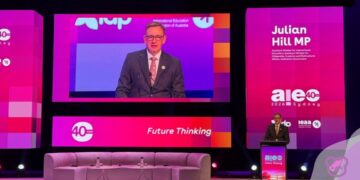
Overall, this was a powerful forum. Last year, SYMPLED had MP Julian Hill as a speaker, who warned us to expect a ‘nuclear option’ regarding an industry shake-up. It’s reasonable to say none of us expected these changes to be as significant as they are. One year later, this year’s SYMPLED was focused on, “Well, if this is what we are dealing with, what can we do to survive?” The message was clear—diversify or risk being left behind.
Despite the heavy topics, the event is a wonderful coming together of like-minded professionals who are keen to uplift standards and celebrate the wins of our hard-working colleagues and the outcomes we deliver for our students. Events like this turn competitors into “co-petitors”, and colleagues into friends and help us all do better as an industry.
A big thanks to Rob Parsonson, Sarah Rosen, and the ISEAA Agent representatives for organising a stellar event. If I missed anything, please forgive me—I’m writing this at the Gold Coast airport, trying to remember all that was covered.
Stay strong, stay positive—and remember why we do what we do!












