







The Koala News
  • News
    • All
    • Accommodation
    • Agents
    • Breaking
    • Compliance
    • Data
    • Ed-Tech
    • English Language
    • Market Update
    • Opinion
    • Policy
    • Profile
    • Research
    • Schools
    • Sponsored Content
    • Student Mobility
    • Student Recruitment
    • Student Support
    • TNE
    • World
    Recruitment alone won’t close Australia’s skills gaps

    Recruitment alone won’t close Australia’s skills gaps

    QS rankings 2026: NZ Unis all feature in the top 30 per cent

    New Zealand international students give experience record 90% approval

    Pearson and WorldSkills join forces to give vocational skills a place in Australia’s future workforce

    Pearson and WorldSkills join forces to give vocational skills a place in Australia’s future workforce

    Australia became part of the Nepali dream. Now a new generation is asking whether it is still worth the risk

    Nepal deserves its own place on the global education map

    Collaboration remains higher education’s greatest technology advantage

    Collaboration remains higher education’s greatest technology advantage

    Hill considers first use of ESOS powers to suspend student recruitment

    Hill considers first use of ESOS powers to suspend student recruitment

    Australian bank accounts among proposed student visa reforms

    Australian bank accounts among proposed student visa reforms

    ICEF Agent Voice 2026: The International Education Market Isn’t Shrinking. It’s Rebalancing.

    ICEF Agent Voice 2026: The International Education Market Isn’t Shrinking. It’s Rebalancing.

    Austrade upgrades EDI platform as providers look to diversify their international strategy

    Austrade upgrades EDI platform as providers look to diversify their international strategy

    The real AI divide in international education is integration, not adoption

    The real AI divide in international education is integration, not adoption

    Trending Tags

    • Austrade
    • English
    • Student Data
    • Awards
    • Schools
  • About
  • Contributors
  • Advertise
  • Jobs
  • Events
  • Subscribe
  • Archive
  • Shop
  • Contact
No Result
View All Result
The Koala News
No Result
View All Result
Home News Policy

Implications of a Levy on International Fees

Dirk MulderbyDirk Mulder
October 24, 2023
in Policy
Implications of a Levy on International Fees
Share on LinkedinShare on TwitterShare on FacebookShare via Email

One suggestion tabled in the Australian Universities Accord Interim Report was a levy on International Students fees. Remember that interim report? The one before the interim report of the Inquiry into Australia’s Tourism and International Education Sectors and the one prior to the Nixon review report. That Universities Accord.

Professor Christopher Ziguras and Associate Professor Gwilym Croucher from the Melbourne Centre for the Study of Higher Education have written a paper that explores the topic – it’s a great read.

The executive summary does better than this little Koala can do in putting the story together. So here it is:

Executive Summary

The Interim Report of the Higher Education Accord includes the idea of a levy on international student fee income, that “could provide insurance against future economic, policy or other shocks, or fund national and sector priorities such as infrastructure and research” (Australian Government, 2023, p. 16). Proponents argue this could address sector-wide challenges such as concern that the government currently underfunds research and infrastructure.

The levy is proposed to channel funds from those institutions that receive high international student fee income to those institutions that do not support a variety of purposes. In 2021, for example, The University of Sydney collected the most fee income at $1.3 billion which was roughly 38% of the university’s total budget that year. In contrast, The University of Notre Dame Australia collected $5 million or roughly 2% of their budget that year.

Were it to be introduced, a levy that supported a redistributive function would be a radical policy step, going far beyond current policy settings and requiring consideration of the consequences of different design options. For a levy to support aspirations around research and infrastructure, it would likely need to collect a significant amount of money each year, with implications for international students and their universities. International students already contribute significantly to the public purse, and we estimate that the Australian government currently collects over $2.6 cent billion per year directly from international students’ charges and taxes.

A new levy implies issues around equality between students and raises key questions about whether it is acceptable to impose a levy on international students’ fees but not domestic students’ fees, and whether the levy should be imposed on all international students or limited to those in particular types of education providers.

The fear for many people is that it would be difficult to design a new levy that did not exacerbate negative sentiments among international students that they are seen as “cash cows”. Most international students already pay tuition fees significantly higher than the amount universities receive for domestic students.

Another issue is around the public redistribution of private fee income, and the consequences for equity between higher education institutions. This raises the question of whether it is reasonable for fee income to be redistributed from high-income to low-income universities. Five universities have had significantly higher international revenue than the rest in recent years, and depending on the design it is likely they would provide the lion’s share of the contributions. A straight 5% levy on international student fees for each university in 2021 would have collected over $430 million, half of which would come from just five universities.

There has so far been very little detailed discussion of what a levy would fund and how. The idea of establishing a ‘sinking fund’ to protect against volatility in the international education market, a kind of sovereign wealth fund for universities, implies that a reserve would need to be built up and hence hundreds of millions of dollars of fee revenue would be withdrawn from the sector for several years until a target was reached. To access funds to pay the levy, universities could respond by reducing expenditures or by increasing fees, with the balance of the two approaches determined by their circumstances and competitive market forces.

A major issue facing the levy proposal is the impact that higher fees could have on demand from international students. Redistributing private students’ fees away from the providers in which they chose to study has implications for the perception of Australian higher education. Without transparency and accountability over the different purposes for which the funds are used, students might rightly ask whether they are receiving value for money, and why domestic full-fee students are not contributing. Were a levy to cause a major drop in Australia’s share of the international education market, it may ultimately be a self-defeating policy.

The Koala congratulates Professor Christopher Ziguras and Associate Professor Gwilym Croucher on a great piece of work and thanks them for their agreement to reproduce the executive summary.

The Inquiry into Australia’s Tourism and International Education Sectors, the latest interim report also suggests a levy –  a light touch marketing Levy on CRICOS providers to top up the brand Australia budget. Professors Ziguras and Croucher’s work can now be seen through a different but somewhat familiar lens.

The paper, “What are the Implications of a Levy on International Fees” can be seen here.

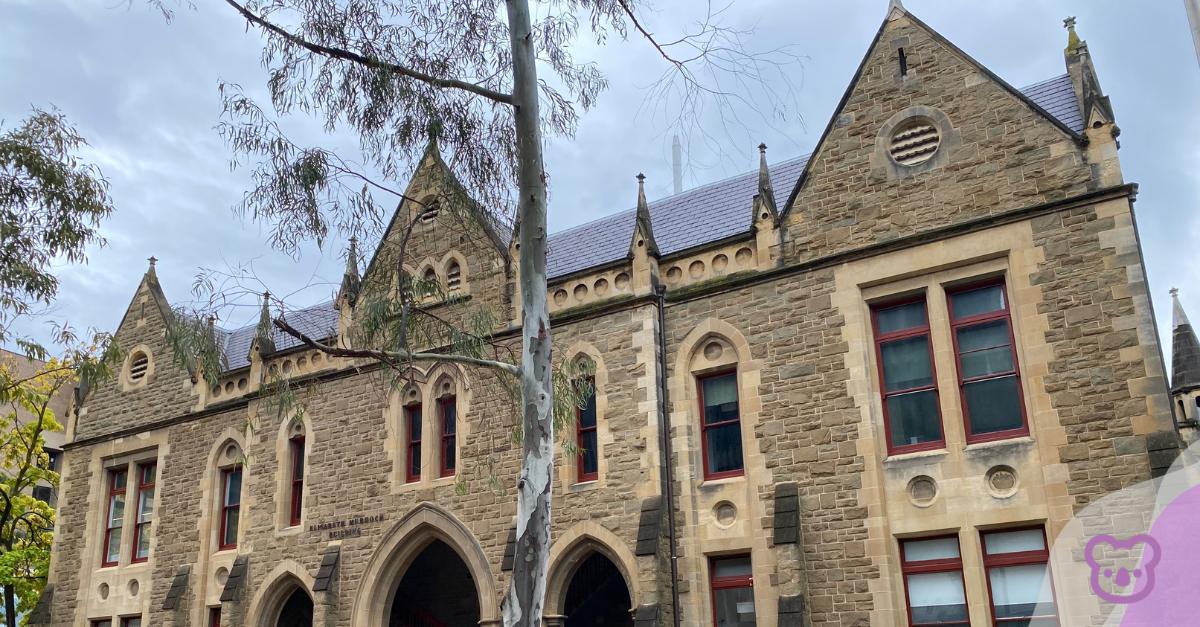
Photo credit: CSHE Building at the University of Melbourne, courtesy of Professor Christopher Ziguras.


Tags: CSHEGovernment Policy
Previous Post

What following the money in the Inquiry into Australia’s Tourism and International Education Sectors interim report tells us

Next Post

Bahasa Sesh Challenge Extended to 31 October

Dirk Mulder

Dirk Mulder

Dirk Mulder is the founder of the Koala and Principal of MulderPR, a strategy and marketing communications consultancy specialising in international education. Dirk has had extensive experience in International Education and Service Management, holding Directorships at the University of South Australia, Curtin University and Murdoch University as well the Lead for International Student Initiative across the Asia Pacific region at Allianz Partners. He has been member of the boards of Perth Education City (now StudyPerth) and Education Adelaide, he has chaired the Universities of Perth International Directors Forum and has been a past board member of the Hawkesbury Alumni Chapter, his alma mater. His views are widely published and quoted across the media and has been seen in Campus Morning Mail, the Australian Financial Review and ABC television and online. Acknowledgement/disclosure: Dirk holds shares in and outside of the education sector including in IDP Education.

Next Post

Bahasa Sesh Challenge Extended to 31 October

What Now? What Next? What Now? What Next? What Now? What Next?
Cambridge Cambridge Cambridge
iDAT Logo iDAT Logo iDAT Logo
The Koala News

The Koala is intelligent, it can be cheeky, it aims to be informative and is uniquely Australian though proudly global.

It unashamedly promotes best practice in International Education. It loves seeing students succeed via vibrant offerings and a supporting mix of policy, recruitment and support settings.

Follow the Koala

Get the App for your mobile device

Subscribe: Have the Koala Delivered to your Inbox

  • About
  • Terms of Use
  • Privacy Policy
  • Contact

© 2023 The Koala News

The Koala News app
Get
No Result
View All Result
  • News
  • About
  • Contributors
  • Advertise
  • Jobs
  • Events
  • Subscribe
  • Archive
  • Shop
  • Contact

© 2023 The Koala News










