











As the dust settles following the midnight salvo from the Government introducing Ministerial Direction 111 (TKN 191124), I’ve been reflecting on what it means for the sector. In this final piece for 2024, I’m answering some of the questions that you’ve put to me (with facts or thoughts, depending on the question) and asking some of my own.
I’ve also looked at what the reaction has been across the sector. I was surprised to see that some responses have been quite positive, but I’ve put that down to the reactions being one of the following:
- Surely anything must be better than MD107
- This isn’t great, but some of our members will benefit, or at least won’t be as badly off as under MD107
- It’s too early to work out why it’s bad
We love a midnight release, six days before Christmas
Following the failure to pass the ESOS Amendment Bill, the sector has continued its call for Ministerial Direction 107 to go, and we had wind earlier this month that something was in the works (TKN 041224).
Delays in releasing the details are much more likely to be caused by the Government wanting to ensure its I’s were dotted, and T’s were crossed, than a deliberate decision to release the information six days from Christmas. But true to current form, there was no real notice about the new arrangements for providers to prepare (remember that they announced visa fees were going up on the day they went up).
My initial reaction was that MD111 was an ‘up yours’ from a Government that was really peeved not to have got the ESOS Amendment Bill through Parliament. Now I think it’s both an ‘up yours’ to the sector as well as to the Opposition.
What does the Government get out of revoking MD107 and introducing MD111?
- The Government can claim to have introduced a fairer system, especially for regional universities particularly impacted by MD107.
- Through the 80 per cent threshold, MD111 punishes Group of Eight universities which have been generally favoured by fast visa processing under MD107.
- Through the indicative allocations it still enables the Government to target the private education sector in reducing numbers and rewards the public VET sector with the new exemption for TAFE providers (see below).
- There’s the possibility of an overall slow-down in visa processing (also see below).
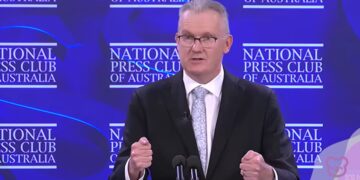
- It provides a political opportunity to have a go at Opposition leader Peter Dutton and the Liberal Party in general. For example, the joint media release from Tony Burke, Minister for Home Affairs, Jason Clare, Minister for Education and Andrew Giles, Minister for Skills and Training said MD111 was “giving a fairer go to regional and outer metropolitan universities and to TAFEs, who have been abandoned by the Liberal Party”.
Does the Government know why it’s doing this?
(I know that’s facetious, but it’s almost Christmas shut down.)
Also in the Ministers’ joint media release it says, “Peter Dutton and the Liberals’ efforts to increase migration and help dodgy education agents and dodgy providers will not succeed”.
There is nothing in MD111 that addresses “dodgy education agents” or “dodgy providers”. (It’s a stretch to accuse the Opposition of wanting to “increase migration” because it didn’t support the ESOS Amendment Bill, but that’s politics for you).
What’s the good news about MD111?
Technically it will be possible for providers to enrol above their ‘indicative allocation’ of new overseas student commencements (NOSC) in 2025.
The uncertainty for pathways students (schools, ELICOS, diploma etc) that was associated with the ESOS Amendment Bill, and whether providers would have places left under their caps for these students, is removed..
Putting aside the number contained in provider indicative allocations, MD111 is a fairer system than MD107, as providers are not prioritised (up to the 80 per cent limit). Providers who have been particularly impacted by MD107 (eg regional universities) will be beneficiaries of MD111.
If processing timelines blow out as some expect, providers with multiple intakes or block enrolments will have an advantage, as they will be able to roll students over from intake to intake.
Two other beneficiaries under MD111, not covered by MD107 or proposed exemptions under the ESOS Amendment Bill, are now exempt and will remain Priority 1: TAFE providers and pilot training courses (there was a particular focus on the impact of NOSCs in this area during the inquiry into the ESOS Amendment Bill).
What’s wrong with MD111?
There’s bad news in MD111 for individual providers and for the sector more broadly.
Firstly, the Department of Home Affairs (DHA) has finite resources. Remember when it was given additional resources post-COVID after we saw massive backlogs in the offshore visa caseload? That won’t happen this time around.
Initially, most offshore student visa applications will fit into the Priority 1 – High category, until the 80 per cent threshold starts to be reached across providers. I don’t know what order these visas will be processed in, although time of application and which DHA offices are processing the visas will be a factor. Regardless, it will slow down the processing for those providers who have been benefiting from MD107.
Once the 80 per cent threshold is reached for every provider, and applications move to Priority 2 – Standard, it becomes a waiting game, for students and providers. And although there’s no mention in the Ministers’ media release about MD111 providing a strategic way of slowing down processing times, this is effectively what will happen.
There is a concern that visa processing timelines will blow out and students will miss their intake. And instead of enrolling up to their full NOSC if the ESOS Amendment Bill had passed, they may now only enrol 80 per cent. This is why feedback from some parts of the sector is, if it looks like a duck and quacks like a duck, then it’s a cap…
According to an update from English Australia (see below), DHA is recommending a minimum of 8 weeks for Priority 1 visa applications and 16 weeks for Priority 2. Time will tell if this is an accurate recommendation.
Secondly, MD111 still relies on a flawed methodology to calculate indicative allocations of NOSCs for providers (there has been plenty written to support my statement that the methodology is flawed for example, see Claire Field’s excellent analysis). But for private providers whose NOSCs are dismally low, enrolling to 80 per cent with a prospect that they may not enrol any higher is a double blow.
Thirdly, the ongoing uncertainty and lack of clarity for students, parents and agents that this causes will continue to have a negative impact on Australia’s reputation. It might be great for a student who happens to be in the 80 per cent threshold, but remaining students will be in limbo. And given the policy and political turmoil that we’ve seen in 2024, it’s not unreasonable to think that students will just go somewhere else (which also suits the current political environment).
Finally, what MD111, and MD107 and the ESOS Amendment Bill, fail to do is to really tackle the issue of what sustainability should look like for the international education sector in Australia.
What about onshore applications?
This is another good news/bad news story. The good news is that MD111 only applies to offshore visa applications and onshore visa applications will not count towards a provider’s indicative allocation. This will be good news for pathways students who are not part of an offshore package COE, such as schools students (TKN 201224).
The bad news, as we learned from the Department of Home Affairs during Senate Estimates in November, is that the onshore visa caseload is already high, and within that caseload there was about 109,000 onshore student visa/students on a bridging visa (TKN 201124). And MD111 does nothing to resolve this.
During Estimates, DHA said it would be focusing on the offshore case load, “we will do what we can to support the onshore case load as well, but students who are onshore on a bridging visa can still study and attend their courses”, said Home Affairs’ Alison Garrod, Assistant Secretary, Temporary Visas.
That sounds OK, and will be OK, for some students. However, the anxiety of being on a bridging visa without the certainty of knowing that you will be able to stay will be too much for some students and their parents.
Are Evidence Levels still a thing?
With MD111, evidence levels are irrelevant in determining prioritisation for the processing of visa applications. However, there is no change to part of the Simplified Student Visa Framework that uses evidence levels to determine financial and English language evidence with the student visa application.
Are we likely to see pressure from other countries?
In short, no. One of the notes in MD111 speaks to this point very clearly:
“Section 4(1) of the [Migration] Act provides that the object of the Act is to regulate, in the national interest, the coming into, and presence in, Australia of non-citizens.”
Although this Act is specific to Australia, it is a position shared across the globe, as every country claims sovereignty over border policies. While there may be polite diplomatic overtures supporting international students coming to Australia, there will not be any diplomatic pressure on the Australian Government.
Reactions from the sector
The reaction from the peak bodies was a mixed bag, which is how the sector has responded all year.
Australian Technology Network of Universities
Welcomed MD111 and its clarity on how visa processing will operate.
“The Government has recognised through MD111 that we need greater stability and predictability for applicants and institutions, essential factors which ATN Universities has been seeking for the health of international education in Australia,” said Executive Director, Dr Ant Bagshaw.
English Australia
EA has not responded publicly to MD111, although it did provide an update to its members following an International Education Stakeholders Forum for peak bodies hosted by the Department of Education yesterday morning.
Group of Eight
The Go8 has come out swinging against MD111, with Chief Executive Vicki Thomson saying it is “in effect a backdoor to caps for all the wrong reasons”.
“The Government has acknowledged that our international student visa system must be underpinned by integrity and quality. However, by replacing one flawed process with another – effectively a ‘slowdown in processing’– it has shifted the goal posts yet again”.
Independent Tertiary Education Council Australia
As NOSCs are in play under MD111, ITECA has come out against MD111, saying it is causing significant frustration and uncertainty for members and discriminates against non-government providers.
“That the Australian Government has sidestepped Parliament has blindsided ITECA members and left them feeling let down by the Australian Government,” said Troy Williams, ITECA Chief Executive.
“It’s a betrayal by the Australian Government of small businesses that been instrumental in building Australia’s reputation as a world-class destination for international education,” Mr Williams said.
Innovative Research Universities
Welcome the removal of MD107 and the introduction of a more equitable approach to visa processing.
“The new Ministerial Direction 111 levels the playing field and the IRU supports the exemptions for priority student groups, including postgraduate research students,” said Executive Director Paul Harris.
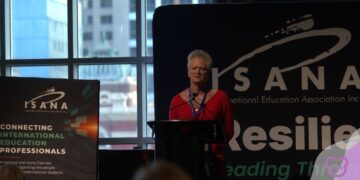
International Education Association of Australia: Speaking to Times Higher Education, Phil Honeywood, Chief Executive, said the government had done “the right thing” in consulting with stakeholders about the changes. “This new ministerial direction will treat all providers more equitably and reduce some of the unfortunate impacts…that direction 107 created,” he said.
“Students who may have been holding off…while awaiting policy clarity should now apply with a greater level of confidence that they will be processed in a much more timely manner.”
Regional Universities Network
With regional universities likely to be one of the main beneficiaries of the revocation of MD107 and introduction of MD111, RUN has come out in support of MD111 saying that it was a “much fairer visa processing regime”.
Chief Executive Officer Alec Webb said “Ministerial Direction 111 will restore equity, repeatability, and transparency to the vital process of administering international student visas”.
Universities Australia
UA focused on the removal of MD107, calling it a commonsense decision. Universities Australia Chief Executive Officer Luke Sheehy said it “[paved] the way for sustainable growth in the critically important international education sector”. There has been no public response to MD111 as at time of writing.
There are no other public reactions from peak bodies.
In closing this section, I would like to use the words of Paul Harris, ED, IRU, although in my mind I’ve swapped out “the higher education system” with “Australia’s international education sector’:
“Decisions taken over the last year have damaged Australia’s reputation as a high-quality provider of international education. We now need a commitment from all sides of politics to a positive and proactive approach to international education in 2025 and beyond, that protects students and supports equity in the higher education system”.
Final words
As above, this is my last article for 2024 (unless the Government decides to announce something else at midnight). I’d like to take the opportunity to thank everyone for reading, especially those who have taken the time to comment and to provide such positive feedback.
A big thanks to Dirk and The Koala News for creating a platform for Australia’s international education sector, and for allowing me to use that platform to share thoughts and analysis, and sometimes just the facts 😉.
Wishing you all a safe and restful holiday period. If you celebrate Christmas, I hope it’s full of fun and festive cheer.
See you in 2025, whatever it may bring!
The Harris Christmas tree.